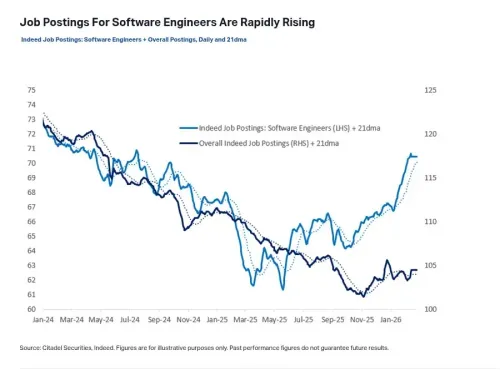
Sacks Shares Apollo Economist's Zero AI Job Loss Finding
Synopsis
White House AI and Crypto Czar David Sacks amplified a finding from Apollo Global Management's chief economist showing zero evidence of AI-driven job losses, reinforcing the Trump administration's innovation-first stance as the global debate over automation and employment intensifies.
Key Takeaways
White House AI and Crypto Czar David Sacks shared on 1 June 2026 that Apollo Global Management's chief economist found zero evidence of AI-related job losses in current data.
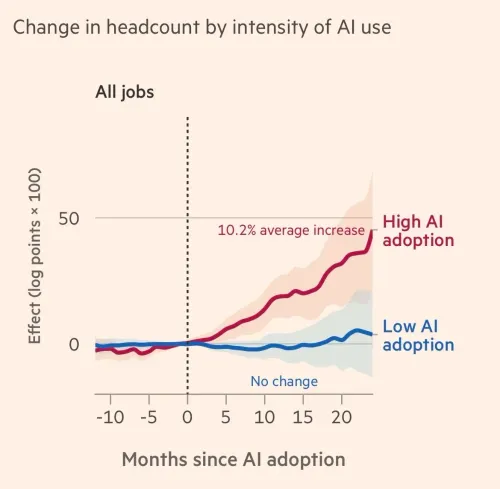
Official US Bureau of Labor Statistics data through 2025 showed continued growth in professional and technical occupations despite rapid AI adoption.
The Trump administration under Sacks has prioritised light-touch AI regulation over preemptive labour-market restrictions.
A White House Executive Order from October 2023 had previously directed agencies to monitor AI's labour-market effects — a precautionary framework the current White House has moved away from.
Labour economists caution that stable headline employment figures can mask task-level displacement not yet visible in aggregate data.
The finding is likely to be used by the administration to counter calls for AI-specific workforce protection legislation in Congress .
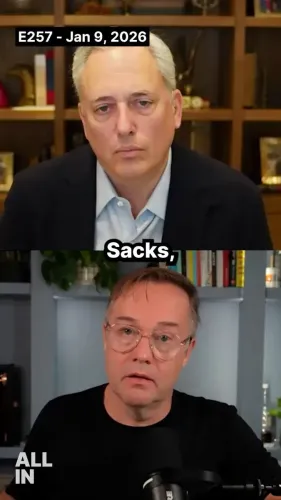
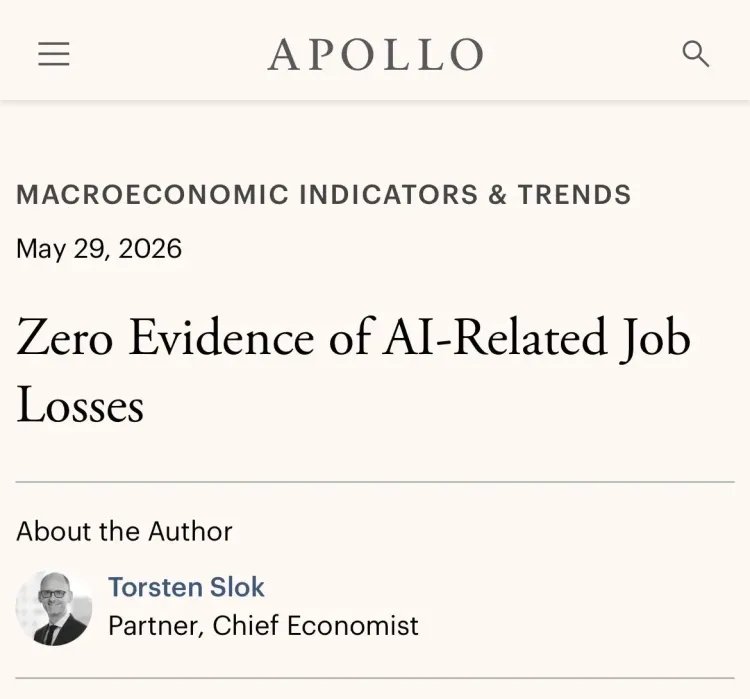
White House AI and Crypto Czar David Sacks on Sunday, 1 June 2026 shared a finding attributed to the chief economist of Apollo Global Management, highlighting that there is 'zero evidence' of AI-related job losses in current macroeconomic data — a claim that cuts directly against widespread fears of automation-driven displacement.
Context
The post, shared via Sacks's official X account, amplifies commentary from Apollo Global Management's chief economist asserting that employment data show no measurable sign of AI-driven job losses to date. Apollo is one of the world's largest alternative asset managers, and its economic research carries weight in institutional finance and policy circles. The statement arrives as public anxiety over generative AI's impact on the labour market has remained elevated since the mass-market release of large language models beginning in late 2022.
Sacks, who serves as the Trump administration's point person on both artificial intelligence and cryptocurrency policy, has consistently championed an innovation-first regulatory posture. His decision to amplify this finding signals the administration's preferred narrative: that AI, so far, is not the job-destroyer its critics warn it will be.
Policy Backdrop
The debate over AI and employment has a formal policy footprint. A White House Executive Order issued in October 2023 directed federal agencies to evaluate AI's effects on labour markets and plan for workforce transitions. That order, issued under the previous administration, reflected precautionary instincts that the current White House has largely moved away from, favouring lighter regulatory touch and industry self-governance.
Official US Bureau of Labor Statistics data through 2025 showed continued growth in professional and technical occupations — the very categories most frequently cited as vulnerable to AI automation. The Apollo economist's commentary appears consistent with that macro picture, even as sector-level and task-level disruptions remain a subject of active academic and policy scrutiny.
Sacks's role as AI and Crypto Czar places him at the centre of administration efforts to position the United States as the global leader in AI development, resisting what he and allies describe as premature or innovation-chilling regulation.
Stakeholders and Impact
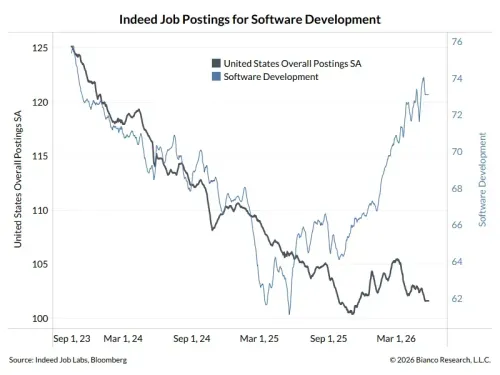
The finding, if it holds up to further scrutiny, has implications for millions of workers in sectors from software development and content creation to legal services and financial analysis — all areas where generative AI tools have been rapidly adopted. Labour economists and trade unions have argued that aggregate employment figures can mask task-level displacement even when headline job numbers remain healthy.
For the tech sector, the Apollo economist's data point provides ammunition against calls for AI-specific labour protections or mandatory impact assessments before deployment. Investors and venture capitalists, a constituency Sacks knows well as co-founder of Craft Ventures and co-host of the All-In Podcast, are likely to read the signal as a green light for continued aggressive AI investment and deployment.
Conversely, worker advocacy groups and some Democratic lawmakers are likely to push back, arguing that the absence of evidence in current data does not rule out near-term disruption as AI capabilities continue to scale rapidly.
What's Next
Attention will now turn to upcoming monthly Bureau of Labor Statistics employment and JOLTS (Job Openings and Labor Turnover Survey) releases, which analysts will parse for any sector-specific shifts in hiring or separations that aggregate data may obscure. Congressional committees focused on technology and labour are likely to cite competing economic analyses as they weigh potential AI workforce legislation.
The administration's posture — using credible institutional research to pre-empt calls for restrictive AI labour policy — suggests that Sacks and the White House will continue to marshal data-driven arguments as the political debate over AI's economic consequences intensifies heading into the second half of 2026.
Point of View
Sacks deploys a classic policy-communication move: outsourcing a politically convenient data point to a credible, non-partisan financial voice. This fits a broader White House pattern of using market-oriented research to neutralise regulatory momentum before it builds legislative traction. The timing matters — with AI capabilities scaling rapidly through 2026, the administration is racing to set the empirical baseline: if no jobs have been lost yet, the burden of proof shifts to those demanding intervention. Whether that baseline holds as more capable AI systems are deployed will be the defining test of this argument.
NationPress
14 Oct 2026
Frequently Asked Questions
Has AI caused job losses in the US according to latest data?
According to commentary shared by White House AI and Crypto Czar David Sacks, Apollo Global Management's chief economist found zero evidence of AI-related job losses in current macroeconomic data, consistent with US Bureau of Labor Statistics figures showing growth in technical occupations through 2025.
Who is David Sacks and what is his role in the Trump administration?
David Sacks is the White House AI and Crypto Czar in the Trump administration. He is also co-founder and general partner of Craft Ventures and a co-host of the All-In Podcast, making him one of the most influential Silicon Valley voices in US government.
What is Apollo Global Management's view on AI and employment?
Apollo Global Management's chief economist has publicly stated there is zero evidence of AI-related job losses in current data, a position that aligns with the Trump administration's innovation-first AI policy stance.
What does the White House's AI policy say about job displacement?
The current White House under the Trump administration, led on AI policy by David Sacks, favours light-touch regulation and has moved away from the precautionary October 2023 Executive Order framework that directed agencies to plan for AI-driven workforce transitions.
Could AI still cause job losses even if current data shows none?
Labour economists caution that stable aggregate employment numbers can mask task-level displacement, meaning some workers may already be losing specific functions to AI even as overall job counts remain healthy. The full labour-market impact of generative AI may take years to appear in official statistics.