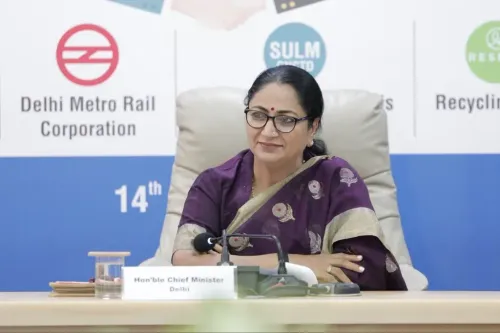
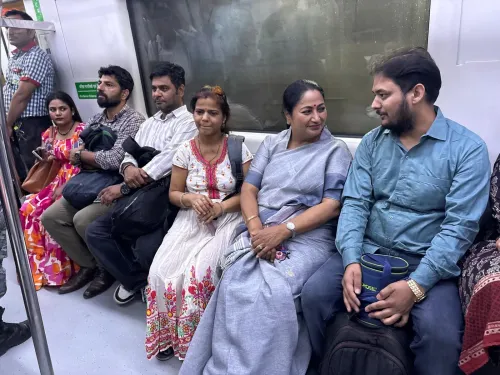
CM Rekha Gupta Launches 'Arpan' Cloth Donation Centres at 10 Delhi Metro Stations
Synopsis
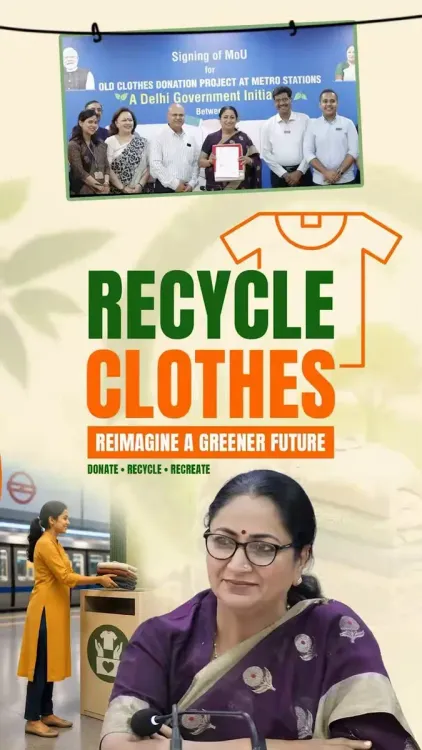
Delhi Chief Minister Rekha Gupta has announced 'Arpan' Donation Centres at 10 Delhi Metro stations, where residents can drop off old clothes. The scheme targets textile waste reduction and livelihood creation for women-led Self Help Groups, advancing the city's sustainability agenda under the Viksit Bharat framework.
Key Takeaways
Delhi CM Rekha Gupta announced the 'Arpan' cloth donation initiative on 15 July 2026 .
Donation centres will be set up at 10 Delhi Metro stations , leveraging high daily footfall for maximum citizen reach.
The scheme targets reduction of textile waste , one of the harder-to-manage urban waste categories.
Collected clothes will create livelihood opportunities for women and Self Help Groups through sorting, processing and redistribution.
The initiative aligns with the national Viksit Bharat framework and continues the policy lineage of the Swachh Bharat Mission .
Future watch points include expansion to additional stations and integration with formal textile recycling supply chains.
Delhi Chief Minister Rekha Gupta on Wednesday, 15 July 2026, announced the launch of 'Arpan' Donation Centres at 10 Delhi Metro stations, inviting citizens to donate old clothes as part of a city-wide sustainability initiative. The scheme aims to reduce textile waste, generate livelihoods for women and Self Help Groups, and advance Delhi's environmental goals.
Context
In her post, CM Gupta described the initiative as an opportunity for citizens to 'become part of a meaningful movement.' She stated that every contribution would 'reduce textile waste, create sustainable livelihood opportunities for women and Self Help Groups, and strengthen Delhi's journey towards a cleaner, greener and more sustainable future.' The announcement was accompanied by the hashtags #GreenDelhi and #ViksitDelhi, signalling alignment with both local environmental branding and the national Viksit Bharat development framework.
Policy Backdrop
The 'Arpan' centres build on a policy lineage that traces back to the Swachh Bharat Mission, launched in 2014, which emphasised source segregation, waste reduction and community participation in cleanliness drives across urban India. Using high-footfall public infrastructure — in this case, Delhi Metro stations operated by the Delhi Metro Rail Corporation — for citizen-led waste collection reflects a broader urban-governance strategy to embed circular-economy principles into daily commuter life. The approach mirrors similar initiatives in other Indian cities that have leveraged transit hubs for environmental campaigns.
Self Help Groups, the primary beneficiary community identified in the announcement, are community-based associations promoted under various central and state government programmes for micro-enterprise, savings and livelihood generation. Routing donated textiles through these groups positions the scheme as a dual-purpose intervention: environmental on one end, socio-economic on the other.
Stakeholders and Impact
Delhi Metro serves millions of daily commuters across the National Capital Region, making its stations among the highest-footfall public spaces in the country. Placing donation centres within this network maximises citizen access and convenience, lowering the barrier to participation compared with standalone collection drives. Women-led Self Help Groups stand to benefit directly through the processing, sorting and redistribution of collected garments, creating income streams tied to the circular textile economy.
The initiative also addresses a growing urban challenge: textile waste, one of the harder-to-manage categories of household waste in Indian cities. By channelling discarded clothing into a structured donation and reuse pipeline, the scheme has the potential to divert significant volumes of material from landfills, provided operational capacity keeps pace with collection volumes.
What's Next
The immediate focus will be on the physical roll-out of the 10 donation centres and the logistics of collection, sorting and distribution to Self Help Groups. Authorities and civic observers will watch whether the volume of donations collected justifies expansion to additional metro stations or integration with formal textile recycling and upcycling supply chains. The scheme's success in generating verifiable livelihood outcomes for women's groups will also determine whether it becomes a replicable model for other Indian cities pursuing similar urban-sustainability goals.
Point of View
Routing a sustainability scheme through women's Self Help Groups to demonstrate inclusive governance. By anchoring the drive at metro stations — spaces associated with modernity and civic order — the administration signals a deliberate effort to reframe Delhi's urban identity around cleanliness and circularity. The dual branding of #GreenDelhi and #ViksitDelhi ties local action explicitly to the Prime Minister's national development narrative, a pattern common to BJP-governed states seeking to demonstrate alignment with the Centre. The scheme's real test will be operational: whether donation volumes, SHG capacity and waste-diversion metrics are tracked and disclosed publicly.
NationPress
15 Jul 2026
Frequently Asked Questions
What is the 'Arpan' Donation Centre scheme in Delhi?
'Arpan' Donation Centres are cloth collection points being set up by the Delhi Government at 10 Delhi Metro stations, where citizens can drop off old clothes. The collected garments will be channelled to women-led Self Help Groups to create livelihood opportunities and reduce textile waste.
Which Delhi Metro stations will have Arpan donation centres?
The Delhi Government has announced 10 metro stations as locations for 'Arpan' centres, but the specific station names had not been officially confirmed in public records at the time of the announcement.
Who benefits from the Arpan cloth donation scheme?
The primary beneficiaries are women and Self Help Groups, who will process, sort and redistribute donated clothing, generating income. Delhi's environment also benefits through reduced textile waste going to landfills.
How does the Arpan scheme connect to Swachh Bharat Mission?
The scheme builds on the Swachh Bharat Mission's emphasis on source segregation and community participation in waste reduction, extending those principles specifically to textile waste through a metro-station-based collection model.
Can Delhi Metro commuters donate clothes directly at the station?
Yes, the stated purpose of placing 'Arpan' centres inside metro stations is to allow commuters to donate old clothes conveniently during their daily travel, without needing to visit a separate collection point.