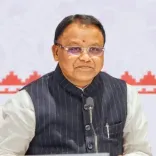
CM Mohan Yadav Pushes Daytime Power, Dairy Drive for MP Farmers
Synopsis
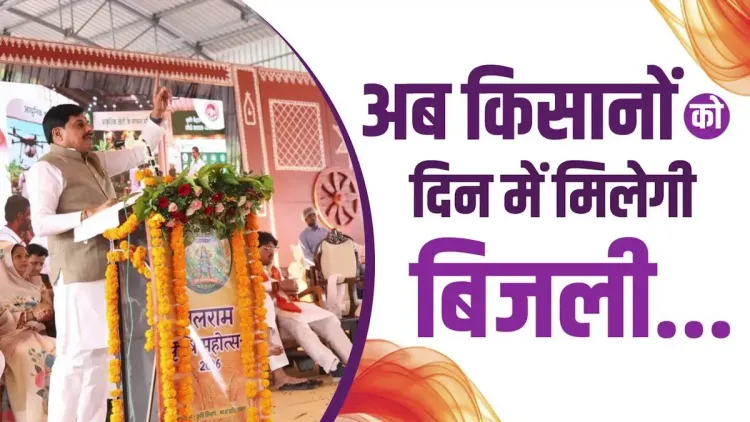
Chief Minister Dr. Mohan Yadav announced on 15 July 2026 that Madhya Pradesh is arranging daytime power supply for farmers and continuously working to boost milk production, under the state's Farmer Welfare Year 2026 initiative aimed at raising rural incomes.
Key Takeaways
The Chief Minister's Office of Madhya Pradesh announced concrete steps to raise farmer incomes on 15 July 2026 .
Mohan Yadav confirmed arrangements are being made to supply electricity to farmers during daytime hours.
The government is simultaneously working to promote milk production as a supplementary income source.
Both measures fall under Farmer Welfare Year 2026 , the state's declared framework for agricultural income enhancement.
The Madhya Pradesh Department of Agriculture is the nodal agency for implementation of these schemes.
The push builds on earlier reforms including PM-KUSUM solar pumps and the Mukhya Mantri Kisan Kalyan Yojana launched in 2020.
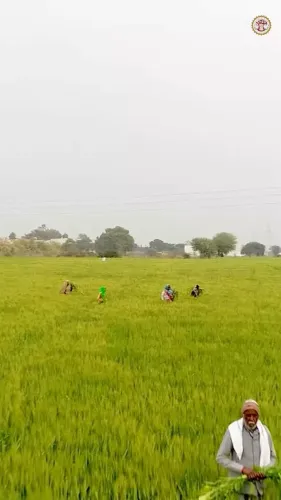
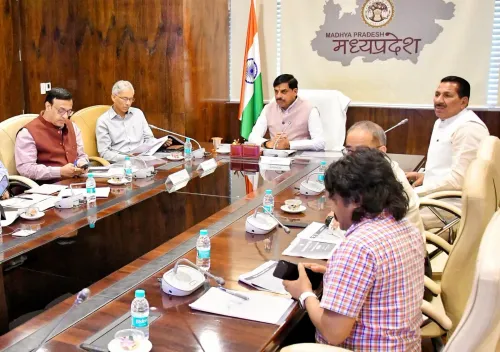
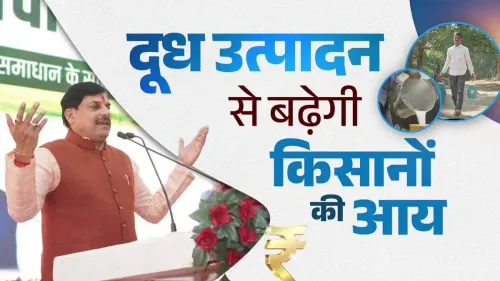
The Chief Minister's Office of Madhya Pradesh announced on Wednesday, 15 July 2026 that the state government is taking concrete steps at every level to raise farmers' incomes, with a specific focus on providing daytime electricity for agriculture and boosting milk production.
Context
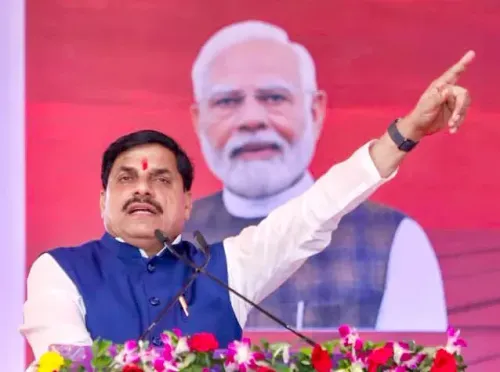
Chief Minister Dr. Mohan Yadav stated, 'प्रदेश सरकार किसानों की आय बढ़ाने के लिए हर स्तर पर ठोस कदम उठा रही है' ('The state government is taking concrete steps at every level to increase farmers' incomes'). He specifically noted that arrangements are being made to supply electricity to farmers during the day, and that the government is continuously working to promote milk production. The announcement was made under the banner of #कृषक_कल्याण_वर्ष_2026 — the state-declared Farmer Welfare Year 2026 — and tagged both the Madhya Pradesh Department of Agriculture and the Chief Minister's official handle.
Policy Backdrop
Madhya Pradesh has pursued agricultural power reforms for several years, including feeder separation and solar pump programmes aligned with the central government's PM-KUSUM scheme, which has been operational since 2019. These measures aim to decouple agricultural power supply from domestic feeders, allowing farmers to irrigate fields during daylight hours rather than at night, reducing crop stress and energy waste. The state also launched the Mukhya Mantri Kisan Kalyan Yojana in 2020 to provide direct financial assistance and input support to farmers, forming part of a broader multi-year effort to diversify and stabilise rural incomes.
Daytime power for irrigation is a long-standing demand of the farming community across central India. Several states have demonstrated that reliable daytime electricity reduces pump-set failures, supports multiple cropping cycles, and improves overall agricultural productivity. The current push in Madhya Pradesh appears to extend this reform trajectory into the 2026 welfare year framework.
Stakeholders and Impact
Madhya Pradesh is one of India's leading agricultural states, with farming and dairy contributing substantially to rural employment. Small and marginal farmers stand to benefit most from dependable daytime power, as they typically lack the capital to invest in private generator sets or large battery storage systems. Dairy producers, who form a significant segment of the rural economy, are the second key beneficiary group: improved fodder availability through better-irrigated fields and direct government support for milk production can provide a supplementary income stream that reduces dependence on monsoon-linked crop cycles.
The Madhya Pradesh Department of Agriculture (@minmpkrishi), tagged in the post, is the nodal agency responsible for implementing farmer-centric schemes and coordinating power allocation for irrigation. Its involvement signals that operational groundwork for these measures is underway rather than merely aspirational.
What's Next
Attention will now turn to the rollout of dedicated daytime agricultural feeders across key districts and any specific dairy procurement or breed-improvement targets the state may announce in upcoming budget sessions or policy circulars. The Farmer Welfare Year 2026 framework provides a political and administrative deadline that is likely to accelerate announcements on both fronts. How the state balances power grid capacity with expanded agricultural demand will be a critical implementation variable to watch in the months ahead.
Point of View
Framing these measures under a dedicated 'Farmer Welfare Year' creates an administrative accountability window while generating a year-long communication arc ahead of potential electoral cycles. The daytime power push is particularly significant because it addresses a structural grievance — nocturnal irrigation — that has persisted for decades despite successive policy announcements. Whether implementation keeps pace with the political messaging will determine how much credibility the 2026 welfare year framework ultimately earns.
NationPress
16 Jul 2026
Frequently Asked Questions
What is Farmer Welfare Year 2026 in Madhya Pradesh?
Farmer Welfare Year 2026 is a state-declared initiative by the Madhya Pradesh government focused on enhancing farmer incomes through measures such as daytime electricity supply for irrigation and support for milk production.
Will Madhya Pradesh farmers get electricity during the day for farming?
CM Dr. Mohan Yadav announced on 15 July 2026 that arrangements are being made to provide daytime electricity to farmers in Madhya Pradesh, building on earlier feeder-separation and solar pump programmes.
How is the Madhya Pradesh government boosting milk production?
The state government is continuously working to promote dairy and milk production as part of its broader strategy to diversify farmer incomes, though specific new scheme details are yet to be formally announced.
What is the Mukhya Mantri Kisan Kalyan Yojana?
The Mukhya Mantri Kisan Kalyan Yojana, launched in 2020, is a Madhya Pradesh scheme that provides direct financial assistance and input support to farmers to stabilise and raise their incomes.
What is PM-KUSUM and how does it relate to MP farmers?
PM-KUSUM is a central government scheme launched in 2019 to promote solar pumps and agricultural feeder separation; Madhya Pradesh has aligned its own daytime power initiatives with this framework to improve irrigation reliability for farmers.