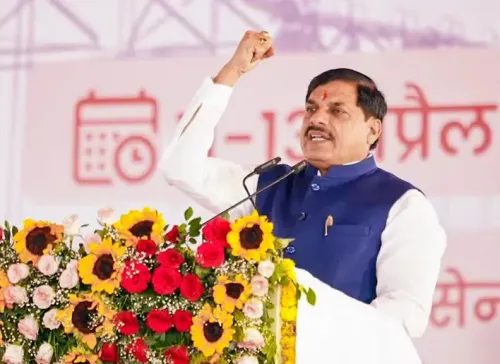
MP Targets 52 Lakh Kg Daily Milk Procurement: CM Mohan Yadav
Synopsis
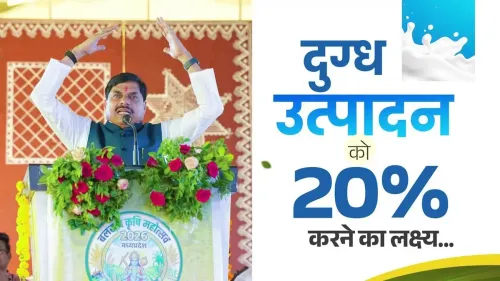
Madhya Pradesh CM Mohan Yadav has set a bold target to raise daily milk procurement to 52 lakh kg — over five times the current 9.67 lakh kg — by connecting 26,000 villages through revamped dairy cooperatives, NDDB partnership, and a mobile-based digital procurement system under the Farmer Welfare Year.
Key Takeaways
CM Mohan Yadav chaired a review meeting of the MP State Cooperative Dairy Federation on April 25, 2025 , announcing a target to raise daily milk procurement to 52 lakh kilograms .
The state currently procures 9.67 lakh kilograms of milk daily, supported by 153 bulk milk coolers — less than one-fifth of the stated target.
In 2025–26 , 1,752 new dairy cooperative societies were formed and 701 dormant ones were revived, with a goal to link 26,000 villages to dairy activities.
A mobile-based milk procurement system and a field force monitoring app have been launched to digitalise and add transparency to the dairy value chain.
Infrastructure investments include a milk powder plant in Indore and facility upgrades in Shivpuri and Gwalior , with NDDB providing institutional and technical support.
The initiative is being driven under the state's "Farmer Welfare Year" framework, positioning dairy as a primary lever for rural income growth and agricultural diversification.
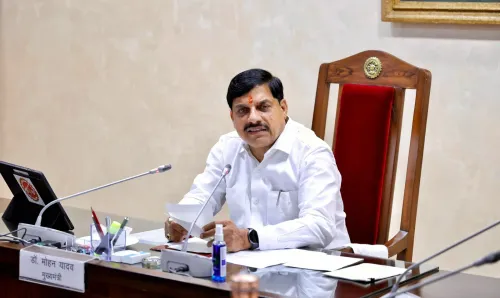
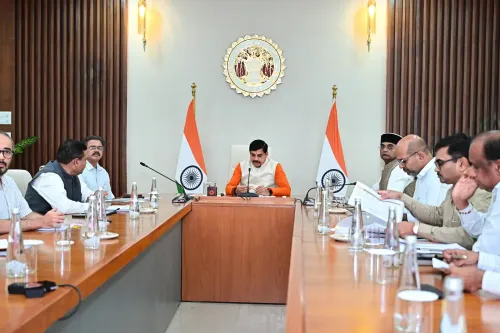
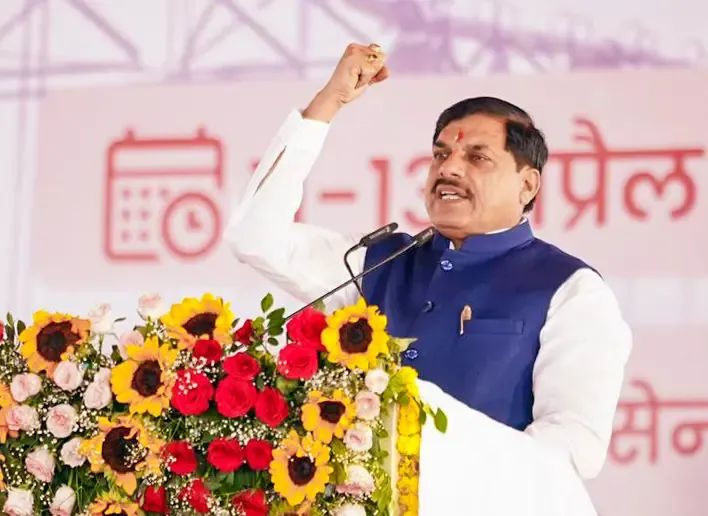
Bhopal, April 25: Madhya Pradesh Chief Minister Mohan Yadav has set an ambitious target to scale daily milk procurement to 52 lakh kilograms, positioning the dairy sector as a cornerstone of the state's rural economy and farmer income strategy. Chairing a high-level review meeting of the Madhya Pradesh State Cooperative Dairy Federation on Friday, April 25, the Chief Minister outlined a sweeping roadmap to transform cooperative dairying across the state.
Dairy as a Pillar of Farmer Welfare Year
The push comes under the state government's flagship "Farmer Welfare Year" initiative, which frames dairy development as a sustainable livelihood engine for rural communities. CM Yadav emphasized that dairy activities are being actively promoted to create consistent income streams for farmers beyond traditional crop-based earnings.
"Dairy development is emerging as an effective means to increase farmers' income, and the government is working to expand its reach across villages through a cooperative framework," Yadav said in an official statement.
This vision is significant given that Madhya Pradesh is among India's top agricultural states, yet its dairy output has historically lagged behind states like Gujarat, Rajasthan, and Uttar Pradesh. The current push signals a deliberate policy pivot to close that gap.
Key Targets and Ground-Level Progress
Officials at the review meeting disclosed that the state currently records daily milk procurement of approximately 9.67 lakh kilograms, supported by 153 bulk milk coolers installed across procurement centres. The gap between the current figure and the 52 lakh kg target underscores the scale of ambition — and the challenge ahead.
The state has also set a goal to connect 26,000 villages with dairy activities. In 2025–26, 1,752 new dairy cooperative societies were formed, while 701 previously inactive societies were revived — a notable operational recovery that reflects renewed grassroots momentum.
To improve transparency and farmer empowerment, the government has introduced a mobile-based milk procurement system that gives farmers real-time access to data on milk quantity, quality, and pricing. A field force monitoring application has also been launched to strengthen operational oversight at the ground level.
NDDB Partnership and Institutional Strengthening
CM Yadav highlighted that collaboration with the National Dairy Development Board (NDDB) has already led to measurable improvements in milk procurement efficiency and price realisation for farmers. He directed that NDDB's expertise be leveraged from the state level down to individual grassroots dairy societies to ensure operational consistency.
"Effective utilisation of the National Dairy Development Board's experience, along with better branding and packaging, will help expand the reach of dairy products," Yadav said.
The NDDB partnership is strategically important — the board's model, which powered Operation Flood and transformed India into the world's largest milk producer, could provide the institutional backbone that MP's cooperative dairy ecosystem currently lacks at scale.
Infrastructure Upgrades and Digital Push
CM Yadav directed officials to implement a time-bound action plan covering several fronts: expansion of dairy cooperative coverage, establishment of new processing and product manufacturing units, modernisation of animal feed plants, and full digitalisation of the dairy value chain.
Specific infrastructure projects underway include a milk powder plant in Indore and upgrades to dairy facilities in Shivpuri and Gwalior. These investments aim to build value-added processing capacity, which is critical for improving farmer price realisation beyond raw milk sales.
The Chief Minister also called for stronger branding and innovative packaging strategies to widen market access for MP's milk and dairy products — a move that could help the state's dairy brands compete with established players in urban and national markets.
Broader Impact and What Comes Next
The dairy expansion drive carries significant implications for Madhya Pradesh's approximately 2.5 crore farming households, many of whom rely on livestock as a supplementary income source. Scaling cooperative dairying could meaningfully reduce rural distress, particularly in rain-shadow and drought-prone districts where crop income is volatile.
Notably, this initiative comes amid a national policy environment that increasingly views dairy as a rural income multiplier. The Union Budget 2024–25 allocated significant resources to animal husbandry and dairying, creating a favourable funding backdrop for state-level ambitions like MP's.
Critics, however, will watch closely whether the 52 lakh kg target — more than five times the current procurement level — is achievable within a realistic timeframe, or whether it risks becoming an aspirational figure without commensurate investment in cattle breed improvement, veterinary infrastructure, and cold chain logistics.
With the 2025–26 cooperative expansion already showing early results, the next key milestones will be the pace of new processing unit commissioning and the adoption rate of the mobile procurement platform among smallholder farmers across MP's diverse agro-climatic regions.
Point of View
Meaning it must grow output by over 430% to meet its own benchmark. While the cooperative revival numbers look promising on paper, India's dairy history is littered with state-level targets that collapsed due to inadequate cold chain infrastructure, poor cattle genetics, and political interference in cooperative management. What makes this push potentially different is the NDDB partnership — the same institutional DNA that built Amul — but CM Yadav must ensure this doesn't become another announcement-driven scheme that fades after the next election cycle. The real test will be farmer income data two years from now.
NationPress
20 Sept 2026
Frequently Asked Questions
What is Madhya Pradesh's daily milk procurement target?
Madhya Pradesh has set a target to achieve daily milk procurement of 52 lakh kilograms . Currently, the state procures approximately 9.67 lakh kilograms per day, meaning the target represents a more than five-fold increase.
What is the role of NDDB in Madhya Pradesh's dairy expansion?
The National Dairy Development Board (NDDB) is partnering with the Madhya Pradesh government to improve milk procurement efficiency and farmer price realisation. CM Yadav has directed that NDDB's expertise be utilised from the state level down to grassroots dairy cooperative societies.
How many new dairy cooperative societies were formed in MP in 2025–26?
In 2025–26 , Madhya Pradesh formed 1,752 new dairy cooperative societies and revived 701 previously inactive ones . This expansion is part of the state's goal to connect 26,000 villages with dairy activities.
What new technology is MP using for milk procurement?
Madhya Pradesh has introduced a mobile-based milk procurement system that provides farmers with real-time data on milk quantity, quality, and pricing. A field force monitoring application has also been launched to strengthen operational oversight.
Which dairy infrastructure projects are planned in Madhya Pradesh?
The state is developing a milk powder plant in Indore and upgrading dairy processing facilities in Shivpuri and Gwalior . The government also plans to modernise animal feed plants and set up new product manufacturing units as part of a broader dairy ecosystem upgrade.