David Sacks Flags Study on AI's Impact on Jobs

Synopsis
White House AI and Crypto Czar David Sacks amplified a Ramp study and charts on AI's impact on jobs on 30 June 2026, signalling active White House monitoring of AI-driven labour market shifts with potential implications for US policy and India's IT sector.
Key Takeaways
David Sacks , White House AI and Crypto Czar, shared a study by fintech firm Ramp on AI's impact on jobs on 30 June 2026 .
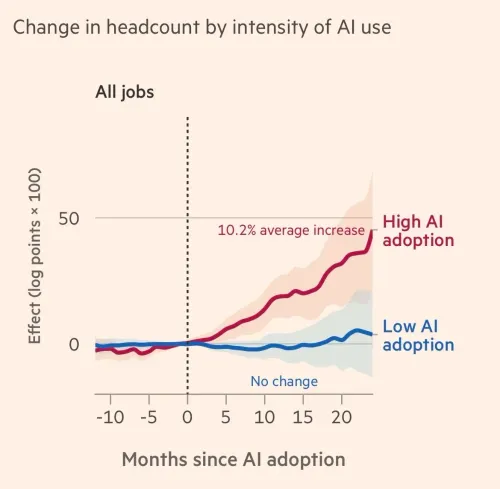
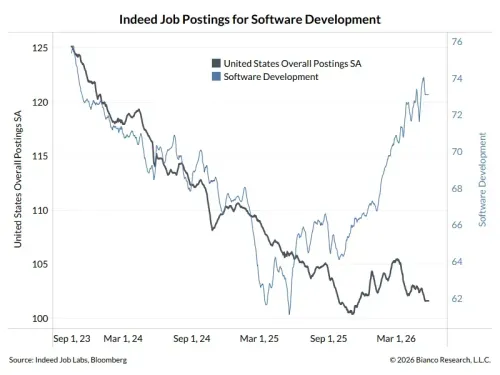
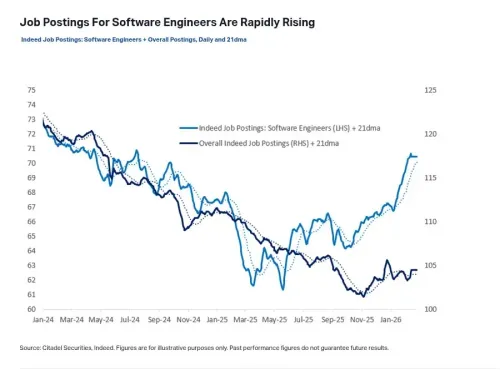
The post also linked to charts visualising the study's findings, though Sacks offered no written commentary.
Sacks holds a dual mandate overseeing AI and crypto policy for the Trump administration, making his amplification of labour-market research significant.
AI-driven job displacement is a central policy debate in Washington DC , with implications for sectors ranging from coding to legal research.
For India , which hosts a large share of global IT and BPO employment, such studies carry direct economic relevance.
The White House has not yet announced specific policy responses, but engagement with this data may precede future executive or legislative action.
White House AI and Crypto Czar David Sacks shared a study and accompanying charts on Tuesday, 30 June 2026, pointing to new data examining how artificial intelligence is reshaping employment, signalling continued White House interest in tracking AI's economic footprint.
Context
Sacks reposted a reference to a study published by fintech firm Ramp, which analysed AI's measurable impact on jobs across sectors. The post also linked to a set of charts illustrating the study's findings. While Sacks offered no accompanying commentary, the act of amplifying the research from his official platform carries weight given his dual mandate overseeing AI and crypto policy for the Trump administration.
Ramp, a corporate spend-management and financial automation platform, has positioned itself at the intersection of AI and enterprise finance. Its data on AI-driven job displacement or transformation carries particular credibility because the company processes real-world business spending and hiring signals at scale.
Policy Backdrop
Sacks was appointed White House AI and Crypto Czar in early 2025, tasked with coordinating federal policy on artificial intelligence and digital assets — two areas the Trump administration has identified as central to American economic competitiveness. His role places him at the centre of debates over how Washington should respond to AI-driven labour market shifts.
The question of AI and jobs has become one of the defining policy fault lines in Washington DC. Economists and technologists remain divided: some studies point to net job creation as AI augments productivity, while others document displacement in white-collar roles such as coding, data entry, legal research, and customer support. By surfacing this particular study, Sacks is implicitly signalling which data points he considers credible inputs for policymaking.
Stakeholders and Impact
For India, where a significant portion of the global IT services and business process outsourcing workforce is concentrated, the findings of any credible AI-jobs study carry direct economic relevance. Indian technology firms and their millions of employees are acutely sensitive to shifts in demand for human labour in tasks that AI can now perform.
Domestically within the United States, the study's implications touch labour unions, technology companies, and Congress members who are debating AI regulation. Sacks's amplification suggests the White House is actively monitoring the evidence base rather than dismissing concerns about displacement.
What's Next
Sacks has not yet publicly outlined specific policy responses to AI-driven job disruption, but his engagement with emerging research suggests the White House may be building an evidence base ahead of potential executive action or legislative proposals. Observers will watch whether this data point surfaces in future policy speeches, executive orders, or Congressional testimony from the administration.
As AI capabilities accelerate through 2026, the pressure on governments worldwide — including in New Delhi — to articulate coherent workforce transition strategies will only intensify. Sacks's quiet signal that he is tracking the data may be an early indicator of where US AI policy heads next.
Point of View
And this data point has cleared an implicit credibility threshold. For a czar who has so far leaned toward AI optimism, engaging with jobs-impact research suggests the administration is preparing to address displacement concerns — whether through retraining programmes, regulatory frameworks, or simply a public narrative. For India, whose IT sector sits squarely in the crosshairs of AI automation, this is a development worth watching closely as US policy takes shape.
NationPress
29 Sept 2026
Frequently Asked Questions
Who is David Sacks and what is his role in the Trump administration?
David Sacks is the White House AI and Crypto Czar appointed by President Trump in early 2025. He is responsible for coordinating federal policy on artificial intelligence and digital assets, and is also known as a Silicon Valley venture capitalist and co-host of the All-In Podcast.
What did David Sacks post about AI and jobs?
On 30 June 2026, Sacks shared a link to a study by fintech firm Ramp examining AI's impact on jobs, along with charts illustrating the findings. He did not add personal commentary to the post.
What is the Ramp AI jobs study?
Ramp is a corporate spend-management and financial automation company that published data analysing how artificial intelligence is affecting employment across sectors. The study draws on real-world business spending and hiring signals processed through Ramp's platform.
How does AI's impact on jobs affect India?
India hosts a large share of the world's IT services and business process outsourcing workforce. Studies on AI-driven job displacement are directly relevant to Indian technology firms and millions of workers whose roles in coding, data processing, and customer support may be affected by automation.
Will the US government take policy action on AI and job losses?
No specific policy response has been announced yet. However, Sacks's active engagement with AI-jobs research suggests the White House is monitoring the evidence base, which may inform future executive orders, retraining programmes, or legislative proposals.