Sacks: AI Will Create, Not Destroy, White-Collar Jobs
Synopsis
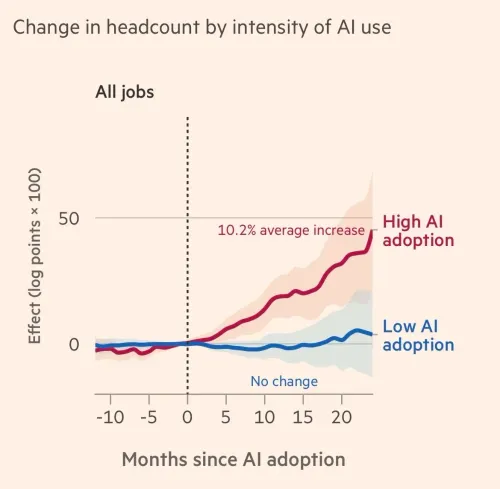
White House AI and Crypto Czar David Sacks says his January 2026 'contrarian' prediction — that AI will create more white-collar jobs than it destroys — is gaining mainstream support, with Goldman Sachs, OpenAI CEO Sam Altman, and Anthropic CEO Dario Amodei appearing to align with the view.
Key Takeaways
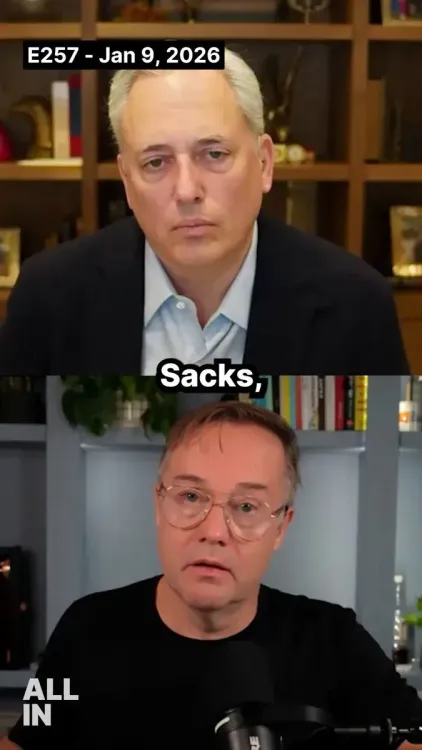
White House AI and Crypto Czar David Sacks made 'AI creates white-collar jobs' his Most Contrarian Take for 2026 on the All-In Podcast's January Predictions show.
Goldman Sachs , OpenAI CEO Sam Altman , and Anthropic CEO Dario Amodei appeared this week to agree with Sacks's position.
Goldman Sachs had previously estimated in 2023 that generative AI could automate tasks equivalent to 300 million full-time jobs globally — a stark contrast to the current tone.
The shift mirrors historical technology adoption cycles where initial automation fears gave way to net job growth narratives.
Sacks's framing aligns with the Trump administration's broader agenda of AI deregulation and US leadership in artificial intelligence.
Future White House executive orders and major bank forecasts will signal whether this consensus hardens into formal policy.
White House AI and Crypto Czar David Sacks declared on Thursday, May 28, 2026, that the broader consensus on artificial intelligence and employment is shifting — away from displacement fears and toward net job creation — citing recent agreement from the CEOs of OpenAI and Anthropic as well as commentary from Goldman Sachs.
Context
In a post on X, Sacks recalled that his 'Most Contrarian Take for 2026,' aired on the All-In Podcast's January Predictions show, was that AI would create more white-collar jobs rather than destroying them. He noted that this week, Goldman Sachs CEO commentary, OpenAI CEO Sam Altman, and Anthropic CEO Dario Amodei appeared to agree with that position. 'The consensus is shifting,' Sacks wrote.
The statement carries weight beyond a podcast prediction: Sacks serves as the Trump administration's top official on both artificial intelligence and cryptocurrency policy, making his public framing of AI's labor-market effects a signal of the White House's preferred narrative heading into a period of intensifying AI regulation debate.
Policy Backdrop
The anxiety Sacks is pushing back against has deep institutional roots. In 2023, Goldman Sachs released a widely cited report estimating that generative AI could automate tasks equivalent to 300 million full-time jobs globally — a figure that dominated headlines and shaped early legislative conversations on both sides of the Atlantic.
Similarly, McKinsey Global Institute reports from 2017 and 2023 projected substantial automation of white-collar tasks while also identifying new job categories that AI adoption would generate. The current shift in tone among leading voices — from net destruction to net creation — mirrors historical technology cycles, where fears of mechanisation and computerisation eventually gave way to documented net employment gains.
The Trump administration has actively pursued deregulation and large-scale investment to position the United States as the global leader in AI development. Sacks's framing aligns directly with that agenda, lending a policy dimension to what might otherwise read as an investor's market call.
Stakeholders and Impact
White-collar workers — in sectors from finance and law to healthcare and software — are the primary audience for this evolving debate. If the 'creation over destruction' thesis gains institutional credibility, it could reduce political pressure for protective legislation and accelerate enterprise AI adoption.
Sam Altman of OpenAI and Dario Amodei of Anthropic are the two most prominent figures in frontier AI development. Their apparent convergence with Sacks's position is notable because both have, at various points, acknowledged significant risks from rapid AI deployment, including on employment. A shift in their public messaging could influence how investors, regulators, and large employers approach workforce planning.
For India, which has a large and fast-growing white-collar technology and services workforce, the global narrative on AI and jobs carries direct relevance. Indian IT firms and policymakers watch signals from Washington and leading AI labs closely when calibrating skilling programmes and export-service strategies.
What's Next
Analysts will look to upcoming quarterly economic forecasts from major banks and any forthcoming White House executive orders on AI workforce transitions for concrete policy follow-through. If the 'AI creates jobs' thesis moves from podcast prediction to official policy language, it could shape the terms of any future US AI governance framework — and the international standards negotiations that follow.
The degree to which Goldman Sachs, OpenAI, and Anthropic formalise their positions in published research or congressional testimony will determine whether this week's apparent consensus holds or fragments under scrutiny.
Point of View
Sam Altman, and Dario Amodei are moving toward his position, he is establishing the White House as having been ahead of the curve — useful framing ahead of any legislative push on AI governance. The timing is deliberate; a 'jobs creation' consensus weakens the case for protective regulation and strengthens the deregulatory posture the Trump administration has championed. If the thesis unravels under economic data, however, Sacks's early ownership of it becomes a liability rather than an asset.
NationPress
11 Oct 2026
Frequently Asked Questions
What did David Sacks predict about AI and jobs?
David Sacks predicted in January 2026 on the All-In Podcast that AI would create more white-collar jobs than it destroys — a position he described as his Most Contrarian Take for the year.
Who is David Sacks and what is his role?
David Sacks is the White House AI and Crypto Czar in the Trump administration, co-founder of Craft Ventures, and co-host of the All-In Podcast. He is the US government's top official on artificial intelligence and cryptocurrency policy.
Did Goldman Sachs say AI will create jobs?
Goldman Sachs CEO commentary in late May 2026 appeared to align with the view that AI will create rather than destroy white-collar jobs, a notable shift from the bank's 2023 report warning of 300 million job automations globally.
What did Sam Altman and Dario Amodei say about AI and employment?
According to Sacks's post, both Sam Altman of OpenAI and Dario Amodei of Anthropic appeared this week to agree that AI is more likely to create white-collar jobs than destroy them, contributing to what Sacks called a shifting consensus.
How does this affect India's IT and white-collar workforce?
India's large technology and services sector watches US AI policy signals closely. A dominant 'AI creates jobs' narrative could accelerate enterprise AI adoption and influence Indian skilling and workforce policy, though the debate remains unsettled pending harder economic data.