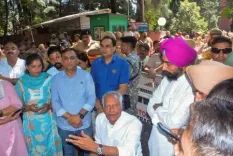
CM Hemant Soren Directs Officials for Time-Bound Scheme Delivery

Synopsis
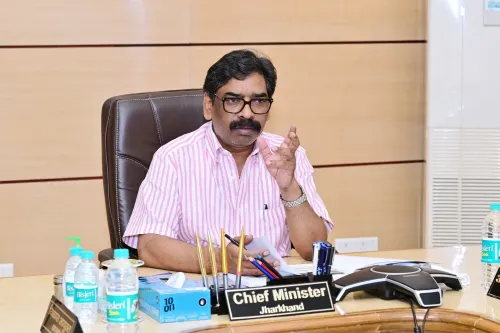
Jharkhand Chief Minister Hemant Soren on 9 July 2026 directed state officials to implement every government scheme within a fixed deadline, stressing that genuine development requires a long-term vision backed by time-bound, ground-level execution.
Key Takeaways
CM Hemant Soren issued a directive on 9 July 2026 through the Chief Minister's Office of Jharkhand ordering officials to ensure every scheme reaches the ground within a defined timeline.
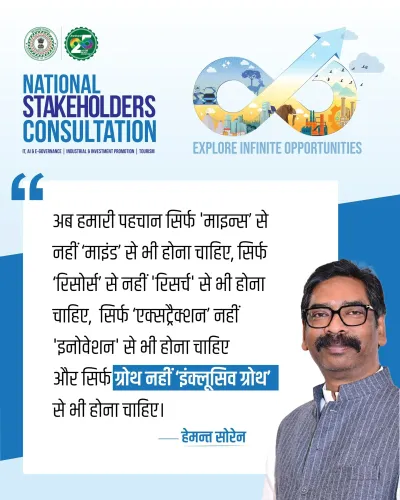
Soren stressed that the vision for holistic development of any state or country must be long-term, not short-term.
The directive places direct accountability on individual bureaucrats to attach fixed deadlines to scheme implementation.
Jharkhand's large tribal and rural population stands to benefit most from faster, time-bound delivery of welfare schemes.
The approach mirrors outcome-linked governance pushes seen in other eastern and central Indian states such as Odisha and Chhattisgarh .
Quarterly progress reviews of flagship schemes are expected to serve as the primary accountability mechanism going forward.
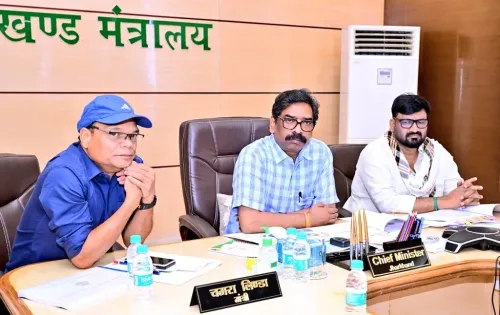
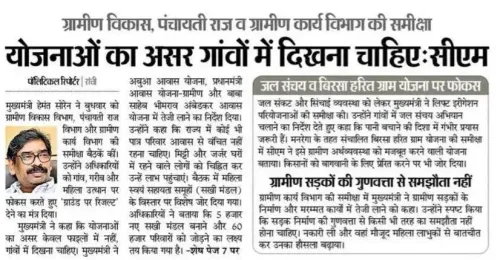
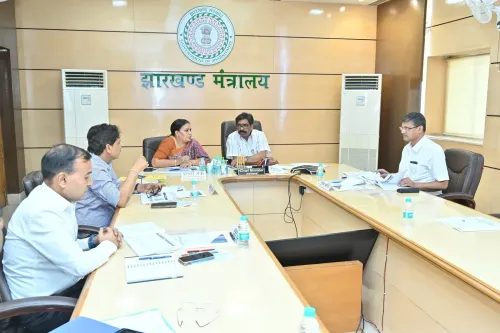
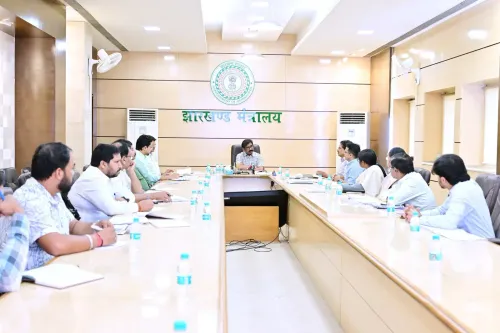
The Chief Minister's Office of Jharkhand, posting on behalf of Chief Minister Hemant Soren, on Thursday, 9 July 2026, issued a firm directive to state officials to ensure every government scheme is implemented on the ground within a defined timeline, underlining the government's commitment to long-term, outcome-driven development.
Speaking in Hindi, CM Soren said: 'किसी भी राज्य या देश के समग्र विकास की सोच छोटे समय के लिए नहीं, बल्कि एक लंबे समय के लिए होती है' — 'The vision for the holistic development of any state or country is not for a short period, but for the long term, and we are moving forward with this very thinking.' He added a direct instruction to the bureaucracy: officials must bring every scheme to the ground while ensuring a fixed deadline.
Context
The statement came through an official post by the Chief Minister's Office of Jharkhand, signalling that the directive carries institutional weight beyond a routine political remark. The dual emphasis — long-term vision paired with short-term, measurable execution — reflects a deliberate governance posture aimed at closing the gap between policy design and ground-level delivery. Jharkhand, a state with a large tribal and rural population, has historically faced challenges in last-mile scheme implementation.Policy Backdrop
During CM Soren's earlier term from 2019 to 2024, the Jharkhand Mukti Morcha (JMM)-led government placed time-bound welfare delivery at the centre of its agenda, pursuing initiatives around land rights, universal basic income pilots, and tribal welfare. The current directive signals a continuation and reinforcement of that approach. Across India, state governments — including those in Odisha and Chhattisgarh — have increasingly moved toward outcome-linked governance frameworks that require officials to attach measurable deadlines to scheme rollout, reducing bureaucratic drift.Stakeholders and Impact
The directive directly targets the state's administrative machinery, placing accountability on individual officers to move schemes from paper to practice. For Jharkhand's scheme beneficiaries — particularly those in rural and tribal belts who depend on government welfare programmes — time-bound delivery can mean faster access to entitlements ranging from housing and food security to employment guarantees. Civil society groups monitoring welfare implementation in the state have long flagged delays between scheme announcement and actual disbursement as a structural problem.What's Next
The directive is expected to be followed by structured monitoring, with quarterly progress reviews of flagship schemes serving as the most likely accountability mechanism. Any mid-term policy updates presented in the Jharkhand state assembly will offer a clearer picture of how rigorously the timeline mandate is being enforced. The government's willingness to publicly commit to deadlines through the Chief Minister's Office sets a benchmark against which future scheme delivery will be measured.Point of View
The administration frames accountability as institutional rather than political. The long-term-vision framing is notable: it positions the JMM government's development agenda as a multi-year project resistant to electoral short-termism, a narrative useful both for policy continuity and voter trust-building. The emphasis on 'dharatal' — ground-level implementation — directly addresses a persistent credibility gap between scheme announcement and actual delivery that has dogged welfare states across India. Whether this translates into enforceable timelines or remains aspirational rhetoric will depend on the monitoring architecture the government puts in place.
NationPress
8 Oct 2026
Frequently Asked Questions
What did Jharkhand CM Hemant Soren say about scheme implementation?
CM Hemant Soren directed state officials to implement every government scheme on the ground within a fixed, defined deadline, stressing that development must be guided by long-term vision rather than short-term thinking.
Why is time-bound scheme delivery important in Jharkhand?
Jharkhand has a large tribal and rural population that depends heavily on government welfare programmes. Delays between scheme announcement and actual delivery have historically been a structural challenge, making fixed timelines critical for beneficiaries.
What is the JMM's governance approach in Jharkhand?
The Jharkhand Mukti Morcha, led by Hemant Soren, has emphasised outcome-linked, time-bound governance since its 2019 term, focusing on welfare delivery, land rights, and tribal welfare with measurable accountability for officials.
How does Jharkhand's approach compare to other Indian states?
Jharkhand's push for deadline-driven scheme implementation aligns with similar frameworks adopted in states like Odisha and Chhattisgarh, reflecting a broader national trend toward outcome-linked governance.
What happens next after CM Soren's directive to officials?
Quarterly progress reviews of flagship schemes are the most likely follow-up mechanism. Any mid-term policy updates in the Jharkhand state assembly will indicate how strictly the timeline mandate is being enforced.