Goyal Highlights Tripura's Transformation from 2011 to 2025
Synopsis
Union Commerce Minister Piyush Goyal on 9 July 2026 shared a video contrasting Tripura's development between 2011-12 and 2024-25, framing the period as evidence of a governance transformation following the BJP's 2018 takeover from the Left Front.
Key Takeaways
Union Commerce and Industry Minister Piyush Goyal posted a video on 9 July 2026 citing a 'major change' in Tripura between 2011-12 and 2024-25 .
Tripura was ruled by the CPI(M)-led Left Front for 25 consecutive years before the BJP won the 2018 assembly elections .
The post aligns with the central government's Act East Policy , which has prioritised connectivity and economic development in northeastern states since 2014 .
The 2011-12 baseline anchors the comparison in the Left Front era, while 2024-25 reflects the current BJP government's tenure.
Future Union Budget allocations and state-level data releases on infrastructure and investment will be key indicators to watch for Tripura .
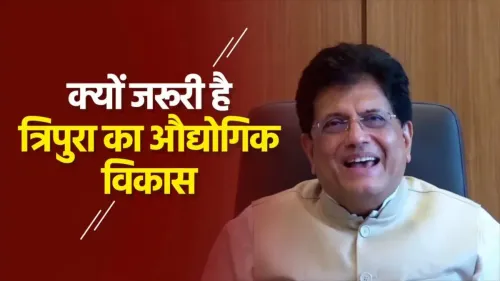
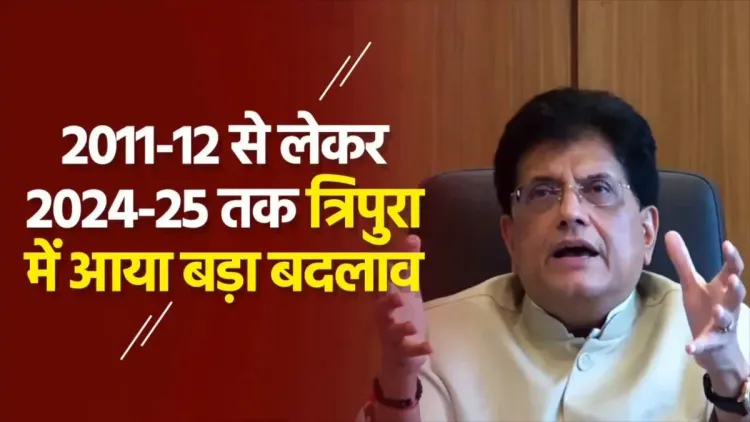
Union Commerce and Industry Minister Piyush Goyal on Thursday, 9 July 2026 shared a video on X drawing attention to what he described as a sweeping transformation in Tripura between 2011-12 and 2024-25, framing the contrast as a measure of governance change in the northeastern state.
The post, in Hindi, reads: '2011-12 se lekar 2024-25 tak Tripura mein aaya bada badlav' — ('A major change has come to Tripura from 2011-12 to 2024-25') — accompanied by a video link. The choice of the 2011-12 baseline places the comparison squarely in the era of the Left Front government, while the 2024-25 endpoint reflects conditions under the current BJP-led dispensation.
Context
Tripura was governed by the Communist Party of India (Marxist)-led Left Front for an uninterrupted 25 years under Chief Minister Manik Sarkar before the BJP swept to power in the 2018 assembly elections. That electoral shift ended one of the longest-running Left governments in Indian history and marked a significant political realignment in the Northeast. The period from 2011-12 to 2024-25 thus spans both the final years of Left rule and the subsequent BJP tenure, making it a politically loaded timeframe for any comparative narrative.
Policy Backdrop
The post fits within the central government's Act East Policy, formally unveiled in 2014, which prioritised economic integration, road and rail connectivity, and reduced insurgency across northeastern states. Since 2014, the National Democratic Alliance government has repeatedly cited improvements in infrastructure, security, and investment climate in the region as evidence of policy dividends. Tripura, sharing borders with Bangladesh on three sides, has been positioned as a potential trade and logistics hub under this framework.
Goyal's post is consistent with a broader communication strategy employed by central ministers, which uses data-driven or visual narratives to contrast pre-2014 and post-2014 performance benchmarks in states where the BJP has formed governments after displacing long-entrenched opposition administrations.
Stakeholders and Impact
The primary audience for such messaging includes Tripura's residents, local businesses, and investors who have a direct stake in the state's economic trajectory. For ordinary citizens, the framing touches on everyday concerns — employment, connectivity, infrastructure, and public services — all of which have been cited in various government reports as areas of improvement in the state's recent years. Local businesses and entrepreneurs stand to benefit from any enhanced spotlight on the state's investment environment that ministerial communication of this kind can generate.
At a national level, the post reinforces the BJP's governance narrative ahead of future electoral cycles and signals continued central attention to Tripura's development. Opposition parties, particularly the Left, are likely to contest the implied claims, pointing to their own record on social indicators during their decades in power.
What's Next
Watchers of northeastern policy will look to upcoming Union Budget allocations for Tripura and fresh data releases from the state government on investment inflows, infrastructure project completion rates, and connectivity milestones as a way to independently assess the transformation Goyal's video highlights. Any new industrial corridor announcements or bilateral trade facilitation measures with Bangladesh — given Tripura's geographic position — would add concrete weight to the governance-change narrative the minister is advancing.
Point of View
Using a state like Tripura — where the party ended a 25-year Left monopoly — as a showcase for its governance credentials. The choice of 2011-12 as the baseline is deliberate: it invokes the final years of Manik Sarkar's administration and implicitly attributes any subsequent gains to the change in government. This kind of ministerial social-media messaging serves a dual purpose — reinforcing the party's development narrative with its existing base while keeping Tripura visible in the national policy conversation. As the Northeast continues to be a strategic priority under the Act East Policy, such posts also signal to investors and regional stakeholders that central attention remains focused on the region.
NationPress
9 Jul 2026
Frequently Asked Questions
What change in Tripura is Piyush Goyal referring to?
Goyal shared a video highlighting what he describes as a major transformation in Tripura between 2011-12 and 2024-25, a period that spans the final years of Left Front rule and the subsequent BJP government's tenure, though the specific statistics are contained in the linked video.
When did BJP come to power in Tripura?
The BJP formed its first government in Tripura after the February 2018 assembly elections, ending 25 years of uninterrupted Left Front rule led by Chief Minister Manik Sarkar.
What is the Act East Policy and how does it affect Tripura?
The Act East Policy, launched in 2014, aims to deepen India's economic and connectivity ties with Southeast Asia with a special focus on northeastern states. Tripura, which shares borders with Bangladesh on three sides, has been positioned as a key trade and logistics hub under this framework.
Why does Goyal use 2011-12 as the starting point for comparison?
2011-12 falls within the Left Front's long tenure in Tripura, making it a politically significant baseline that allows the BJP to contrast conditions under the previous government with those under its own administration since 2018.
What should I watch for next regarding Tripura's development?
Key indicators to track include Union Budget allocations for Tripura, state government data on infrastructure project completion, investment inflows, and any new connectivity or trade facilitation announcements linked to the Bangladesh border.