Goyal Hails PM Modi as India's Longest-Serving Elected PM
Synopsis
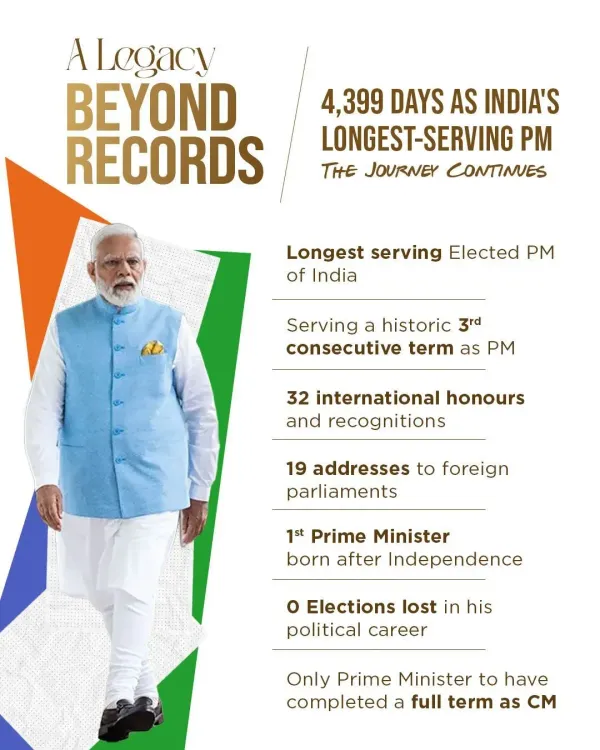
Commerce Minister Piyush Goyal on 10 June 2026 marked PM Narendra Modi surpassing all predecessors to become India's longest-serving elected Prime Minister, with 4,399 days of continuous tenure, citing grassroots reforms and the Viksit Bharat 2047 vision.
Key Takeaways
PM Narendra Modi has become India's longest-serving elected Prime Minister as of 10 June 2026 , surpassing all previous holders of the office.
Commerce Minister Piyush Goyal cited 4,399 days of continuous elected tenure in his tribute post on X.
Modi's tenure, which began on 26 May 2014 , has spanned major economic reforms including GST, DBT , and PLI schemes .
Goyal highlighted benefits reaching farmers, MSMEs, women, youth , and the middle class as hallmarks of inclusive governance.
The Viksit Bharat 2047 vision — India's roadmap to developed-nation status — was cited as the central long-term framework of Modi's leadership.
India's rising global stature, including its G20 Presidency in 2023 , was noted as evidence of Modi's international impact.
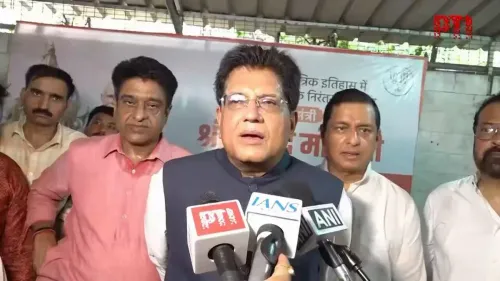
Union Commerce and Industry Minister Piyush Goyal on Wednesday, 10 June 2026 hailed Prime Minister Narendra Modi as India's longest-serving elected Prime Minister, marking what he described as a historic milestone in Indian democratic history. Goyal, who is also the Leader of the House in the Rajya Sabha and a senior BJP leader, credited Modi's twelve-year tenure with delivering transformative reforms that have reached the grassroots across the country.
Context
Narendra Modi was first sworn in as Prime Minister on 26 May 2014, leading a BJP-majority government after a decisive general election mandate. His continuous elected tenure — spanning two full terms and a third term that began in June 2024 — has now crossed the record previously held by Jawaharlal Nehru, India's first Prime Minister, making Modi the longest-serving elected Prime Minister in the country's history. Goyal's post, tagged with the hashtag #LongestServingElectedPMModi, called the day one 'to honour his dynamic leadership.'
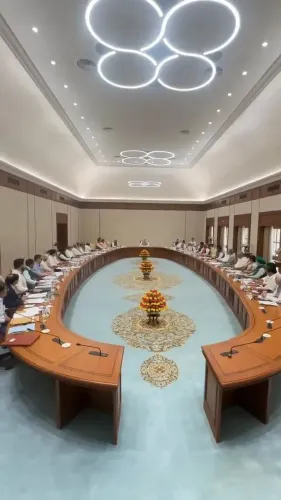
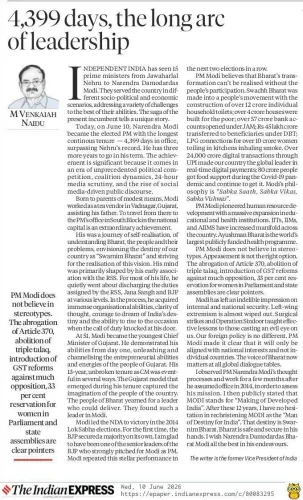
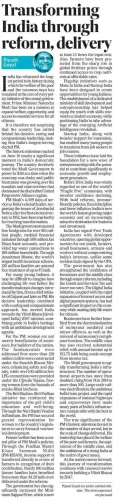
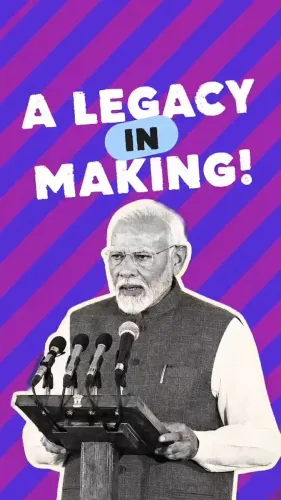
Goyal cited the figure of 4,399 days of continuous elected service, framing the milestone as a reflection of sustained public mandate and policy continuity. The post was accompanied by three images, underlining the celebratory tenor of the tribute.
Policy Backdrop
Over the course of Modi's tenure, the government has introduced a wide range of economic and social initiatives — from the rollout of the Goods and Services Tax (GST) and Direct Benefit Transfers (DBT) to Production-Linked Incentive (PLI) schemes aimed at boosting domestic manufacturing. Goyal specifically highlighted benefits flowing to farmers, MSMEs, women, youth, and the middle class as evidence of inclusive governance reaching the grassroots level.
The Viksit Bharat 2047 vision — India's roadmap to become a developed nation by the centenary of independence — has served as the overarching framework tying together these initiatives. First formally articulated around India's 75th Independence Anniversary in 2022, the 2047 goal has since become the central long-term development narrative of the Modi government. Goyal's tribute explicitly linked Modi's 'vision, foresight and stewardship' to this national journey.
India's G20 Presidency in 2023 and ongoing bilateral trade negotiations have also been cited as markers of the country's elevated global standing under Modi's leadership — a point Goyal echoed by noting that the Prime Minister has 'earned several prestigious global accolades.'
Stakeholders and Impact
The groups specifically named in Goyal's tribute — farmers, entrepreneurs, women, MSMEs, and the youth — represent the core constituencies that the government's flagship programmes have targeted. Schemes such as PM-KISAN for farmers, Mudra loans for micro-entrepreneurs, and Skill India for youth have collectively aimed to widen the formal economic base.
For the MSME sector in particular — a domain that falls within Goyal's own ministerial portfolio — the PLI schemes and formalisation drives have been positioned as structural enablers of growth. The minister's framing of 'crores empowered across the country' reflects the government's emphasis on scale and last-mile delivery as defining metrics of success.
What's Next
The milestone is likely to intensify political attention on the government's delivery record as India moves deeper into the current term. Progress reports on MSME outreach, farmer income targets, and scheme implementation will be closely watched in upcoming parliamentary sessions and the next Union Budget. The Viksit Bharat 2047 roadmap will continue to serve as the benchmark against which the government's long-term governance record is measured, with each passing year adding to both the achievements cited and the expectations set.
Point of View
DBT, PLI, Viksit Bharat — rather than purely partisan rhetoric, the message is designed to appeal beyond the party base to aspirational voters who evaluate governments on delivery. The invocation of 'crores empowered' and grassroots reach directly counters opposition narratives about elite-skewed growth. Positioning Modi's record tenure as a democratic mandate rather than mere longevity is a strategic framing that ties electoral legitimacy to policy continuity.
NationPress
26 Oct 2026
Frequently Asked Questions
Who is India's longest-serving elected Prime Minister?
As of 10 June 2026 , Narendra Modi is India's longest-serving elected Prime Minister, having served continuously since 26 May 2014 — surpassing the record previously held by India's first Prime Minister, Jawaharlal Nehru.
How many days has PM Modi served as Prime Minister?
Commerce Minister Piyush Goyal cited 4,399 days of continuous elected service in his tribute post on 10 June 2026 , marking the milestone publicly.
What is Viksit Bharat 2047?
Viksit Bharat 2047 is the Indian government's official vision to transform India into a fully developed nation by 2047 , the centenary of independence. It was formally articulated around India's 75th Independence Anniversary in 2022 as a 25-year development roadmap.
What reforms has the Modi government introduced in 12 years?
Key reforms under the Modi government include the Goods and Services Tax (GST) , Direct Benefit Transfers (DBT) , Production-Linked Incentive (PLI) schemes , PM-KISAN for farmers, Mudra loans for micro-entrepreneurs, and Skill India for youth, among others.
What did Piyush Goyal say about PM Modi's record tenure?
Piyush Goyal called 10 June 2026 'a historic day' and said Modi's leadership has 'ushered in transformative reforms' that have 'reached the grassroots level, empowering crores across the country,' while also elevating India's stature on the global stage.