CM Hemant Soren Seeks Tribal Industrial Quota Doubled to 50%
Synopsis
Chief Minister Hemant Soren has directed Jharkhand's industrial department to review the existing 25 per cent tribal reservation in industrial policy and examine how it can be doubled to 50 per cent, signalling a major push for greater economic inclusion of Scheduled Tribe communities.
Key Takeaways
CM Hemant Soren has directed the concerned department to review tribal reservation in Jharkhand's industrial policies .
The existing provision reserves 25 per cent of industrial policy benefits for Scheduled Tribe groups in the state.
Soren has asked the department to explore raising this threshold to 50 per cent .
Jharkhand is governed under the Fifth Schedule of the Constitution, which mandates special protections for tribal communities.
The directive initiates a formal departmental review; any change would require an amendment to the Jharkhand Industrial Policy .
The move directly affects tribal communities and industrial investors operating in the mineral-rich state.
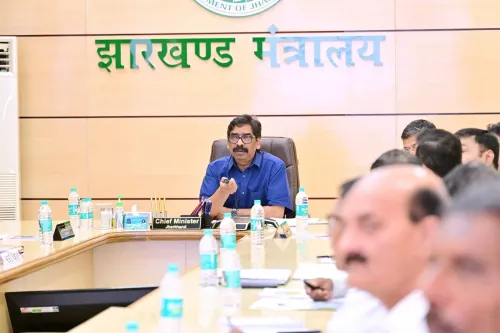
The Chief Minister's Office of Jharkhand on Thursday, July 9, 2026, shared a directive from Chief Minister Hemant Soren calling on the concerned department to review the existing 25 per cent reservation for tribal communities in the state's industrial policies and explore raising it to 50 per cent.
In the post, Soren is quoted as saying: 'Audyogik nitiyon mein adivasi samuh ke liye jo 25% aarakshan ka praavdhan hai, vibhag use punah dekhe aur vichar kare ki ise 25% se badhakar 50% kaise kiya jae' — ('The department should re-examine the existing provision of 25 per cent reservation for tribal groups in industrial policies and consider how it can be increased from 25 per cent to 50 per cent.')
Context
Jharkhand is home to one of the largest Scheduled Tribe populations in India, and the state's identity as a tribal homeland has been central to its politics since its formation in 2000. Industrial development in the state, driven largely by its mineral wealth, has historically generated tensions over land acquisition, employment and the share of economic benefits flowing to indigenous communities.
The existing 25 per cent reservation for tribal groups within the state's industrial policy framework is a provision designed to ensure a defined share of industrial employment or related benefits for Scheduled Tribe communities. Soren's directive asks the department to revisit that threshold and chart a path toward doubling it.
Policy Backdrop
Jharkhand falls under the Fifth Schedule of the Indian Constitution, which provides special protections for tribal areas and communities, including restrictions on land alienation and a mandate for the Tribes Advisory Council to deliberate on laws affecting tribal welfare. Successive state governments have periodically recalibrated reservation and affirmative-action provisions in employment and economic policy to align with these constitutional obligations.
The Jharkhand Industrial Policy serves as the primary state framework governing industrial incentives, land use and local employment norms. Adjustments to its reservation clauses require departmental review, stakeholder consultation and, ultimately, a formal amendment — a process Soren's statement has now set in motion.
Stakeholders and Impact
The most direct beneficiaries of any upward revision would be members of Jharkhand's tribal communities, who have long argued that industrialisation has displaced populations without delivering proportionate economic inclusion. A move to 50 per cent reservation in industrial policy could significantly expand employment and contracting opportunities for Scheduled Tribe groups.
Industrial investors and business associations operating in the state will watch the departmental review closely, as higher local-reservation mandates affect hiring flexibility and project planning. The outcome will also be scrutinised by constitutional experts given the interplay between affirmative-action provisions and existing Supreme Court guidelines on reservation ceilings in other domains.
What's Next
The immediate next step is a departmental review, as directed by CM Soren. The department is expected to assess the legal, administrative and economic feasibility of raising the threshold and submit its findings. Any formal proposal to amend the Jharkhand Industrial Policy would then need to go through the appropriate governmental approval process before taking effect.
The outcome of this review will be a key indicator of how the Soren government intends to balance tribal welfare commitments with the state's broader industrial investment agenda in the coming months.
Point of View
Soren keeps the proposal in motion without committing to a timeline, allowing him to gauge stakeholder and investor reaction. The move fits a broader pattern across JMM's tenure of using economic-policy instruments — rather than just welfare schemes — to operationalise tribal rights. Whether the review translates into a formal amendment will test the administration's ability to reconcile constitutional affirmative-action ambitions with the investment-friendliness it simultaneously courts.
NationPress
8 Oct 2026
Frequently Asked Questions
What is the current tribal reservation in Jharkhand's industrial policy?
The current provision reserves 25 per cent of benefits under Jharkhand's industrial policies for tribal (Scheduled Tribe) groups. CM Hemant Soren has now directed the department to explore raising this to 50 per cent .
Why is Hemant Soren pushing to increase tribal reservation in industries?
Jharkhand has a large Scheduled Tribe population that has historically faced displacement and limited economic benefit from industrialisation. Soren's directive aims to ensure a greater share of industrial opportunities flows to tribal communities in the mineral-rich state.
What is the Fifth Schedule and how does it relate to Jharkhand?
The Fifth Schedule of the Indian Constitution provides special protections for Scheduled Tribe communities in designated areas, including restrictions on land alienation. Jharkhand falls under this schedule, giving the state a constitutional mandate to safeguard tribal interests in policy-making.
Will the tribal reservation increase in Jharkhand's industrial policy be implemented immediately?
No. CM Soren's statement initiates a departmental review . The department must assess feasibility and submit recommendations before any formal amendment to the Jharkhand Industrial Policy can be approved and implemented.
How does this affect industrial investors in Jharkhand?
A higher tribal reservation mandate in industrial policy could affect hiring and contracting norms for businesses operating in Jharkhand . Industry stakeholders are expected to engage with the departmental review process as it unfolds.