CM Hemant Soren joins Vision2050 National Stakeholders Meet in Delhi
Synopsis
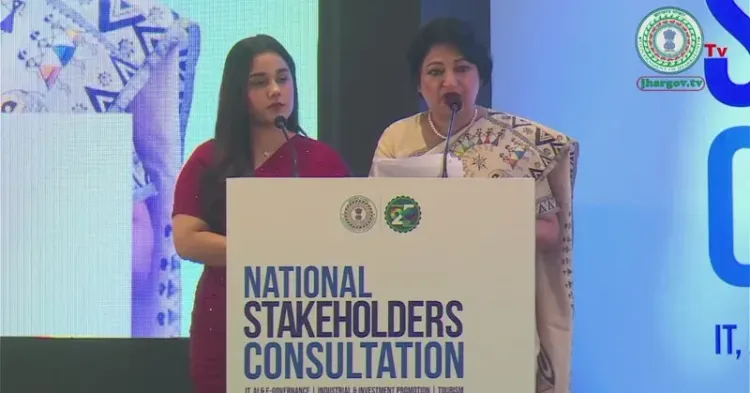
Jharkhand Chief Minister Hemant Soren attended the two-day National Stakeholders Consultation in New Delhi on 8 July 2026, participating in Vision2050 deliberations with industry representatives and overseeing the signing of multiple MoUs aimed at shaping the state's long-term industrial future.
Key Takeaways
Hemant Soren attended the two-day National Stakeholders Consultation in New Delhi on 8 July 2026 .
The event is held under the Vision2050 framework, involving deliberations with industry representatives from across the country.
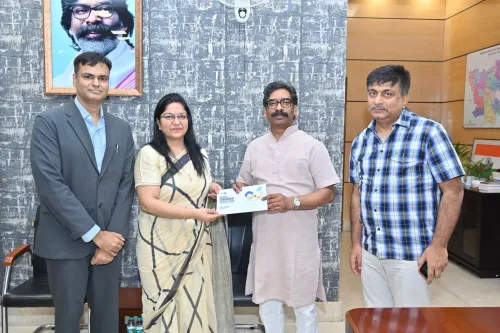
Multiple MoUs are scheduled to be signed during the consultation.
Jharkhand is a mineral-rich state with reserves of coal and iron ore, giving it a significant stake in national industrial planning.
The Soren administration has historically balanced industrial outreach with emphasis on local employment and environmental safeguards.
Follow-up on MoU execution timelines and investment inflows into Jharkhand will be key indicators of the consultation's outcomes.
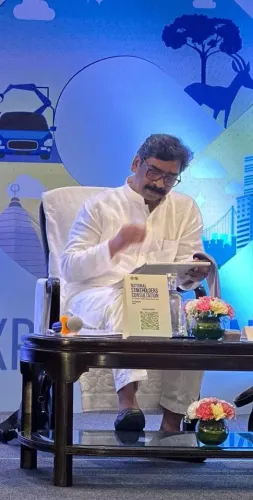
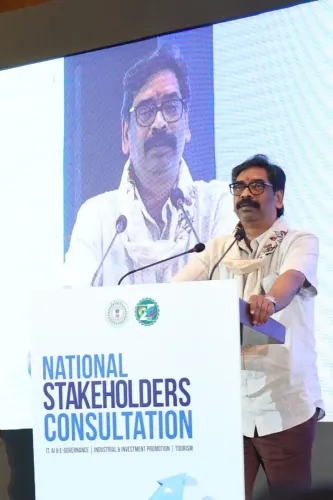
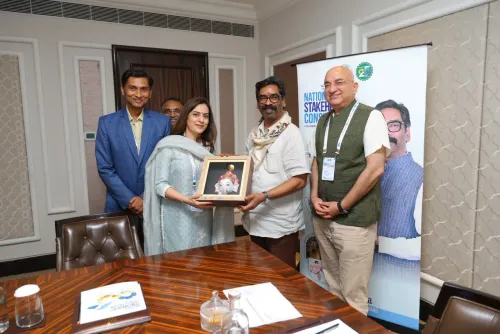
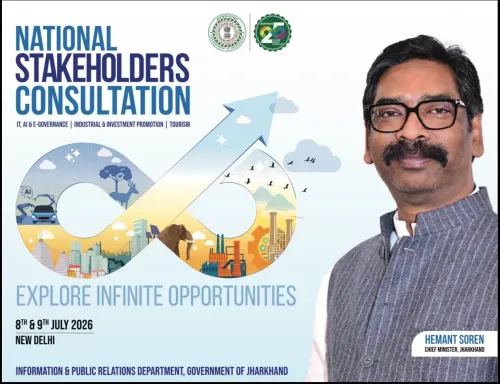
Jharkhand Chief Minister Hemant Soren attended the two-day National Stakeholders Consultation in New Delhi on Wednesday, 8 July 2026, participating in deliberations under the Vision2050 framework alongside industry representatives. The event is expected to see the signing of multiple Memoranda of Understanding (MoUs) aimed at shaping long-term industrial and economic priorities.
Context
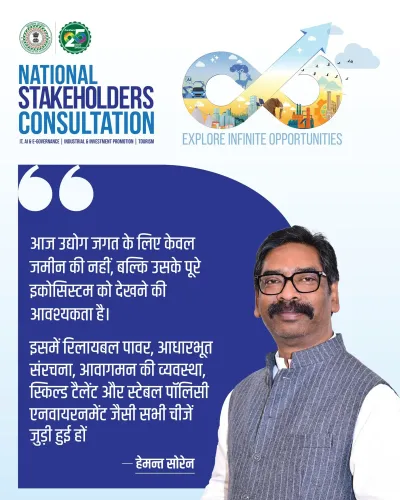
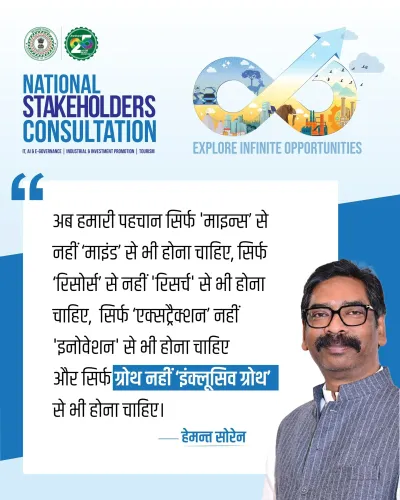
Posting on X, Chief Minister Soren wrote, 'आज नई दिल्ली में आयोजित दो दिवसीय National Stakeholders Consultation में शामिल हुआ हूं' — 'Today I have joined the two-day National Stakeholders Consultation organised in New Delhi.' He added that discussions with industry representatives would be held under Vision2050 and that several MoUs would be signed, calling it an 'historic occasion' and extending greetings with the Jharkhand salutation Johar.
The consultation brings together state governments and industry bodies to align regional industrial plans with a central long-term national vision document. Jharkhand, as one of India's most mineral-rich states, holds a significant stake in any such framework given its vast reserves of coal, iron ore, and other key resources.
Policy Backdrop
Jharkhand's industrial outreach has a documented lineage: the state's Industrial Policy 2016 laid the groundwork for improving ease of doing business and attracting investment in mining and manufacturing. The JMM-led administration under Soren has since sought to build on that foundation while simultaneously emphasising local employment generation and environmental safeguards.
State governments in mineral-rich regions have regularly participated in national-level stakeholder consultations to ensure their priorities are embedded in central policy blueprints. Jharkhand's participation in the Vision2050 process reflects that established pattern of engagement, with the state seeking to diversify its economy beyond primary mineral extraction toward downstream manufacturing and value-added industries.
Stakeholders and Impact
Industry representatives attending the consultation are expected to engage directly with state delegations on investment opportunities, infrastructure requirements, and regulatory frameworks. For Jharkhand, any MoUs signed at such a platform carry particular significance given the state's large tribal population and the need to ensure that industrial expansion translates into tangible local benefit.
Chief Minister Soren's presence at the national forum also signals the state government's intent to position Jharkhand as a proactive partner in India's long-horizon economic planning, rather than a passive recipient of central directives. The signing of MoUs, once executed, could unlock fresh investment commitments across sectors including minerals processing, energy, and manufacturing.
What's Next
The two-day consultation concludes with the signing of MoUs, though the specific sectors, counterparties, and investment values involved are yet to be formally announced. Follow-up disclosures on execution timelines and resulting investment inflows will be closely watched by industry observers and stakeholders in Jharkhand.
The broader test will be whether commitments made at the national consultation translate into on-ground investment activity and job creation in the state — a metric that the Soren administration has consistently highlighted as central to its industrial policy vision.
Point of View
Engagement with a Vision2050 framework represents an opportunity to advocate for value-added industrialisation and downstream processing. The MoU signings, if followed through, could become a political asset for Soren, demonstrating tangible investor confidence in a state that has often struggled to convert resource wealth into broad-based prosperity. The real measure of success, however, will be whether these commitments survive the transition from consultation room to construction site.
NationPress
7 Oct 2026
Frequently Asked Questions
What is the National Stakeholders Consultation that Hemant Soren attended?
The National Stakeholders Consultation is a two-day forum held in New Delhi where state governments and industry representatives deliberate on long-term economic priorities under the Vision2050 framework, with MoUs expected to be signed as part of the process.
What is Vision2050 and why is Jharkhand participating?
Vision2050 is a long-term national economic planning framework. Jharkhand is participating because of its significant mineral wealth in coal and iron ore, and the state government's interest in shaping industrial policy that benefits local communities.
What MoUs will be signed at the Vision2050 consultation?
Multiple MoUs are scheduled to be signed during the two-day consultation, though the specific sectors, investment values, and counterparties have not yet been formally announced.
What is Hemant Soren's industrial policy stance for Jharkhand?
Chief Minister Hemant Soren has sought to attract industrial investment to Jharkhand while simultaneously emphasising local employment generation, tribal welfare, and environmental safeguards, building on the state's Industrial Policy 2016.
When and where did Hemant Soren attend the stakeholders consultation?
Hemant Soren attended the National Stakeholders Consultation on 8 July 2026 in New Delhi , as part of a two-day event under the Vision2050 framework.