UNSC deadlocked on UN chief successor with 40-day deadline looming
Synopsis
With 40 days to find a new UN chief, the Security Council is stuck — frontrunner Rebecca Grynspan has the most votes but is blocked by two unnamed veto powers. The US wants a Latin American candidate but insists on 'the best.' The last time the UN faced this kind of impasse, it took a French reversal and a last-minute Kofi Annan election to avert a leadership vacuum.
Key Takeaways
The UN Security Council is deadlocked on electing a successor to António Guterres with 40 days left before the 1 January transition deadline.
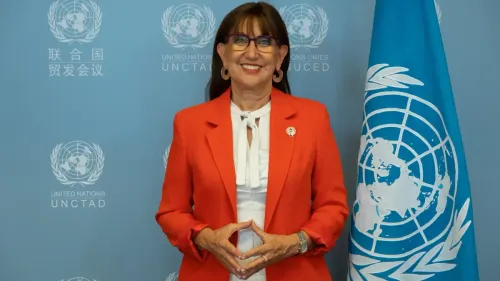
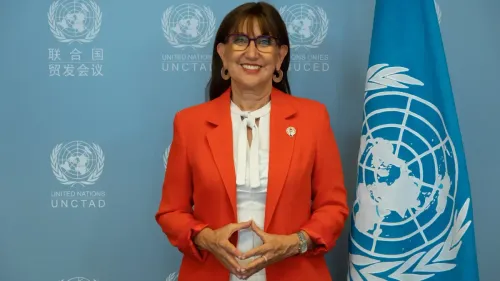
Rebecca Grynspan (UNCTAD head, Costa Rica) leads with 10 positive votes but faces opposition from at least 2 permanent members .
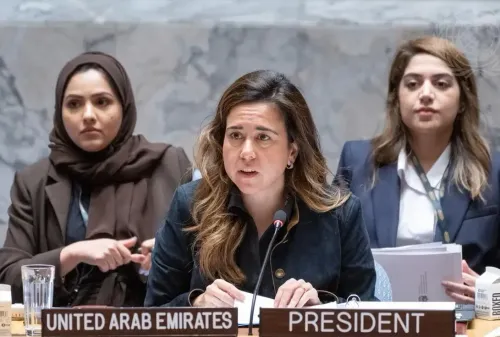
The IAEA chief (Argentina) holds second with 8 positives ; Lana Nuseibeh (UAE) is third with 7 positives ; both carry 3 permanent-member negatives .
US Representative Mike Waltz urged trailing candidates to step aside and said Washington backs a Latin American candidate.
Guterres has ruled out serving in an interim capacity beyond 1 January , raising the risk of an unprecedented leadership vacuum.
Historical precedent: in 1996 , the Council elected Kofi Annan with just 18 days to spare after the US vetoed Boutros Boutros-Ghali's second term.
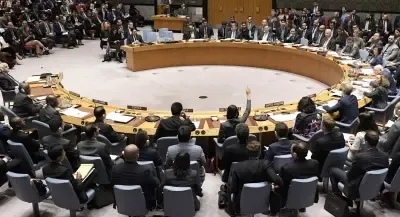
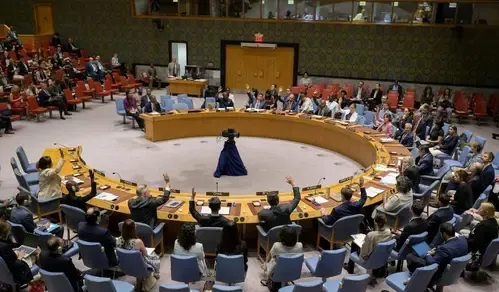
The United Nations Security Council is deadlocked over electing a successor to Secretary-General António Guterres with just 40 days remaining before the transition deadline of 1 January. The impasse deepened after the ninth informal straw poll on Friday, 21 November 2026, where frontrunner Rebecca Grynspan, head of the UN Conference on Trade and Development (UNCTAD), secured the most positive votes but was blocked by opposition from at least two veto-wielding permanent members.
Where the Candidates Stand
Grynspan, a Costa Rican national, was the only candidate of the eight in the race to clear the critical nine-vote threshold, receiving ten positive votes. Despite leading the field, she faces an insurmountable barrier: opposition from two permanent members, whose identities remain unknown since ballots are cast anonymously.
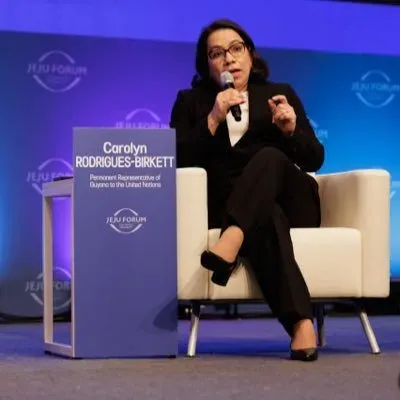
Second place went to International Atomic Energy Agency (IAEA) Director-General, who is from Argentina, with eight positive votes but three negatives from permanent members. Lana Nuseibeh, United Arab Emirates Minister of State, moved into third with seven positive votes, also carrying three negatives from permanent members. Carolyn Rodrigues-Bikett, a former foreign minister of Guyana, ranked fourth with just six positive votes overall, though she recorded only two negatives from permanent members — a comparatively low veto risk.
US Calls for a Narrower Field
US Permanent Representative Mike Waltz urged trailing candidates to withdraw before the poll, saying, 'If they haven't received it, we think it's probably time to step aside and let the council consider a narrower field for those who are receiving some level of support.' He also acknowledged the longstanding demand from Latin America and the Caribbean for representation at the top of the UN, noting, 'We would welcome and encourage and want a candidate from Latin America to emerge.' Washington, however, left the door open to candidates from other regions, with Waltz adding, 'We also want the best candidate to emerge.'
Waltz further stated that the US 'will continue to push forward and try to find consensus in the Council for the next leader of the United Nations.'
Latin America's Historic Claim
Countries from Latin America and the Caribbean have pressed hard for the next secretary-general to come from the region, pointing out that it has been 35 years since the region last held the office. Javier Pérez de Cuéllar of Peru ended his second term in 1991, and no Latin American has led the organisation since. Three of the four top-ranked candidates — Grynspan, the IAEA chief, and Rodrigues-Bikett — are from the region, lending weight to that claim.
The Veto Problem and the Clock
The core obstacle is structural: of the five permanent members — the US, the UK, France, Russia, and China — any single one can veto a candidate. Analysts note that the US, Russia, and China will ultimately be decisive, given the UN's current crisis of relevance and its severe financial constraints. Guterres has ruled out serving in an interim capacity beyond 1 January, meaning the Council must reach consensus or face an unprecedented leadership vacuum.
This is not without historical parallel. After the assassination of Dag Hammarskjöld in 1961, France initially vetoed the election of U Thant, leaving the UN briefly without a leader — before Paris reversed course and Thant was eventually elected. More recently, in 1996, the Council only narrowly met the deadline after the US vetoed a second term for Boutros Boutros-Ghali of Egypt, eventually electing Kofi Annan of Ghana on 13 December 1996, with the General Assembly endorsing him just four days later. That precedent offers both a warning and a template: resolution is possible, but only under immense last-minute pressure.
What Happens Next
Further straw polls are expected in the coming days as the Council attempts to consolidate support behind a single candidate. The General Assembly must formally endorse whomever the Security Council recommends. With the UN facing simultaneous crises — from active global conflicts to a deepening institutional funding shortfall — the selection of its next leader carries consequences well beyond procedural politics.
Point of View
And it now risks leaving the world's most consequential multilateral body without a leader at precisely the moment it faces compounding crises. Grynspan's strong showing means little if two unnamed P5 members can torpedo her without explanation. The US push for a narrower field is tactically sound but sidesteps the real question — whether Washington, Beijing, and Moscow can agree on anyone at all, given the state of their bilateral relations. The 1996 Annan precedent is reassuring only up to a point: that Council was not navigating a simultaneous war in Europe, a Middle East in flames, and a UN treasury in crisis.
NationPress
21 Nov 2026
Frequently Asked Questions
Why is the UN Security Council deadlocked over the next secretary-general?
The deadlock stems from the veto power held by the five permanent members (US, UK, France, Russia, China). Frontrunner Rebecca Grynspan has the most positive votes but is opposed by at least two permanent members, which is enough to block her election. The Council must find a candidate who can clear nine positive votes without drawing any permanent-member veto.
Who are the leading candidates to replace António Guterres?
As of the ninth straw poll on 21 November 2026, Rebecca Grynspan (UNCTAD head, Costa Rica) leads with 10 positive votes. The IAEA Director-General from Argentina is second with 8 positives, UAE's Lana Nuseibeh is third with 7 positives, and former Guyana foreign minister Carolyn Rodrigues-Bikett is fourth with 6 positives but only 2 permanent-member negatives.
What happens if the Security Council fails to agree before 1 January?
António Guterres has explicitly ruled out serving in an interim capacity beyond 1 January, meaning the UN could face an unprecedented leadership vacuum. Historical precedent from 1961, when France vetoed U Thant, shows the organisation has navigated near-vacuums before — but never under the current scale of global crises.
Why do Latin American countries feel they deserve the next UN secretary-general?
Latin America and the Caribbean have not held the UN's top post since Javier Pérez de Cuéllar of Peru ended his term in 1991 — a gap of 35 years. Regional blocs have argued this is their turn. Three of the four leading candidates, including frontrunner Grynspan, are from the region.
How has the Security Council navigated similar deadlocks in the past?
In 1996, the US vetoed a second term for Boutros Boutros-Ghali with only 18 days to spare, before the Council elected Kofi Annan on 13 December 1996 — just in time. In 1961, France initially vetoed U Thant before reversing course. Both cases suggest last-minute resolution is possible, but far from guaranteed.