UNCTAD chief Grynspan leads UN secretary-general race in first UNSC poll
Synopsis
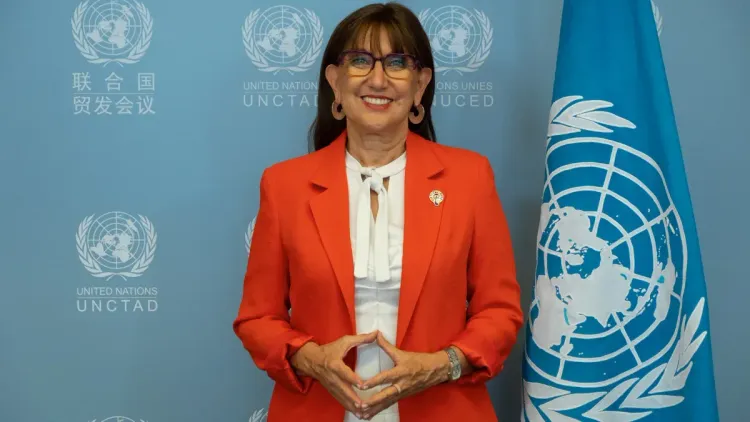
In the first informal Security Council straw poll for the next UN Secretary-General, UNCTAD chief Rebecca Grynspan topped the field with 10 positive votes, while Carolyn Rodrigues-Birkett of Guyana was a surprise runner-up. The result carries a historic subtext: the UN has never had a woman or a Latin American as its chief in 80 years — and this race could change both at once.
Key Takeaways
Rebecca Grynspan (UNCTAD chief, Costa Rica) led the first UNSC straw poll with 10 positive, 1 negative, 4 neutral votes on 31 July .
Carolyn Rodrigues-Birkett , former Guyana Foreign Minister, was a surprise runner-up with 9 positive votes.
Rafael Grossi (IAEA, Argentina) placed third; Michelle Bachelet (former Chile president) came fourth with 5 negative votes — the most in the field.
The UN has never had a female secretary-general in its 80-year history; no Latin American has held the post since 1991 .
Straw polls continue until a candidate clears the P5 veto threshold ; Thursday's round did not yet use colour-coded permanent-member ballots.
Maria Fernanda Espinosa (Ecuador) remains viable with only 2 discourage votes and 8 no-opinion votes.
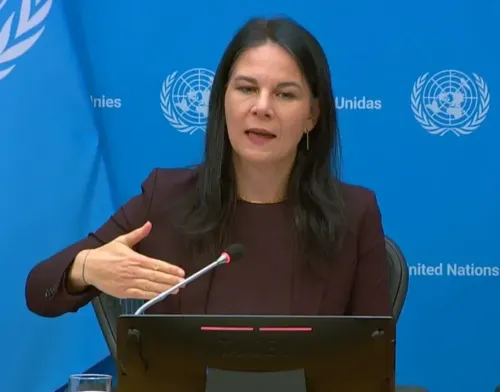
Rebecca Grynspan, secretary-general of the UN Conference on Trade and Development (UNCTAD) and former vice president of Costa Rica, has emerged as the front-runner in the race to become the next UN Secretary-General, leading the first informal straw poll conducted by the UN Security Council (UNSC) on Thursday, 31 July. According to diplomatic sources, she received ten positive, one negative, and four neutral votes among the 15-member Council.
Poll Results at a Glance
Former Guyana Foreign Minister Carolyn Rodrigues-Birkett was a surprise runner-up, drawing nine positive, two negative, and four neutral votes, according to a tabulation by 1 for 8 Billion (1f8B), a civil society coalition campaigning for a fair and open election process. The group represents scores of civil society organisations worldwide.
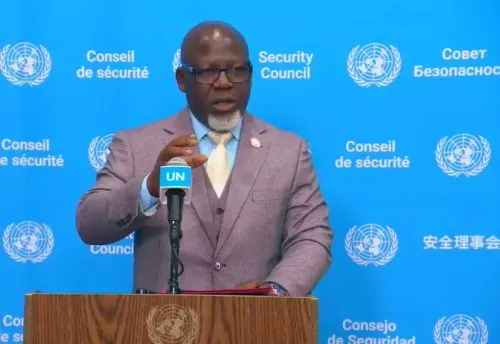
International Atomic Energy Agency (IAEA) Director-General Rafael Grossi of Argentina placed third, followed by former UN High Commissioner for Human Rights and ex-president of Chile, Michelle Bachelet. Council President Zenon Mukongo declined to officially disclose the results, but diplomats shared the tally with news outlets.
Why Grossi and Bachelet Face Headwinds
Both Grossi and Bachelet face significant obstacles from permanent Council members. Grossi received two 'discourage' votes — attributed in part to his public criticism of Russia's attacks on the Zaporizhzhia Nuclear Power Plant in Ukraine and his publicly stated differences with the US over Iran's nuclear potential.
Bachelet received five negative votes, the highest among the candidates, reportedly owing to her sharp criticism of the human rights records of Russia, China, and US ally Israel — drawing strong rebuttals from all three. In this race, the support of all five permanent members is effectively a prerequisite, as any one of them can veto the Council's recommendation.
Other Candidates in the Field
Former Senegal President Macky Sall, who notably does not have the backing of his own country, placed fifth. Maria Fernanda Espinosa, a former president of the UN General Assembly and Ecuador's former foreign minister, came next-to-last but is considered still viable — she received only two 'discourage' votes and eight 'no opinion' votes, leaving considerable room to build support.
Olara Otunnu, a former UN under-secretary-general and Uganda's former foreign minister who has previously served as Council president, entered the race only last week and placed last in the poll.
The Latin American and Gender Dimensions
Grynspan, Rodrigues-Birkett, and Espinosa may benefit from a growing groundswell of opinion that the UN — now in its 80th year — should finally have a woman as secretary-general. The office has been held exclusively by men since the organisation's founding. Additionally, there has not been a Latin American in the role for 35 years, since Javier Pérez de Cuéllar stepped down in 1991.
How the Process Works
The straw polls are secret and use colour-coded ballots for the five permanent members in later rounds, allowing the Council to identify which candidates risk a veto from the US, Russia, or China. Ballots carry three options — 'Encourage', 'Discourage', and 'No Opinion' — corresponding to positive, negative, and neutral signals. The polling continues until a candidate achieves broad consensus, after which the Council forwards a recommendation to the UN General Assembly, which by convention endorses it. Thursday's poll did not yet use distinctive ballots for permanent members, so it remains unclear whether Grynspan or Rodrigues-Birkett face any veto risk.
Further rounds are expected in the coming weeks as the field narrows toward a consensus choice.
Point of View
And Thursday's round did not yet use colour-coded ballots for the P5. The real test comes when permanent members must signal openly whether they will block a candidate. Bachelet's five negative votes effectively end her realistic prospects, but Grossi's two discourage votes suggest he still has a path if geopolitical alignments shift. The deeper story is structural: after 80 years and nine consecutive male secretaries-general, the P5's willingness to coalesce around a woman will reveal whether the UN's stated commitment to gender parity extends to its own apex office.
NationPress
14 Sept 2026
Frequently Asked Questions
Who is leading the race to become the next UN Secretary-General?
UNCTAD Secretary-General Rebecca Grynspan of Costa Rica is currently leading the race, having received ten positive, one negative, and four neutral votes in the first informal Security Council straw poll held on 31 July. She is followed by former Guyana Foreign Minister Carolyn Rodrigues-Birkett as a surprise runner-up.
What is a UN Security Council straw poll and how does it work?
A straw poll is an informal, secret ballot used by the 15-member Security Council to gauge support levels for each candidate for UN Secretary-General. Members mark each candidate as 'Encourage', 'Discourage', or 'No Opinion'. In later rounds, permanent members receive colour-coded ballots to identify potential vetoes from the US, Russia, or China.
Why are Rafael Grossi and Michelle Bachelet considered at a disadvantage?
IAEA chief Rafael Grossi received two 'discourage' votes, linked to his criticism of Russia's actions at the Zaporizhzhia nuclear plant and his differences with the US over Iran's nuclear programme. Michelle Bachelet received five negative votes — the most among all candidates — due to her strong criticism of Russia, China, and US ally Israel on human rights grounds.
Is there a push for a woman to lead the United Nations?
Yes. The UN is in its 80th year and has never had a female secretary-general. Three of the seven candidates — Grynspan, Rodrigues-Birkett, and Espinosa — are women, and diplomatic sources indicate a growing consensus in favour of finally breaking that barrier.
What happens after the straw polls conclude?
Once a candidate achieves broad consensus among the five permanent Council members — meaning the US, Russia, and China will not exercise a veto — the Security Council formally recommends that candidate to the UN General Assembly, which by tradition endorses the recommendation to complete the election.