UN Secretary-General race begins with UNSC straw poll of 7 candidates
Synopsis
The contest to choose the United Nations' next Secretary-General has formally opened — and for the first time in the organisation's 80-year history, four of the seven candidates are women. The Security Council's first secret straw poll on 30 July sets off a process where the US, Russia, and China will ultimately decide who leads the world body.
Key Takeaways
The UN Security Council held its first straw poll on 30 July to assess support for seven candidates seeking to become the next Secretary-General.
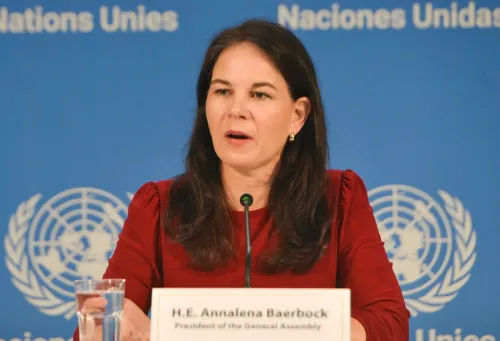
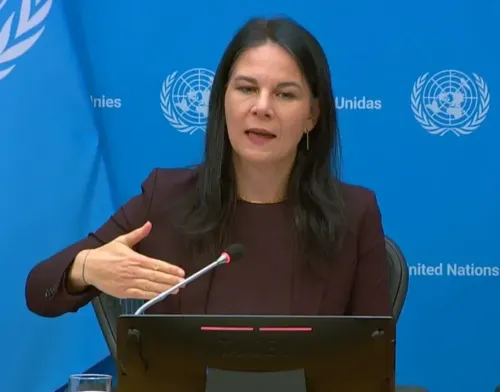
Results will not be made public; they have been shared only with nominating countries' missions and General Assembly President Annalena Baerbock .
The ballot offered three options per candidate: Encourage , Discourage , and No Opinion .
Four candidates — Rafael Grossi , Michelle Bachelet , Rebeca Grynspan , and Olara Otunnu — have direct UN leadership experience.
There is broad support for a woman Secretary-General after 80 years of male leadership; four of the seven candidates are women.
The US , Russia , and China hold veto power and will effectively determine the final selection.
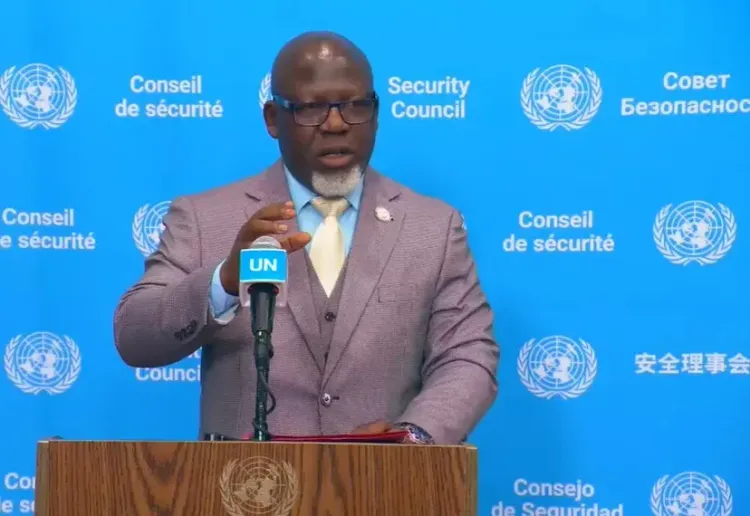
The race to elect the next United Nations Secretary-General formally began on Thursday, 30 July, as the UN Security Council conducted its first straw poll to gauge initial support levels for the seven declared candidates. Council President Zenon Mukongo Ngay, the permanent representative of the Democratic Republic of Congo (DRC), which holds the rotating Council presidency this month, confirmed the poll took place but said the Council had decided not to make the results public.
How the Straw Poll Works
Each ballot offered three options for every candidate: Encourage, Discourage, or No Opinion. The results have been shared privately with the missions of the nominating countries and General Assembly President Annalena Baerbock, but will not be disclosed publicly at this stage.
The first round is entirely secret. In later rounds, the votes of the five permanent members — the P5 — will be shown separately, though without identifying individual countries, to determine which candidate risks a veto. The process continues through successive polls until a candidate secures consensus among the P5, meaning the United States, Russia, and China do not exercise their veto.
Who the Candidates Are
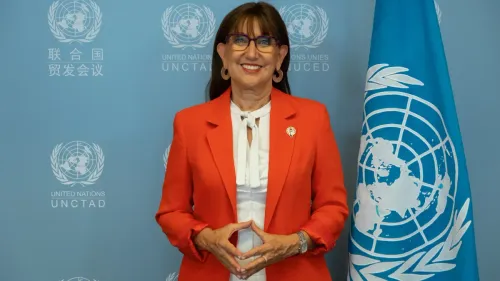
Four of the seven candidates bring direct leadership experience within UN institutions. Rafael Grossi of Argentina currently heads the International Atomic Energy Agency (IAEA). Michelle Bachelet, former president of Chile and former UN High Commissioner for Human Rights, is also in the running. Rebeca Grynspan, former vice president of Costa Rica and current head of UN Trade and Development (UNCTAD), is another contender. Olara Otunnu of Uganda, a former UN under-secretary-general and foreign minister who has also presided over the Security Council, announced his candidacy just last week.
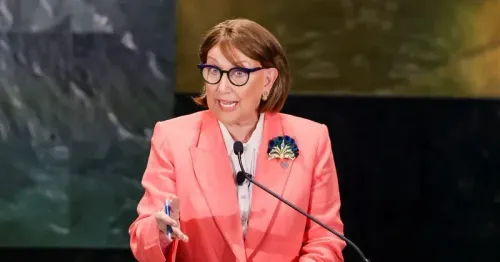
Maria Fernanda Espinosa, a former president of the General Assembly and former foreign minister of Ecuador, is also seeking the post. The remaining two candidates are former Guyanese Foreign Minister Carolyn Rodrigues-Birkett and former Senegalese President Macky Sall.
The General Assembly Dialogues
Candidates must participate in a three-hour interactive dialogue with diplomats and civil society representatives, held under the auspices of the General Assembly. As of the straw poll date, Grynspan, Bachelet, Grossi, Espinosa, and Rodrigues-Birkett had completed their dialogues. Otunnu, having declared his candidacy only recently, is yet to appear. More candidates may still enter the race ahead of the final vote.
The Case for a Woman Secretary-General
There is a broad groundswell of opinion that after 80 years of the United Nations, the time has come for a woman to lead the organisation. This sentiment was formally acknowledged when Baerbock and the then-Security Council president jointly issued nomination invitations last year that made specific mention of women candidates. Four of the seven current candidates are women.
Ultimately, however, the US, Russia, and China will hold decisive influence. The final candidate selected by the Council will be endorsed by the 193-nation General Assembly.
Historical Precedent
The current process mirrors the selection that elevated António Guterres in 2016, when he emerged as the front-runner in the first two straw polls without receiving a single 'Discourage' mark — a distinction none of the other nine candidates that year could claim.
Point of View
At its core, a veto-avoidance exercise — a diplomatic temperature check designed to eliminate candidates that the P5 will not accept before anyone has to say so publicly. The real contest is not among the seven candidates but among Washington, Moscow, and Beijing, whose strategic interests rarely align. The formal acknowledgement of a preference for a woman Secretary-General is a meaningful shift in tone, but tone and outcome are different things. History suggests the P5 will converge on whoever is least threatening to all three — which may or may not be a woman.
NationPress
14 Sept 2026
Frequently Asked Questions
What is the UN Security Council straw poll for the next Secretary-General?
It is a secret preliminary ballot in which Security Council members vote 'Encourage', 'Discourage', or 'No Opinion' for each candidate. The poll, held on 30 July, is the first in a series designed to identify which candidate can secure consensus among the five permanent members without triggering a veto.
Who are the seven candidates for UN Secretary-General?
The seven declared candidates are Rafael Grossi (Argentina), Michelle Bachelet (Chile), Rebeca Grynspan (Costa Rica), Olara Otunnu (Uganda), Maria Fernanda Espinosa (Ecuador), Carolyn Rodrigues-Birkett (Guyana), and Macky Sall (Senegal).
Why are the straw poll results being kept secret?
The Council decided not to announce the results publicly at this early stage. Results have been shared only with the nominating countries' missions and General Assembly President Annalena Baerbock. In later rounds, P5 votes will be shown separately — still anonymously — to assess veto risk.
Why is there pressure for a woman to become UN Secretary-General?
All eight previous Secretaries-General have been men. After 80 years, there is a growing consensus within the UN membership that it is time for a woman to lead the organisation. General Assembly President Annalena Baerbock and the then-Security Council president formally reflected this sentiment in nomination invitations issued last year.
How does the final selection of the UN Secretary-General work?
The Security Council conducts successive straw polls until a candidate emerges with the consensus of all five permanent members — meaning the US, Russia, and China do not veto the choice. The Council then formally recommends that candidate, who is endorsed by the 193-member General Assembly.