UN Security Council 3rd straw poll: Grynspan leads with 9 votes
Synopsis
The UN Security Council's third straw poll has Rebeca Grynspan back in front with nine votes — but rising negative tallies for both frontrunners signal the race to replace António Guterres by January 2027 is far from settled, and further rounds are likely before any candidate locks down the consensus needed to clear the five permanent members.
Key Takeaways
The UN Security Council held its third straw poll on 19 September 2026 on candidates for the next UN Secretary-General .
Rebeca Grynspan led with 9 votes in favour and 5 negative votes , according to leaked results cited by '1 for 8 Billion' .
Carolyn Rodrigues-Birkett followed with 8 votes in favour and 6 negative votes .
Negative votes grew for both frontrunners compared to earlier rounds, complicating the path to consensus.
Six other candidates — including Michelle Bachelet , Rafael Grossi , and Macky Sall — remain in the race.
The incoming Secretary-General is set to take office on 1 January 2027 , when António Guterres' term expires.
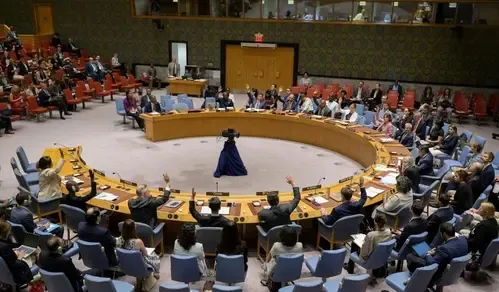
The UN Security Council held its third straw poll on 19 September 2026 to assess the viability of candidates vying to succeed António Guterres as the next UN Secretary-General, whose term expires at the end of this year. Results of the closed-door ballot were not officially released, though they were reportedly leaked.
Who Led the Third Poll
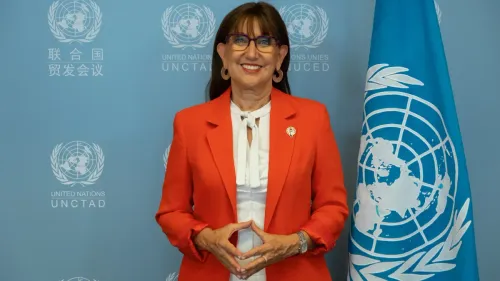
According to '1 for 8 Billion', a global campaign advocating a fair and inclusive process to appoint the first woman UN Secretary-General, Rebeca Grynspan — a former Vice President of Costa Rica and the current Secretary-General of the UN Conference on Trade and Development (UNCTAD) — led the third straw poll with nine votes in favour and five negative votes.
Carolyn Rodrigues-Birkett, Guyana's Permanent Representative to the United Nations, followed with eight votes in favour and six negative votes. Notably, negative votes grew for both frontrunners compared to previous rounds, signalling that consensus remains elusive.
How the Straw Poll Works
Security Council straw polls are informal, secret ballots used to gauge candidate viability before a formal recommendation is made to the UN General Assembly. Each Council member reportedly receives one ballot per candidate, with three options: 'encouraged', 'discouraged', or 'no opinion expressed', according to What's in Blue, a publication tracking Security Council developments. Results are not officially published.
France, which holds the rotating presidency of the Security Council for September 2026, confirmed that candidates would be informed of the results through the permanent representatives of their nominating states. Jérôme Bonnafont, France's UN ambassador, disclosed this after the conclusion of the vote.
How the Race Has Shifted Across Three Rounds
The first straw poll on 30 July saw Grynspan lead with 10 votes in favour, ahead of Rodrigues-Birkett's nine. In the second round on 21 August, the two swapped positions — Rodrigues-Birkett pulled ahead with eight votes against Grynspan's seven. The third poll on 19 September saw Grynspan reclaim the lead, though the rising negative tallies for both suggest that a portion of the Council remains unconvinced by either frontrunner.
The Other Candidates in the Race
Six other candidates remain in contention. They are: Ivonne A-Baki, a former Ecuadoran minister and diplomat; Michelle Bachelet, former President of Chile and former UN High Commissioner for Human Rights; María Fernanda Espinosa, former President of the UN General Assembly and former Foreign and Defence Minister of Ecuador; Rafael Grossi of Argentina, current Director General of the International Atomic Energy Agency (IAEA); Olara Otunnu of Uganda, a former UN Under-Secretary-General; and Macky Sall, former President of Senegal.
What Comes Next
The Security Council is expected to narrow its recommendation before the end of the year so that the incoming Secretary-General can take office on 1 January 2027. The rising negative votes in the third round suggest that further polling rounds may be needed before a candidate achieves sufficient consensus, particularly given the veto power held by the five permanent members — the United States, the United Kingdom, France, Russia, and China.
Point of View
The UN secretary-general race is tighter and messier than the frontrunners' vote tallies suggest. The fact that negative votes are rising for both Grynspan and Rodrigues-Birkett — not falling — points to a Council that has not coalesced, and where one or more of the five permanent members may be playing spoiler. The informal straw poll mechanism, designed to build consensus quietly, is instead producing public leaks and visible uncertainty, which risks undermining the legitimacy of whoever eventually emerges. With Guterres' term ending in weeks and the P5 dynamic opaque, the real selection may happen in bilateral diplomacy far removed from the ballot box.
NationPress
19 Sept 2026
Frequently Asked Questions
What is a UN Security Council straw poll for secretary-general?
A straw poll is an informal, secret ballot used by the UN Security Council to assess the viability of candidates for UN Secretary-General before making a formal recommendation to the General Assembly. Each Council member receives a ballot per candidate with three options — 'encouraged', 'discouraged', or 'no opinion expressed' — and results are not officially published.
Who is leading the race to become the next UN secretary-general?
Rebeca Grynspan, a former Vice President of Costa Rica and current UNCTAD chief, led the third straw poll on 19 September with nine votes in favour, according to leaked results. Carolyn Rodrigues-Birkett of Guyana followed with eight votes in favour.
Why are rising negative votes significant?
Increasing negative votes for the frontrunners across successive rounds indicate that a portion of the Security Council — which includes five veto-wielding permanent members — remains unconvinced. A candidate needs broad consensus, not just a plurality, making growing opposition a meaningful obstacle to securing the role.
Who are the other candidates for UN secretary-general?
Six other candidates remain in contention: Ivonne A-Baki (Ecuador), Michelle Bachelet (Chile), María Fernanda Espinosa (Ecuador), Rafael Grossi (Argentina), Olara Otunnu (Uganda), and Macky Sall (Senegal). All bring significant diplomatic or international organisation experience.
When will the next UN secretary-general take office?
The next UN Secretary-General is scheduled to assume office on 1 January 2027, when António Guterres' current term expires. The Security Council must recommend a candidate to the General Assembly for formal appointment before that date.