White House: 'America belongs to those who love it'
Synopsis
The White House posted a pointed two-sentence declaration on November 3, 2026, asserting that America belongs to those who love it — a stark framing of national belonging that draws on a long U.S. rhetorical tradition of distinguishing patriotism from perceived anti-American sentiment.
Key Takeaways
The White House posted a two-sentence statement on November 3, 2026 asserting national belonging is tied to love of country.
The exact text: 'America does not belong to those who hate it.
America belongs to those who love it.' No specific target, policy, or individual was named in the post.
The framing draws on a long U.S. rhetorical tradition of patriotism-versus-anti-Americanism messaging used by multiple administrations.
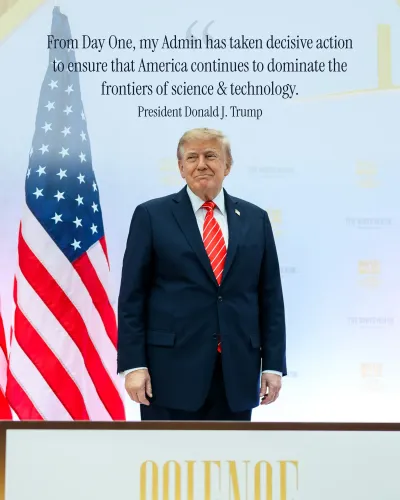
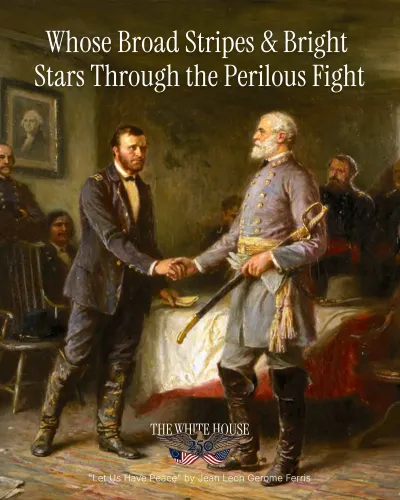
The post was accompanied by one image and carries the institutional weight of the executive office's official communications account.
A two-sentence declaration from the official White House account cut through the noise on Tuesday, November 3, 2026 — and landed like a political thunderclap. The White House posted a sharp, unambiguous statement on national belonging that drew an immediate line between patriotism and its perceived opposite.
The post read in full: 'America does not belong to those who hate it. America belongs to those who love it.' No policy detail, no named target — just a rhetorical stake planted firmly in the ground.
A statement with deep rhetorical roots
The language is spare, but the tradition it draws from is long. U.S. administrations across party lines have periodically reached for 'love of country' framing to assert a boundary between legitimate dissent and what they characterise as anti-American sentiment. The formula is deliberately elastic — it can be directed at foreign critics, domestic protesters, political opponents, or cultural commentators, depending on the moment's political temperature. What gives this particular post its edge is the starkness of its binary. No qualifier, no exemption clause. Love or don't belong — full stop.Why the White House chose this moment
The timing — a Tuesday in early November, a month long associated in American political memory with elections and national reckoning — amplifies the message's resonance. The White House's official communications account carries institutional weight distinct from a campaign handle; a statement here is understood as an expression of executive-branch sentiment, not mere partisan rhetoric. For Indian observers watching U.S. domestic politics, the post signals that the current administration is willing to use the presidency's bully pulpit to frame national identity debates in blunt, affective terms — a style of governance communication that has grown increasingly common across democracies worldwide. The White House has offered no elaboration. Watch for follow-on statements or policy actions that give the declaration a concrete target.Point of View
Leaving the target deliberately undefined so the message can attach to any perceived adversary. This kind of affective nationalism, where belonging is framed as an emotion rather than a legal or civic status, has become a signature tool of executive communications across multiple democracies. For the U.S. in particular, deploying it from the official presidential account — not a campaign handle — elevates it from political positioning to a statement of governing philosophy. The absence of context is itself the strategy: ambiguity maximises the coalition of people who feel the post is speaking for them.
NationPress
3 Nov 2026
Frequently Asked Questions
What did the White House post on November 3, 2026?
The White House posted a two-sentence statement reading: 'America does not belong to those who hate it. America belongs to those who love it.' No further context or target was specified.
What does the White House statement about loving America mean?
The statement asserts that national belonging is defined by love of country, drawing a sharp line between those the administration considers patriotic and those it considers antagonistic to American values.
Who is the White House targeting with the 'love it or leave it' message?
The post named no specific individual, group, or policy. The lack of a named target is deliberate, making the message applicable to a broad range of perceived critics of the United States.
Is this kind of patriotism messaging common from U.S. presidents?
Yes. Multiple U.S. administrations have used love-of-country framing to distinguish between constructive criticism and what they characterise as anti-American sentiment, particularly during periods of domestic political tension.
Why does the White House post on X matter for India?
The White House's official X account reflects executive-branch sentiment with global reach. For Indian observers, it signals how the current U.S. administration frames domestic identity debates — a dynamic that affects diplomatic tone and bilateral engagement.