CM Dhami Seeks Forest Land Clearance to Shift Uttarakhand HC to Haldwani
Synopsis
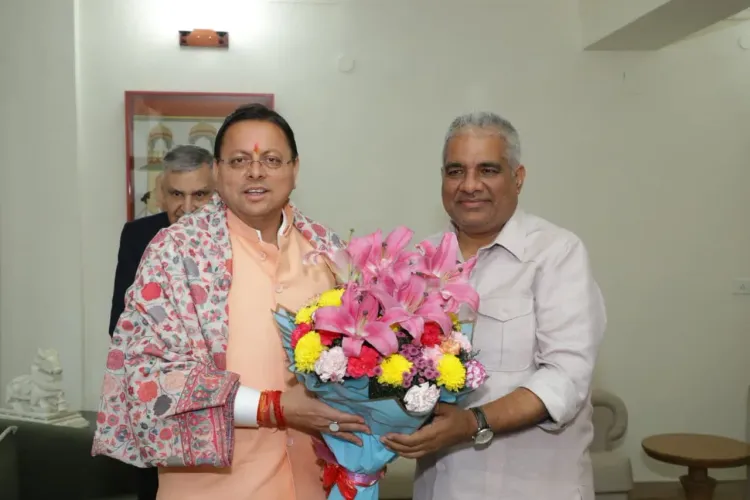
Uttarakhand CM Pushkar Singh Dhami met Union Environment Minister Bhupender Yadav in New Delhi to push for reserved forest land diversion at Lamachaur, Haldwani, to build a permanent campus for the Uttarakhand High Court, currently burdened by Nainital's terrain and infrastructure constraints. Yadav gave a positive assurance.
Key Takeaways
CM Pushkar Singh Dhami met Bhupender Yadav in New Delhi on November 3, 2026 to discuss relocating the Uttarakhand High Court.
The current Nainital campus faces landslide risk, traffic congestion, and a shortage of parking space.
The proposed new site is the Lamachaur area in Haldwani , which falls under reserved forest land requiring central clearance.
Clearance is governed by the Forest Conservation Act, 1980 , making the Union Environment Ministry the key decision-maker.
Bhupender Yadav expressed positive agreement and assured the state of further action on the proposal.
The Uttarakhand High Court has been seated in Nainital since the state's formation in 2000 .
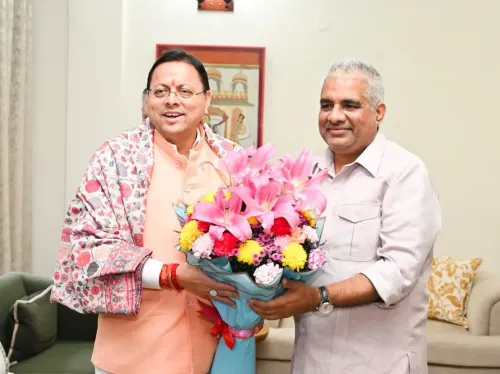
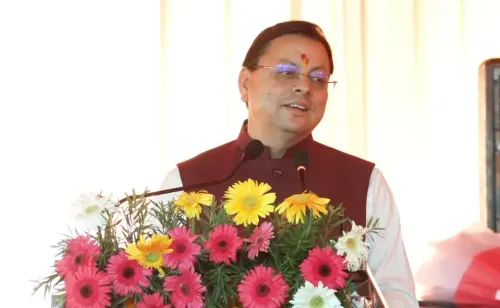
A court perched on a hill — scenic, storied, and increasingly strained. Uttarakhand Chief Minister Pushkar Singh Dhami met Union Environment Minister Bhupender Yadav in New Delhi on Tuesday, November 3, 2026, formally pressing the case to relocate the Uttarakhand High Court from Nainital to Haldwani — and walked away with a positive signal.
Why Nainital's Hill Court Is Running Out of Room
The Uttarakhand High Court has sat in Nainital since the state was carved out of Uttar Pradesh in November 2000 — more than two decades on the same hill. CM Dhami told the minister that the current campus is now hemmed in by a tightening ring of problems: landslide risk, mounting traffic pressure, and a chronic shortage of parking. The geography that once gave the court its character now constrains it.
For judges, lawyers, and ordinary litigants — many travelling from the plains — every court date comes with an additional tax of congestion and anxiety about the unstable terrain. That human cost, Dhami argued, makes the move not an administrative preference but a practical necessity.
The Lamachaur Proposal: Plains, Space, and a Forest Land Hurdle
The state's answer is the Lamachaur area in Haldwani — a plains site where a modern, purpose-built complex could offer space that Nainital's slopes simply cannot. But here is the catch: the land in question falls under reserved forest classification, meaning any diversion or transfer requires explicit central clearance under the Forest Conservation Act, 1980.
That is precisely why CM Dhami was in New Delhi. Bhupender Yadav, as Union Minister for Environment, Forest and Climate Change, holds the authority over such diversions — a single nodal point where Uttarakhand's judicial infrastructure ambition meets the federal machinery of forest governance. After the detailed discussion, Yadav expressed positive agreement with the proposal and assured the state of forward action. Dhami publicly thanked the minister for the assurance.
A Himalayan State's Perennial Infrastructure Dilemma
Uttarakhand is not unique in this bind. Across India's hill states, any significant public infrastructure project — a hospital, a university, a court — almost inevitably brushes against forest land. The Forest Conservation Act creates a deliberate bottleneck, forcing a conversation between development urgency and ecological sensitivity in one of the world's most fragile mountain ecosystems.
For Haldwani, a fast-growing city in the Kumaon foothills that already serves as the region's commercial nerve centre, hosting the high court would be a significant institutional upgrade — reducing travel burdens for litigants from the Terai and plains districts who currently have to wind up to Nainital for every hearing.
What Comes Next for the High Court Shift
A minister's 'positive assurance' is momentum, not a clearance. The formal process will require the Ministry of Environment's written approval on the forest land diversion proposal, after which the Uttarakhand government would move toward site acquisition, architectural planning, and — critically — any legislative or judicial procedural steps that a change in a high court's seat may demand. The exact area of forest land sought for diversion remains a figure the state has not publicly specified.
The clock, though, is ticking: every monsoon season in Nainital is a reminder of what the terrain is capable of, and the argument for moving the court to safer, more accessible ground only grows louder each year.
Point of View
And Uttarakhand's high court case could set a visible precedent for how development needs are weighed against Himalayan ecology at the federal level. The real test will be whether ministerial assurance translates into a formal written order before the next election cycle.
NationPress
3 Nov 2026
Frequently Asked Questions
Why is the Uttarakhand High Court being shifted from Nainital to Haldwani?
The Nainital campus faces landslide risks, traffic congestion, and parking shortages due to its hill location. The Haldwani site in the plains offers space for a modern, accessible complex for judges, lawyers, and litigants.
Where exactly is the new Uttarakhand High Court proposed to be built?
The proposed site is the Lamachaur area in Haldwani , in the Kumaon foothills of Uttarakhand, on land currently classified as reserved forest.
Why does the central government need to approve the Haldwani High Court land?
The Lamachaur land is classified as reserved forest, so any diversion or transfer requires approval from the Union Ministry of Environment, Forest and Climate Change under the Forest Conservation Act, 1980.
What did Union Minister Bhupender Yadav say about the Uttarakhand High Court relocation?
Bhupender Yadav expressed positive agreement with the state's proposal and assured CM Dhami of further action, though a formal written clearance is still pending.
Since when has the Uttarakhand High Court been in Nainital?
The Uttarakhand High Court has been seated in Nainital since the state was formed in November 2000 , when Uttarakhand was carved out of Uttar Pradesh.