CM Dhami: Society Must Lead Uttarakhand's Development Vision
Synopsis
Chief Minister Pushkar Singh Dhami on 25 July 2026 called on Uttarakhand's enlightened civil society to serve as active co-architects of the state's development, saying the vision of a 'Viksit Uttarakhand' can only be realised through every citizen's participation — not government action alone.
Key Takeaways
CM Pushkar Singh Dhami stated that Uttarakhand's future will be shaped by the thinking, participation, and guidance of society's enlightened sections — not the government alone.
The statement was shared by the Chief Minister's Office of Uttarakhand on 25 July 2026 .
The 'Viksit Uttarakhand' framing aligns with India's national Viksit Bharat @2047 vision, which calls for citizen-led development across all states.
Uttarakhand, formed in 2000 , faces structural challenges including out-migration, ecological pressures, and dependence on tourism and pilgrimage.
No specific institutional mechanism for citizen participation was announced alongside the statement; concrete follow-through remains to be seen.
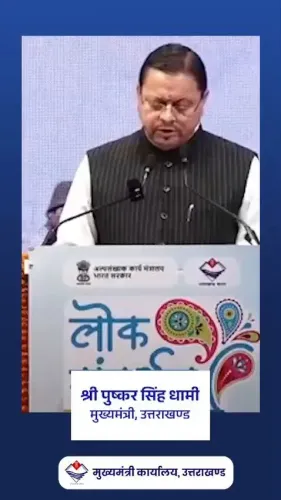
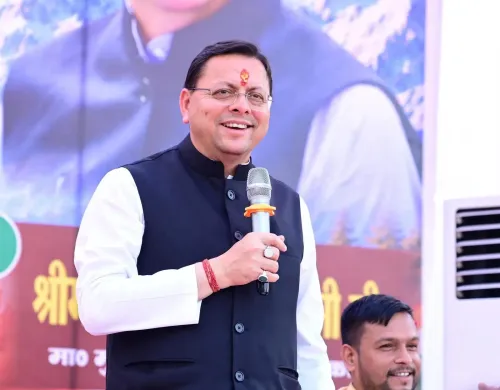
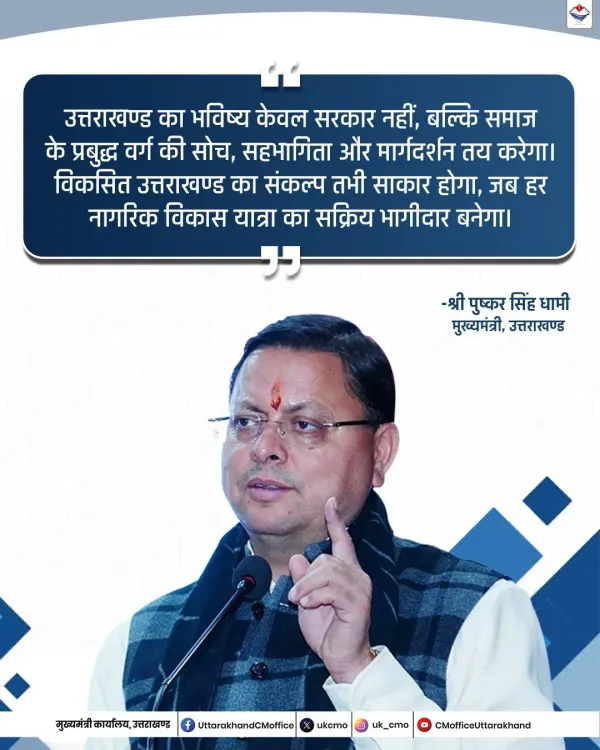
Chief Minister Pushkar Singh Dhami on Saturday, 25 July 2026, called on the enlightened sections of society to take an active role in shaping Uttarakhand's future, stating that the state's development journey cannot be driven by government alone. The remarks, shared by the Chief Minister's Office of Uttarakhand on X, underscore a push for broad-based civic participation as the state pursues its vision of a developed Uttarakhand.
Context
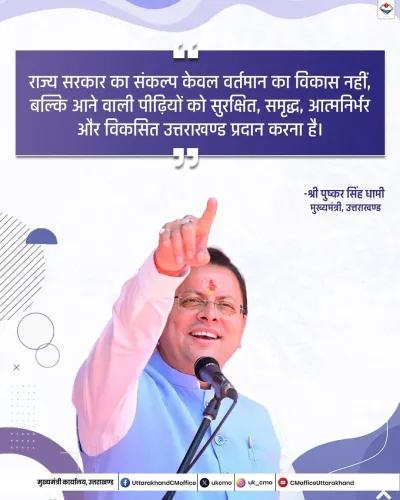
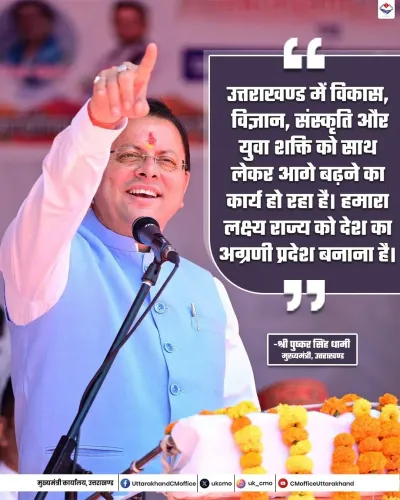
CM Dhami was quoted as saying: 'उत्तराखण्ड का भविष्य केवल सरकार नहीं, बल्कि समाज के प्रबुद्ध वर्ग की सोच, सहभागिता और मार्गदर्शन तय करेगा' — 'The future of Uttarakhand will be determined not by the government alone, but by the thinking, participation, and guidance of the enlightened sections of society.' He added that the resolve for a developed Uttarakhand will be realised only when every citizen becomes an active partner in the development journey.
The statement positions civic society — intellectuals, professionals, and community leaders — as co-architects of state policy rather than passive recipients of government schemes. It is a notable shift in official messaging toward shared ownership of development outcomes.
Policy Backdrop
Uttarakhand was carved out of Uttar Pradesh in 2000 with the specific mandate of enabling focused, hill-region-sensitive development. Decades later, the state continues to grapple with structural challenges: persistent out-migration from rural hill districts, an economy heavily dependent on tourism and pilgrimage, and ecological pressures on its Himalayan terrain.
The 'Viksit Uttarakhand' framing mirrors India's national Viksit Bharat @2047 vision, articulated from 2022, which calls on every state to set parallel developed-state targets with active citizen involvement. BJP-led administrations across several states have adopted this inclusive-development rhetoric as part of a broader national governance template.
Stakeholders and Impact
The call is directed most immediately at civil society organisations, academic institutions, and local community bodies across Uttarakhand's 13 districts. For ordinary citizens — particularly in remote hill villages — the message signals that state policy will increasingly seek bottom-up inputs rather than flowing top-down from Dehradun.
Historically, Uttarakhand governments have leaned on participatory frameworks for issues such as sustainable tourism and forest management. A renewed push along these lines could translate into district-level consultations, public-private partnerships, or citizen advisory forums, though no specific mechanism has been announced alongside this statement.
What's Next
Observers will watch for concrete institutional follow-through — whether through upcoming state budget presentations, a formal vision document, or new district-level governance forums that operationalise the participatory approach CM Dhami has outlined. The statement sets a political tone; the test will be whether administrative structures are built to match it.
For a state where decades of youth out-migration have thinned local civic capacity, translating this vision into measurable engagement will require sustained policy commitment beyond electoral cycles.
Point of View
The BJP administration in Dehradun is aligning itself tightly with the Viksit Bharat @2047 template, creating a political shield: if development lags, the framing allows blame to be distributed beyond the government. The real test is institutional — whether this rhetoric produces new forums, budgetary allocations, or district-level structures that give citizens actual agency. Without those, the statement remains aspirational branding ahead of what could be a politically significant period for the state.
NationPress
24 Oct 2026
Frequently Asked Questions
What did CM Pushkar Singh Dhami say about Uttarakhand's development?
CM Dhami said that Uttarakhand's future will be determined not by the government alone, but by the thinking, participation, and guidance of the enlightened sections of society, and that every citizen must become an active partner in the development journey.
What is 'Viksit Uttarakhand'?
'Viksit Uttarakhand' refers to the state government's vision of a fully developed Uttarakhand, modelled on India's national Viksit Bharat @2047 goal, which encourages states to pursue development targets with active citizen involvement.
When was Uttarakhand formed and why?
Uttarakhand was carved out of Uttar Pradesh on 9 November 2000 to enable focused, hill-region-sensitive governance and development for the Himalayan districts that had long felt underserved.
What challenges does Uttarakhand face in development?
The state faces persistent out-migration from hill districts, an economy heavily reliant on tourism and pilgrimage, and ecological pressures on its Himalayan environment — all of which complicate sustained development.
How does CM Dhami's statement connect to national policy?
It mirrors the Viksit Bharat @2047 vision articulated at the national level from 2022, under which BJP-led state governments have been encouraged to frame development as a collaborative exercise between government and citizens.