Amit Shah inaugurates Peepal Van in Nava Raipur, honours Modi's 25 years
Synopsis
Union Home Minister Amit Shah inaugurated the Viksit Bharat Sankalp Park — a 15-acre Peepal Van in Nava Raipur — dedicated to PM Modi's 25 years in public life. The park features 2,500 Peepal trees and over 500 local plant species, part of a drive to make Nava Raipur India's first Peepal City.
Key Takeaways
Amit Shah inaugurated the Viksit Bharat Sankalp Park (Peepal Van) in Nava Raipur, Chhattisgarh on November 3, 2026 .
The park spans 15 acres and contains 2,500 Peepal trees and over 500 local plant species , dedicated to PM Modi's 25 years in public life.
The initiative aims to make Nava Raipur India's first officially recognised 'Peepal City.' The drive traces back to the 'Ek Ped Maa Ke Naam' campaign launched in 2024 , under which 2 lakh Peepal saplings have already been planted in the city.
Shah stated that the park demonstrates the government's belief that nature and progress are complementary , not competing, goals.
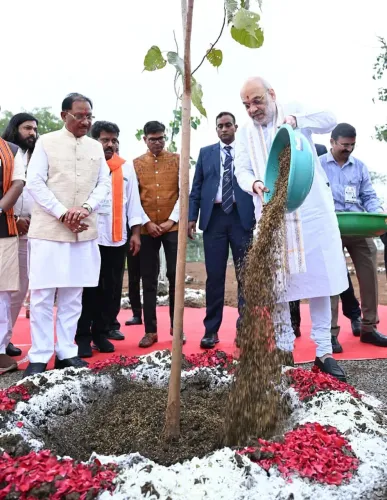
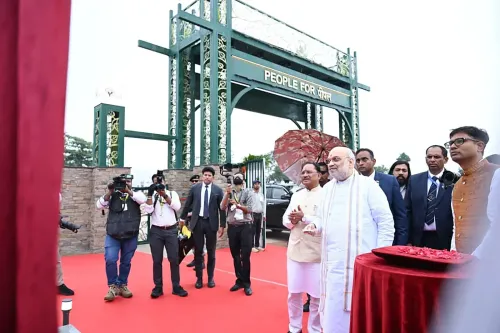
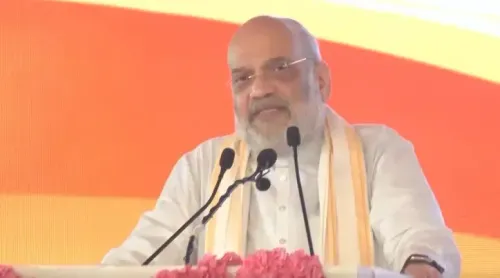
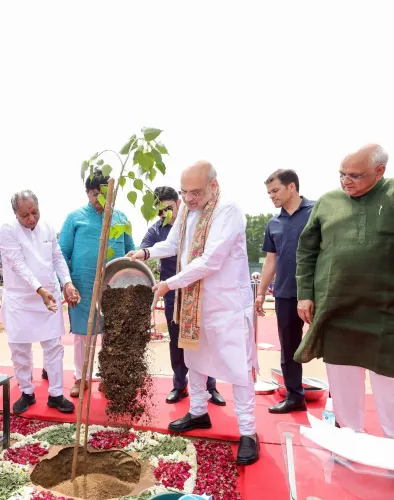
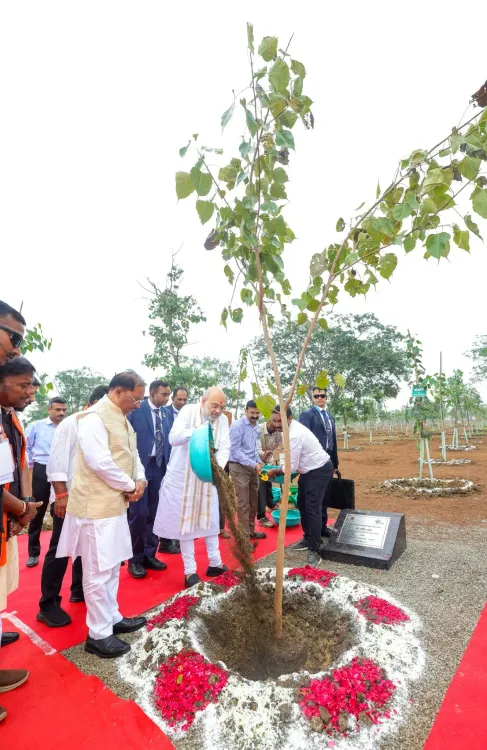
A 15-acre urban forest of sacred Peepal trees now stands in Nava Raipur, Chhattisgarh — a living monument to Prime Minister Narendra Modi's 25 years in public life. Union Home Minister Amit Shah inaugurated the 'Viksit Bharat Sankalp Park (Peepal Van)' on Tuesday, November 3, 2026, personally planting a Peepal sapling to mark the occasion.
Shah framed the moment with a pointed declaration: 'Prakriti aur pragati ek-doosre ke poorak hain' — 'Nature and progress are complementary to each other, and our government has proved it.' The park, he said, is more than a green space; it is an argument made in soil and roots.
2,500 Peepal trees and a city reimagined
The Viksit Bharat Sankalp Park brings together 2,500 Peepal trees and over 500 species of locally native plants across its expanse in Nava Raipur, Chhattisgarh's planned capital city. The scale is deliberate: the number of Peepal trees mirrors the 25 years of Modi's public-life journey — one hundred trees for each year. The park is designed as a conservation message as much as a tribute, with native biodiversity embedded into its very blueprint.
Nava Raipur, built as a greenfield administrative capital, has been positioned as a model for sustainable urban development in central India. Adding a dedicated Peepal forest to its landscape pushes that identity further — toward what Shah described as making the city the country's first 'Peepal City.'
From 'Ek Ped Maa Ke Naam' to two lakh saplings
The roots of today's inauguration stretch back to 2024, when the 'Ek Ped Maa Ke Naam' (One Tree in Mother's Name) national plantation campaign was launched. The drive urged citizens across India to plant trees as a tribute to their mothers, weaving emotional resonance into environmental action. In Nava Raipur's case, that campaign directly seeded the Peepal City ambition: 2 lakh (200,000) Peepal saplings have already been planted across the city under the initiative.
That grassroots momentum — households, schools, and local bodies all participating — is precisely what the central government has cited as proof that large-scale urban greening can be driven by cultural belonging rather than top-down mandate alone.
Nature as statecraft: the bigger pattern
This inauguration fits into a broader and consistent pattern: state-level urban greening projects that blend native-species afforestation with symbolic national narratives. Large plantation campaigns have become a visible instrument of India's climate and urban-environment policy, combining measurable green-cover targets with moments of public mobilisation.
The survival rate of those two lakh saplings — and whether Nava Raipur formally receives an official 'Peepal City' designation — will determine whether today's ceremony translates into durable ecological change. A park inauguration is a beginning, not a verdict. The Peepal, after all, is famously patient.
Point of View
500 trees map precisely onto Modi's 25 public-service years, making conservation inseparable from political tribute. It also signals that the 'Ek Ped Maa Ke Naam' campaign, which began as a mass-mobilisation exercise in 2024, is now producing tangible landmark infrastructure. Nava Raipur's 'Peepal City' ambition will be a test case for whether emotionally anchored greening drives can sustain long-term ecological outcomes. The political optics are polished; the ecological verdict depends on how many of those two lakh saplings are still standing in five years.
NationPress
3 Nov 2026
Frequently Asked Questions
What is the Viksit Bharat Sankalp Park (Peepal Van) in Nava Raipur?
It is a 15-acre urban forest in Nava Raipur, Chhattisgarh, featuring 2,500 Peepal trees and over 500 local plant species. It was inaugurated by Union Home Minister Amit Shah on November 3, 2026, as a tribute to PM Modi's 25 years in public life.
What is the 'Ek Ped Maa Ke Naam' campaign and how is it connected?
'Ek Ped Maa Ke Naam' (One Tree in Mother's Name) is a national tree plantation drive launched in 2024. In Nava Raipur, it directly launched the Peepal City initiative, resulting in 2 lakh Peepal saplings already planted across the city ahead of today's park inauguration.
What does it mean for Nava Raipur to become India's first 'Peepal City'?
The campaign aims to plant Peepal trees — a species sacred in Indian tradition and ecologically significant — at scale across Nava Raipur so the city is formally recognised as India's first Peepal City. As of November 2026, the official designation is still an ongoing ambition, not yet formally conferred.
Why are 2,500 Peepal trees significant in this park?
The number 2,500 corresponds symbolically to PM Narendra Modi's 25 years in public life — one hundred trees per year — making the plantation count an embedded tribute within the park's ecological design.
Where is Nava Raipur located and why was it chosen for this park?
Nava Raipur is the planned administrative capital of Chhattisgarh in central India, built as a greenfield city. Its design emphasises sustainable urban development, making it a natural host for a large-scale native-species afforestation project like the Peepal Van.