Pralhad Joshi Tours Bharat Renewable Energy Summit 2026 Exhibition
Synopsis
Union Minister Pralhad Joshi toured the Bharat Renewable Energy Summit 2026 exhibition at Bharat Mandapam on November 3, praising industry innovations as proof India is ready to bridge funding and technology gaps on its path to 500 GW of clean energy by 2030.
Key Takeaways
Pralhad Joshi visited the Bharat Renewable Energy Summit 2026 exhibition at Bharat Mandapam, New Delhi on November 3, 2026 .
The minister called the technology and innovation on display 'highly encouraging,' noting industry's readiness to bridge funding and technological gaps.
India's Panchamrit commitments include 500 GW of non-fossil electricity capacity by 2030 and net-zero emissions by 2070 .
The National Green Hydrogen Mission , launched in 2023 , forms a key plank of India's next-generation clean-energy manufacturing push.
State governments featured alongside private companies, reflecting a federal alignment on deployment and investment targets.
Joshi linked the technologies on display to the Viksit Bharat vision championed by Prime Minister Narendra Modi .
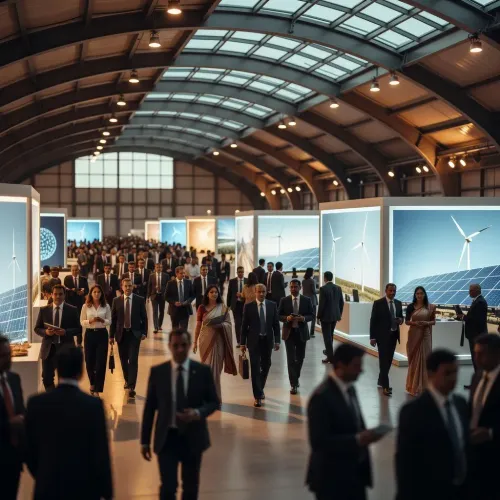
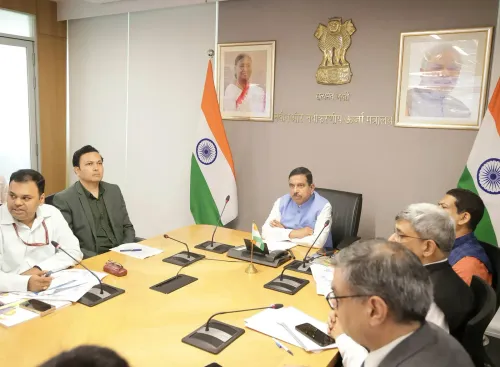
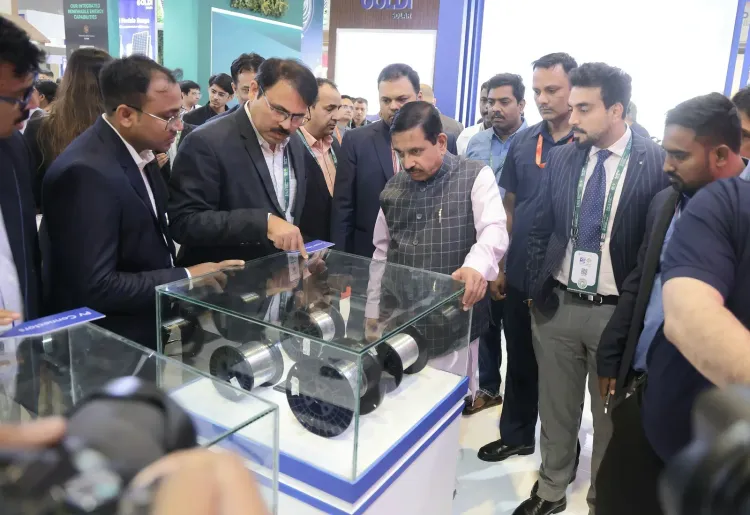
Inside Bharat Mandapam, New Delhi, rows of stalls mounted by India's leading renewable energy companies and state governments offered Union Minister Pralhad Joshi a close look at the country's clean-energy industrial muscle — and he liked what he saw. The Bharat Renewable Energy Summit 2026, held on Tuesday, November 3, 2026, drew the Minister of New and Renewable Energy for a walkthrough of an exhibition he called 'highly encouraging.'
Posting in English, Kannada, and Hindi, Joshi said the 'incredible technological line-up and innovation on display' demonstrated that India's industry is 'fully prepared' to bridge funding and technological gaps and drive 'robust acceleration' in the country's clean-energy transition. In Kannada he noted — 'ನಮ್ಮ ಉದ್ಯಮ ವಲಯ ಸಂಪೂರ್ಣ ಸಜ್ಜಾಗಿದೆ' [our industry sector is completely ready] — and in Hindi he described the innovations as proof that the sector can deliver new momentum to India's #CleanEnergy transformation.
Bharat Mandapam as India's clean-energy showroom
Bharat Mandapam has become a preferred venue for India's highest-profile trade and policy gatherings, and the renewable energy sector is now firmly part of that circuit. The summit brought together private companies alongside multiple state governments, reflecting a federal push to align local manufacturing and grid ambitions with national targets. Joshi's trilingual post — mirroring the linguistic diversity of India's renewable energy belt — underscores how politically broad-based this agenda has become.
500 GW by 2030 and the technology gaps that still need closing
The minister's emphasis on 'bridging funding and technological gaps' is not rhetorical flourish — it points to a live pressure point. At COP26 in 2021, India committed to the Panchamrit pledges: 500 GW of non-fossil capacity by 2030 and net-zero by 2070. The National Green Hydrogen Mission, launched in 2023, extended that ambition into next-generation clean fuels and domestic manufacturing. Both targets require capital flows and technology transfers that industry exhibitions like this one are designed to catalyse.
Joshi also credited Prime Minister Narendra Modi's vision for India's accelerating clean-energy push, saying these technologies would serve as a 'key foundation' for realising the Viksit Bharat [Developed India] goal.
What the exhibition signals for the next auction cycle
Exhibitions of this scale rarely exist in a policy vacuum. They typically precede or accompany fresh capacity auction announcements, financing windows, or storage-technology incentives. The convergence of state pavilions and private sector innovators at a single venue signals that both layers of government are aligning on deployment timelines. The coming months will test whether the ministerial enthusiasm translates into the next tranche of renewable auctions — and whether green hydrogen and grid-storage projects attract the financing mechanisms the summit appeared designed to invite.
Point of View
Ahead of what are likely to be consequential auction and financing announcements. By invoking the 'Viksit Bharat' frame, Joshi situates India's clean-energy targets not as environmental obligations but as economic destiny, making it harder for any future government to walk them back. The trilingual post also reflects a deliberate effort to broaden the political ownership of the renewable transition beyond English-speaking, urban constituencies. With the 2030 target clock ticking, exhibitions like this serve as both a readiness check and a pressure valve — reassuring investors that the pipeline is real.
NationPress
4 Nov 2026
Frequently Asked Questions
What is the Bharat Renewable Energy Summit 2026?
The Bharat Renewable Energy Summit 2026 is an industry exhibition held at Bharat Mandapam in New Delhi, showcasing renewable energy technologies and innovations from leading companies and state governments across India.
What did Pralhad Joshi say at the Bharat Renewable Energy Summit?
Joshi called the technologies and innovations on display 'highly encouraging' and said they proved India's industry is ready to bridge funding and technological gaps to accelerate the country's clean-energy transition.
What is India's 500 GW renewable energy target?
India committed at COP26 in 2021 to installing 500 GW of non-fossil electricity capacity by 2030 as part of its Panchamrit climate pledges, which also include achieving net-zero emissions by 2070.
What is India's National Green Hydrogen Mission?
The National Green Hydrogen Mission, launched in 2023, aims to scale up green hydrogen production and clean-energy manufacturing in India, complementing broader renewable capacity targets.
Where is Bharat Mandapam located?
Bharat Mandapam is a convention and exhibition centre in New Delhi that hosts major trade, policy, and government events.