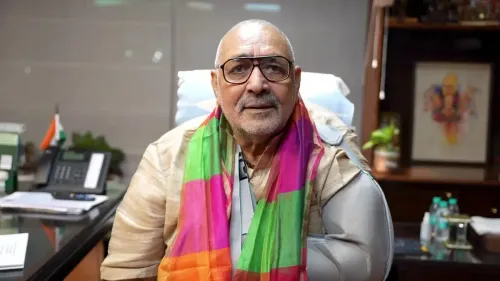
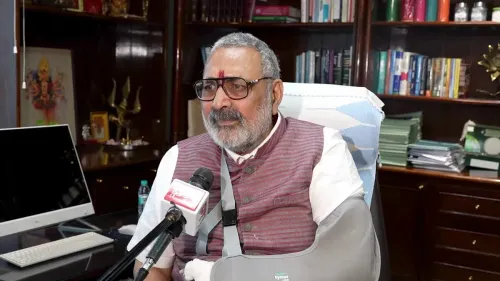
Giriraj Singh hits out at 'selective attacks' on Sanatan Dharma
Synopsis
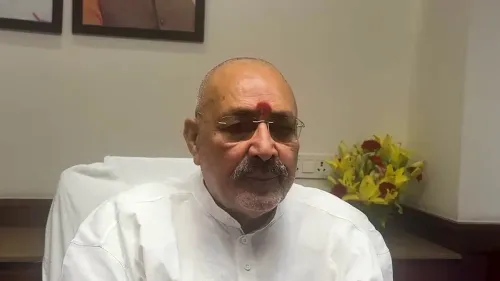
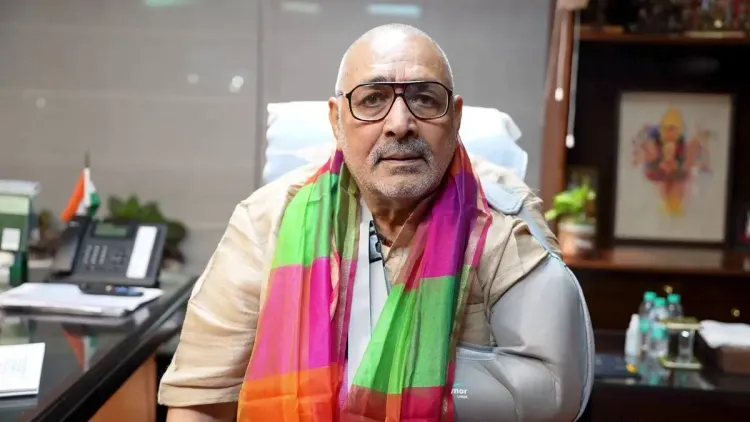
Union Textiles Minister Giriraj Singh accused the opposition on November 3, 2026, of staying silent on all issues except selectively targeting Sanatan Dharma, while dividing society along caste lines and playing the 'appeasement game' — sharpening the BJP's cultural-nationalist pitch ahead of Parliament's winter session.
Key Takeaways
Union Textiles Minister Giriraj Singh posted on X on November 3, 2026 , accusing opponents of selective attacks on Sanatan Dharma .
He charged the opposition with a dual strategy: splitting voters along caste lines and practising 'tushtikaaran' (appeasement).
Singh described this approach as the 'narrow, petty thinking' that defines his rivals.
The post continues a sustained BJP pattern of defending Sanatan Dharma against perceived cultural criticism ahead of legislative sessions.
The statement is directed at consolidating Hindu voters in states like Bihar , where caste arithmetic is electorally decisive.
Silence on everything else, and attacks reserved only for Sanatan — that, says Union Textiles Minister Giriraj Singh, is the defining feature of his political opponents. In a sharp post on X on Tuesday, November 3, 2026, the senior BJP leader and Lok Sabha MP from Begusarai, Bihar, turned the spotlight on what he called a pattern of caste-based division and appeasement politics.
Posting in Hindi, Singh wrote: 'Baaki sab par chuppī aur keval Sanatan par hamla!' — 'Silence on everything else, and only Sanatan is attacked!' He went further, charging that the opposition cycles between splitting society along caste lines and playing what he called 'the game of appeasement' — and that this, he said, defines their 'narrow, petty thinking.'
The Sanatan Dharma fault line in Indian politics
The defence of Sanatan Dharma has become one of the most charged fault lines in Indian electoral discourse. BJP leaders have repeatedly accused opposition parties of singling out Hindu religious traditions for criticism while staying conspicuously quiet on similar scrutiny of other faiths. Singh's post follows a well-worn but deeply contested rhetorical script: frame the opposition as culturally hostile, then pivot to caste mobilisation and minority vote-banking as twin instruments of division.
The charge carries electoral weight. Bihar, Singh's home state, is a laboratory of caste arithmetic, and accusations of 'tushtikaaran' — appeasement — resonate sharply with voters who feel that majoritarian cultural concerns are systematically dismissed. The framing is not new, but its intensity tends to spike around legislative sessions and ahead of state election cycles.
Caste, appeasement, and the BJP's counter-narrative
BJP's counter-narrative has consistently been to recast caste-based outreach by rival parties as divisive, while positioning its own cultural-nationalist platform as unifying. Singh's post is a textbook example: in two lines, it packages the selective-silence argument, the caste-division charge, and the appeasement accusation together — a rhetorical trifecta aimed squarely at consolidating Hindu voters who may otherwise be fragmented by sub-caste loyalties.
Opposition parties, for their part, have argued that raising questions about social hierarchies embedded in tradition is legitimate democratic discourse, not an 'attack' on religion. That counter is notably absent from Singh's framing — which is precisely the point. The post is a provocation designed to draw a response and sharpen the contrast.
With Parliament's winter session approaching, exchanges like this one are the overture — staking out ideological ground before the floor debates begin. Watch for opposition rebuttals that either challenge the 'attack on Sanatan' framing directly or redirect toward economic and governance issues, forcing the BJP to fight on two fronts simultaneously.
Point of View
The BJP signals it intends to fight the cultural-identity battle on its own terms rather than cede ground to socioeconomic framing. The timing — ahead of Parliament's winter session — suggests the party wants this narrative in the air before policy debates begin. The 'selective silence' charge is particularly sharp because it forces the opposition to either defend past statements on Sanatan or pivot, neither of which is comfortable. Historically, such rhetorical moves have proven effective at consolidating upper-caste and OBC swing voters who feel caught between BJP cultural nationalism and caste-based opposition outreach.
NationPress
4 Nov 2026
Frequently Asked Questions
What did Giriraj Singh say about Sanatan Dharma?
Giriraj Singh accused the opposition of staying silent on all other issues while selectively attacking Sanatan Dharma, calling this 'narrow, petty thinking.'
Why does Giriraj Singh accuse the opposition of appeasement?
Singh charges opposition parties with practising 'tushtikaaran' — appeasement of minority communities — while ignoring the concerns of Hindu voters, a recurring BJP argument in Indian political discourse.
What is the BJP's position on Sanatan Dharma and criticism of it?
The BJP consistently frames criticism of Sanatan Dharma as religiously biased, arguing that similar scrutiny is never applied to other faiths, and uses this charge to mobilise Hindu voters ahead of elections and legislative sessions.
Who is Giriraj Singh and why does his statement matter?
Giriraj Singh is a senior BJP leader, Union Textiles Minister, and Lok Sabha MP from Begusarai, Bihar. His statements carry weight as a signal of the party's ideological positioning, particularly among voters in Hindi-belt states.
What is 'tushtikaaran' in Indian politics?
'Tushtikaaran' means appeasement — in Indian political usage, it refers to the BJP's accusation that opposition parties frame policies to favour religious or caste minorities for electoral gain, at the perceived expense of the majority.