CM Sai Unveils Viksit Bharat Sankalp Park in Nava Raipur
Synopsis
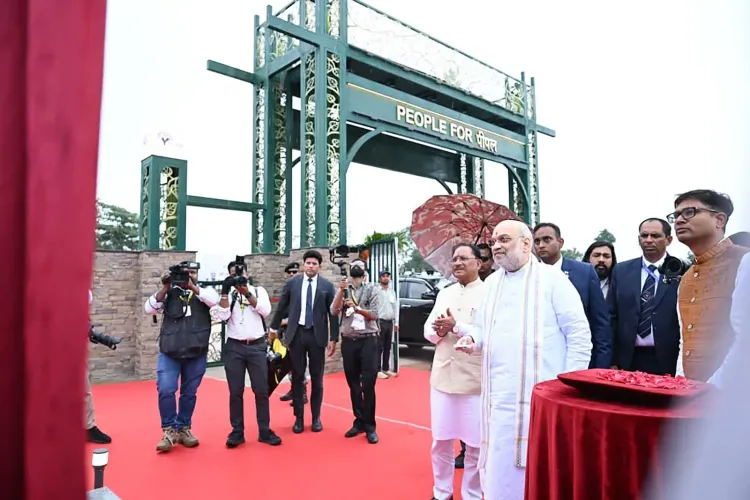
Chhattisgarh CM Vishnu Deo Sai and Union Home Minister Amit Shah inaugurated the 'Viksit Bharat Sankalp Park' in a 16-acre Peepal grove in Nava Raipur, planting saplings under the 'Peepal for People' campaign to advance the state's Peepal City vision.
Key Takeaways
The Viksit Bharat Sankalp Park was inaugurated on November 3, 2026 in Nava Raipur , Chhattisgarh.
The park spans approximately 16 acres inside an existing Peepal grove, preserving the trees rather than clearing them.
Union Home Minister Amit Shah performed the inauguration alongside Chief Minister Vishnu Deo Sai .
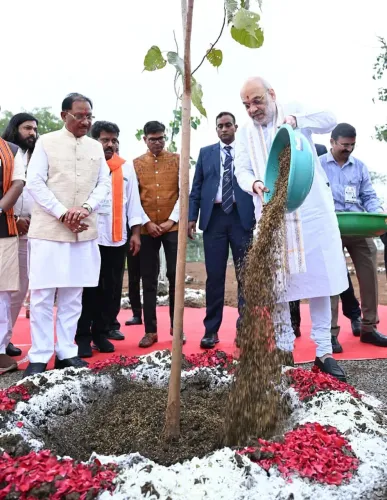
A Peepal sapling was jointly planted under the 'Peepal for People' campaign, part of the drive to brand Nava Raipur as a 'Peepal City' .
The initiative is framed as a ground-level expression of PM Modi's Viksit Bharat goal of a developed, self-reliant India by 2047 .
Nava Raipur, Chhattisgarh's planned capital since 2000 , has consistently prioritised green infrastructure in its urban design.
A 16-acre Peepal grove in Nava Raipur became the setting for a statement about what modern India wants to stand for — growth without erasing green. Chhattisgarh Chief Minister Vishnu Deo Sai joined Union Home Minister Amit Shah on Tuesday, November 3, 2026, for the inauguration of the 'Viksit Bharat Sankalp Park', a public green space carved out of an existing Peepal forest in the state's planned capital.
A park born inside a Peepal forest
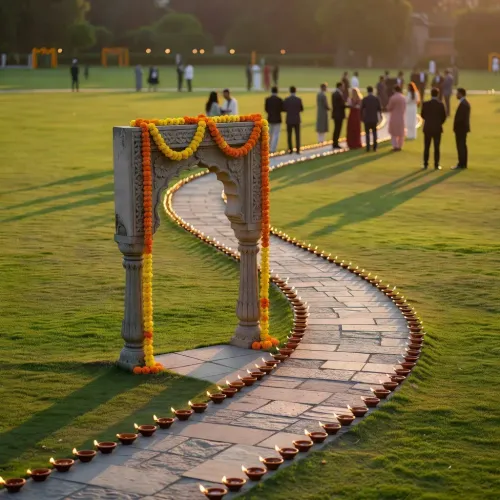
The site is no ordinary patch of land. The grove — already dense with Peepal trees — was developed into a public park rather than cleared for construction, a deliberate choice that frames the inauguration as conservation-first urban planning. CM Sai, posting in Hindi, described the moment as the fulfilment of 'prakriti aur pragati ko saath lekar chalna' (walking with nature and progress together) — a phrase he attributed directly to Prime Minister Narendra Modi's foundational philosophy for the Viksit Bharat vision.
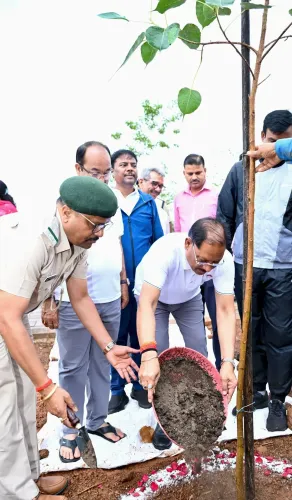
At the ceremony, Shah and Sai jointly planted a Peepal sapling under the 'Peepal for People' campaign, the state's ongoing drive to reinforce Nava Raipur's identity as a 'Peepal City'. The campaign is simple in design but deliberate in signal: every significant public occasion in the capital is marked by a Peepal planting, accumulating a living green record of the city's growth.
Nava Raipur's green-city ambition, two decades in the making
Nava Raipur — Chhattisgarh's purpose-built administrative capital, conceived after the state's formation in 2000 — was planned from the outset with wide green corridors and low-density layouts unusual for Indian cities of its size. The Peepal City project extends that founding logic into a cultural and ecological identity, positioning the capital as a model for how India's newer cities can grow without the congestion and concrete-intensity that older metros carry.
The Viksit Bharat goal, articulated by PM Modi as a target for a fully developed India by 2047, explicitly threads sustainability through economic ambition. Inauguration of a park bearing that name in a state capital sends a clear signal: the BJP-governed state is anchoring its urban development narrative to the national mission's vocabulary, making visible the connection between local greenery and a centenary national aspiration.
What the Viksit Bharat Sankalp Park is meant to do
CM Sai's post frames the park's primary purpose as inspirational — a space that will 'motivate future generations toward building a developed and self-reliant India.' That framing turns a green park into civic infrastructure: not just lungs for the city, but a classroom in national purpose. Whether through signage, programming, or simply the act of preserving 16 acres from development pressure, the park becomes a tangible anchor for an otherwise abstract 2047 goal.
The Peepal tree itself carries deep cultural resonance in India — sacred in Hindu, Buddhist, and Jain traditions, and ecologically significant as one of the few trees that releases oxygen through the night. Choosing it as the symbol of a 'city of the future' fuses environmental utility with civilisational continuity. It is, in its way, a very deliberate piece of city branding.
Point of View
On-ground symbols ahead of a politically active period. Choosing a Peepal grove — culturally loaded, ecologically credible — as the site is astute: it sidesteps the criticism that development means deforestation. For CM Sai, a relatively new face in the chief ministerial role, hosting Amit Shah for a green-urban milestone also reinforces his government's alignment with Delhi's priorities and cements Nava Raipur's image as a model planned city. The broader pattern — Viksit Bharat-branded parks appearing in state capitals — suggests a coordinated soft-power campaign that turns local green spaces into billboards for a national mission.
NationPress
3 Nov 2026
Frequently Asked Questions
What is the Viksit Bharat Sankalp Park in Nava Raipur?
The Viksit Bharat Sankalp Park is a public green space spanning approximately 16 acres inside an existing Peepal grove in Nava Raipur, Chhattisgarh. It was inaugurated on November 3, 2026, by Union Home Minister Amit Shah and Chief Minister Vishnu Deo Sai as a symbol of combining development with nature conservation.
What is the 'Peepal for People' campaign in Chhattisgarh?
The 'Peepal for People' campaign is a Chhattisgarh state initiative under which Peepal saplings are planted at public events and key locations to build Nava Raipur's identity as a 'Peepal City', linking green urban planning with the state's development agenda.
Why is Nava Raipur called the 'Peepal City'?
Nava Raipur, Chhattisgarh's purpose-built administrative capital, is being promoted as a 'Peepal City' through systematic plantation drives and the preservation of Peepal groves. The initiative aims to give the planned city a distinctive green identity rooted in India's cultural and ecological heritage.
What is the Viksit Bharat vision and its 2047 target?
Viksit Bharat, meaning 'Developed India', is PM Narendra Modi's national goal of making India a fully developed, self-reliant nation by 2047 — the centenary of independence. The framework emphasises sustainable growth that integrates environmental care with economic progress.
Who inaugurated the Viksit Bharat Sankalp Park?
Union Home Minister Amit Shah inaugurated the Viksit Bharat Sankalp Park in Nava Raipur on November 3, 2026, in the presence of Chhattisgarh Chief Minister Vishnu Deo Sai.