CM Dhami Seeks Forest Land Nod to Shift Uttarakhand HC to Haldwani
Synopsis
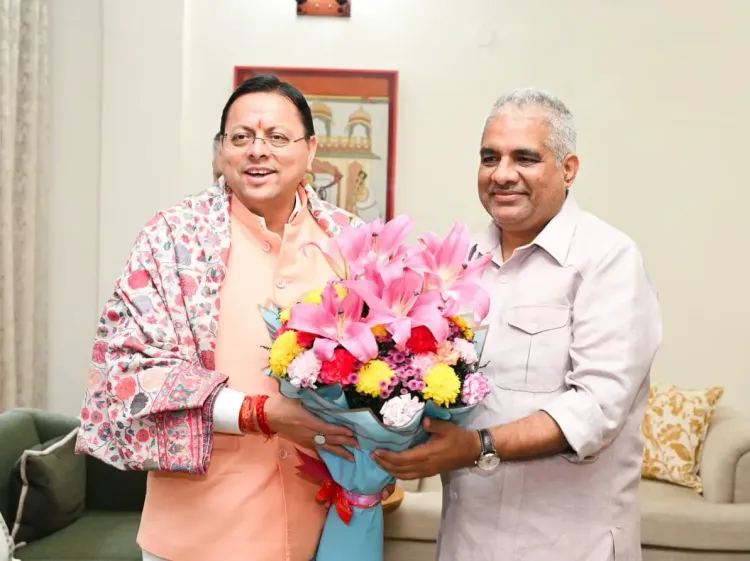
Uttarakhand CM Pushkar Singh Dhami met Union Environment Minister Bhupendra Yadav on 3 November 2026 in New Delhi, seeking fast-track clearance for forest land diversion at Haldwani's Lamachaur to build a permanent High Court campus, citing landslide risks and congestion at the current Nainital site.
Key Takeaways
CM Pushkar Singh Dhami met Union Minister Bhupendra Yadav in New Delhi on 3 November 2026 to push for forest land clearance for the High Court relocation.
The Uttarakhand High Court , seated in Nainital since 2000, faces landslide risk, tourist congestion, and chronic access and parking problems.
The proposed permanent campus is in the Lamachaur area of Haldwani , which offers national highway connectivity and room for expansion.
The site is reserved forest land , making a formal diversion approval from the Union Ministry of Environment the critical bottleneck.
A Supreme Court of India order has already directed the state to provide land for the new High Court building within a set timeline.
Minister Yadav gave an assurance of 'positive and prompt action' on the proposal; formal statutory processes still remain.
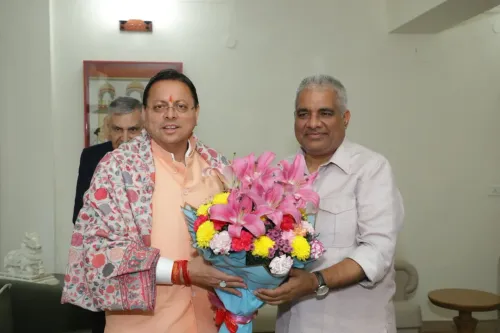
A landslide-prone hillside and gridlocked tourist traffic are no place for a High Court — and Uttarakhand Chief Minister Pushkar Singh Dhami took that argument directly to the Union government in New Delhi on Tuesday, 3 November 2026, meeting Union Minister for Environment, Forest and Climate Change Bhupendra Yadav to press for a critical forest land clearance that could finally move the state's apex court off the slopes of Nainital.
Why Nainital's hilltop court is running out of road
The Uttarakhand High Court has been seated in Nainital since the state was carved out of Uttar Pradesh under the Uttarakhand Reorganisation Act, 2000. But the location, nestled at the foothills of China Peak, has aged poorly. CM Dhami told the Union Minister that the complex faces a trifecta of structural hazards: persistent landslide risk, relentless year-round tourist movement, and chronic parking and access gridlock that directly disrupts court functioning. Nainital's identity as a premier hill resort is, paradoxically, the court's biggest operational liability.
The congestion is not seasonal. The Chief Minister emphasised that litigants, lawyers, and judges navigate the same choked roads as holiday-makers every single day of the year — a situation incompatible with a modern, high-functioning judicial institution.
Lamachaur, Haldwani: the proposed new home
The state government has identified the Lamachaur area of Haldwani as the site for a permanent High Court campus. Haldwani sits in the plains of the Kumaon region, well-connected to national highways and arterial roads — a sharp contrast to the narrow hill approaches to Nainital. CM Dhami argued that the proposed site would offer judges, advocates, litigants, and the general public vastly improved access, adequate parking, and room for future expansion of judicial infrastructure that the current hilltop campus simply cannot accommodate.
There is, however, one non-negotiable hurdle: the Lamachaur site falls on reserved forest land. That makes the Union Ministry of Environment, Forest and Climate Change the indispensable gatekeeper. Without a formal forest land diversion under the Forest Conservation Act, no construction can begin. Dhami asked Bhupendra Yadav to fast-track the proposal for transfer and diversion of that reserved forest land.
The Supreme Court clock ticking in the background
The meeting carries added urgency because of a standing Supreme Court of India order — referenced by CM Dhami during the discussions — that has already directed the state to provide land for a new High Court building within a stipulated timeline and ensure its formal handover. That apex-court deadline transforms this from a routine infrastructure proposal into a compliance obligation. Delay in securing the forest clearance risks the state falling foul of the country's highest judicial authority — a politically and legally untenable position.
This dynamic is not unique to Uttarakhand. Himalayan states with high forest cover routinely face this friction: the need to modernise or relocate public institutions butting up against the stringent requirements of central environmental law. The outcome here — approval, conditional approval, or rejection — will set a practical precedent for how quickly such transitions can move.
Yadav's assurance — and what happens next
Union Minister Bhupendra Yadav responded positively, offering what the Chief Minister's Office described as an assurance of 'positive and prompt action' on the proposal. That is an assurance, not an order. The formal process — scrutiny by the Forest Advisory Committee, site inspection, and statutory compliance checks — still lies ahead.
CM Dhami stated that the state government is treating the procedural steps as a priority, with continuous coordination underway with the central government and all relevant departments. A modern, permanent High Court campus, he said, will not only strengthen Uttarakhand's judicial infrastructure but make court services more accessible and efficient for every citizen of the state.
The forest clearance file is now in New Delhi. Whether Bhupendra Yadav's assurance translates into a swift formal approval will determine whether Uttarakhand's highest court gets the modern home it has long needed — or stays marooned on a landslide-risk hillside for years to come.
Point of View
And where delays carry real legal costs given the Supreme Court's oversight. CM Dhami's decision to personally lobby the Union Minister signals that the state regards this as a time-sensitive compliance priority, not merely a long-term infrastructure aspiration. The Forest Conservation Act's mandatory clearance process means the Ministry of Environment holds effective veto power over a judicially mandated infrastructure project, placing Bhupendra Yadav in an unusually pivotal position. How swiftly the forest advisory process moves will test the Modi government's stated commitment to reducing regulatory friction for states — especially those, like Uttarakhand, where virtually every major development project requires central forest clearances.
NationPress
3 Nov 2026
Frequently Asked Questions
Why is the Uttarakhand High Court being shifted from Nainital to Haldwani?
The current High Court complex in Nainital sits at the foothills of China Peak, making it vulnerable to landslides. Heavy year-round tourist traffic also causes severe congestion, disrupting court access for litigants, lawyers, and judges. Haldwani's Lamachaur area offers better road and national highway connectivity and space for a modern, expandable campus.
What is the Lamachaur area in Haldwani and why was it chosen?
Lamachaur is a locality in Haldwani, a major plains town in Uttarakhand's Kumaon region. It has been proposed as the site for the High Court's permanent campus because of its superior connectivity to national highways and its capacity to support large-scale judicial infrastructure — unlike the constrained hilltop site in Nainital.
Why does the Uttarakhand government need permission from the Union Environment Ministry?
The proposed Lamachaur site is classified as reserved forest land. Any transfer or diversion of such land for non-forest use requires formal clearance from the Ministry of Environment, Forest and Climate Change under the Forest Conservation Act. Without that approval, the state cannot legally begin construction.
What role does the Supreme Court play in this High Court relocation?
The Supreme Court of India has issued an order directing the Uttarakhand government to provide land for the new High Court building and ensure its formal handover within a stipulated timeline. This makes securing the forest clearance a compliance obligation, not just a policy choice.
Has the Union Minister approved the forest land diversion for the Haldwani High Court campus?
Union Minister Bhupendra Yadav gave CM Dhami an assurance of positive and prompt action on the proposal during their 3 November 2026 meeting. However, this is not a formal approval — the proposal still has to go through the statutory Forest Advisory Committee process and other regulatory steps before construction can begin.