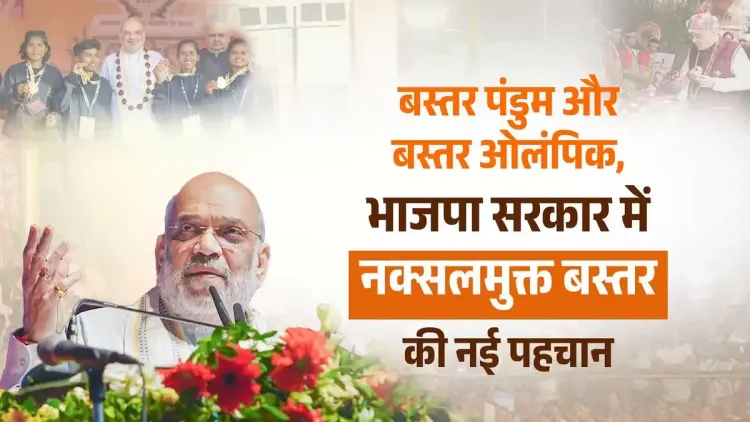
Amit Shah highlights Bastar Pandum and Bastar Olympic initiatives
Synopsis
Union Home Minister Amit Shah praised the BJP government in Chhattisgarh for reviving tribal art through the Bastar Pandum festival and steering lakhs of youth toward sport via the Bastar Olympic, signalling the party's two-track cultural and athletic push in the tribal heartland.
Key Takeaways
Amit Shah on 3 November 2026 highlighted two BJP-led Chhattisgarh initiatives — Bastar Pandum (cultural revival) and Bastar Olympic (youth sport).
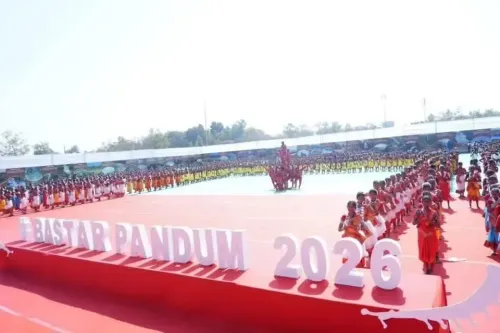
Bastar Pandum is positioned as a state platform to preserve and showcase the distinctive tribal art forms of the Bastar region.
The Bastar Olympic is framed as a sporting pathway for 'lakhs of youth' from tribal communities who lack mainstream athletics infrastructure.
The BJP formed the Chhattisgarh government in December 2023 and has since centred tribal welfare and cultural identity in its governance messaging.
The two programmes together reflect a deliberate strategy of pairing cultural affirmation with youth-development opportunities in a tribal-majority belt.
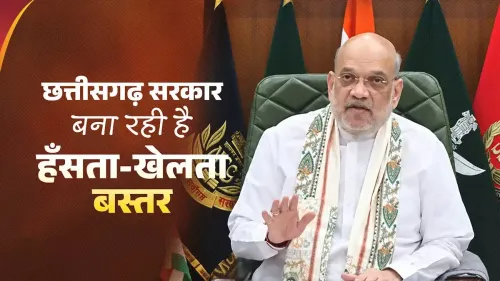
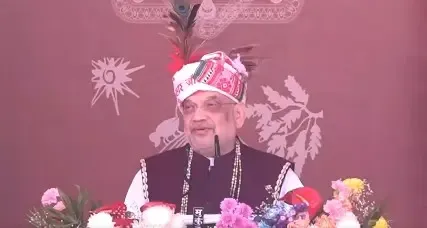
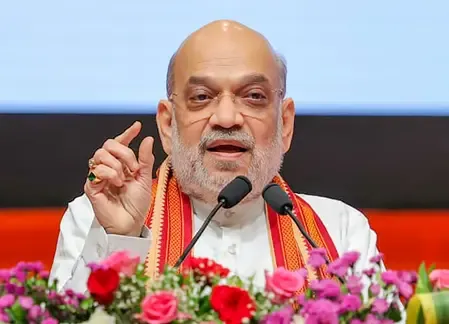
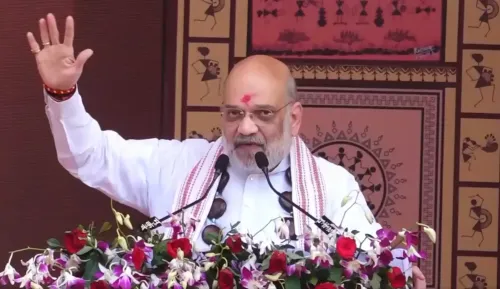
Deep in the forested heartland of southern Chhattisgarh, tribal art forms are finding a new stage — and thousands of young athletes are finding a new arena. On Tuesday, 3 November 2026, Union Home Minister Amit Shah took to X to credit the BJP government in Chhattisgarh with two flagship initiatives — Bastar Pandum and the Bastar Olympic — saying together they are reviving indigenous culture and channelling tribal youth toward sport.
Shah's post, written in Hindi, stated: 'Chhattisgarh mein BJP sarkar ne Bastar Pandum se janjaatiya kala aur sanskriti ko punr-jeevit kiya hai aur Bastar Olympic se laakhon yuvaon ko nayi disha mil rahi hai' — 'The BJP government in Chhattisgarh has revived tribal art and culture through Bastar Pandum, and through the Bastar Olympic, lakhs of youth are getting a new direction.'What Bastar Pandum represents for tribal heritage
Bastar is one of India's most culturally distinct tribal belts, home to communities whose art, music, dance, and ritual traditions have long existed on the margins of mainstream cultural policy. Bastar Pandum — a state-promoted festival initiative — is framed by the BJP as a vehicle to document, showcase, and sustain those traditions following the party's return to power in Chhattisgarh in December 2023 after winning the state assembly elections.
The region carries art forms — Dhokra metalwork, Godna tattoo art, Ghotul music traditions — that have rarely had formal institutional backing. A dedicated festival platform signals at least an intent to shift that equation.
Bastar Olympic: sport as a policy lever for youth
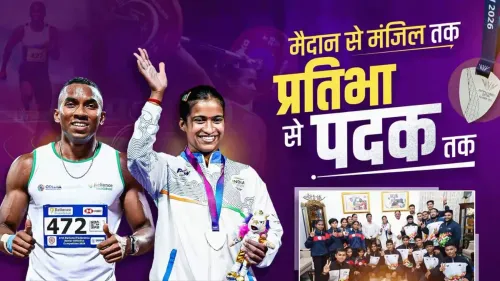
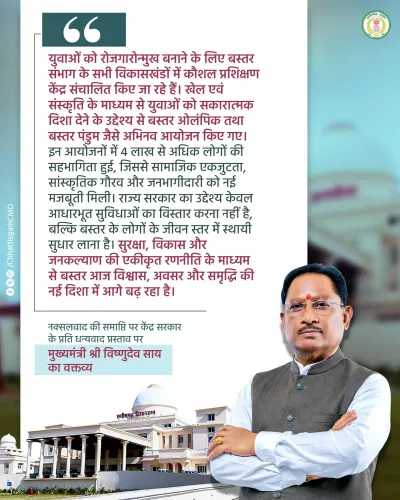
Running alongside the cultural push is the Bastar Olympic, a state-level sporting event designed to bring competitive sport to tribal youth who might otherwise sit outside mainstream athletics infrastructure. Shah's framing — that the initiative is giving 'a new direction' to 'lakhs of youth' — positions it less as a sporting calendar fixture and more as a social mobility instrument in a region that has historically seen limited state investment in youth development.
The pairing of the two programmes — one cultural, one athletic — reflects a deliberate two-track approach: anchoring identity through heritage while opening pathways through sport.
BJP's tribal governance pitch in Chhattisgarh
Shah's amplification of these schemes fits a clear pattern in how the BJP has sought to frame its record in Chhattisgarh since assuming power. With a large Scheduled Tribe electorate spread across the state's southern districts, cultural and welfare visibility in Bastar carries real political weight. Highlighting schemes that blend identity affirmation with youth opportunity is consistent with the party's messaging in other tribal-majority states as well.
Whether the programmes deliver at the scale the post implies will ultimately be tested in subsequent budgets, the reach of future Bastar Olympic editions, and the participation numbers from tribal communities on the ground.
Point of View
Where Scheduled Tribe voters are numerically decisive, this messaging carries electoral as well as administrative logic. The pairing of a heritage festival with a sporting event mirrors a broader BJP playbook seen in Jharkhand and Madhya Pradesh: cultural legitimacy as a foundation for political consolidation. The real test will be whether Bastar Pandum and the Bastar Olympic grow in scale and funding, or remain high-visibility but low-investment exercises.
NationPress
3 Nov 2026
Frequently Asked Questions
What is Bastar Pandum?
Bastar Pandum is a state-promoted cultural festival in Chhattisgarh designed to showcase and revive the traditional art, music, and heritage of tribal communities in the Bastar region.
What is the Bastar Olympic?
The Bastar Olympic is a state-level sporting competition launched by the BJP government in Chhattisgarh to provide tribal youth in the Bastar belt with competitive sporting opportunities and a structured path in athletics.
When did the BJP come to power in Chhattisgarh?
The BJP formed its government in Chhattisgarh in December 2023 after winning the state assembly elections held earlier that year.
Why did Amit Shah post about Bastar today?
Amit Shah highlighted the Bastar Pandum and Bastar Olympic initiatives on 3 November 2026, as part of the BJP's ongoing effort to communicate its tribal welfare and cultural revival agenda in Chhattisgarh.
What tribal art forms are found in the Bastar region?
Bastar is known for Dhokra metalwork, Godna tattoo art, Ghotul musical traditions, and a range of indigenous crafts and performance forms unique to its tribal communities.