Amit Shah meets Bastar tribals at Rashtrapati Bhavan
Synopsis
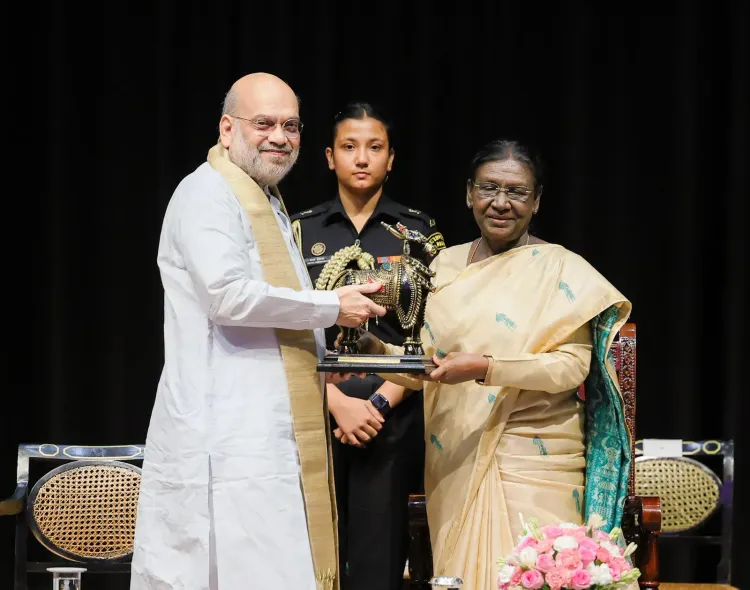
Union Home Minister Amit Shah and President Draupadi Murmu hosted Bastar's Manjhi-Chalki community leaders and Bastar Pandum festival winners at Rashtrapati Bhavan on 30 July 2026 — the first time Bastar residents arrived there in traditional tribal attire — as the government showcased the region's post-Naxal cultural revival.
Key Takeaways
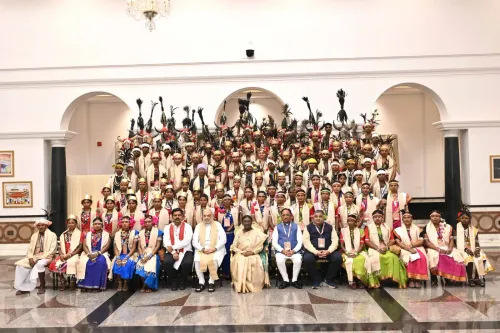
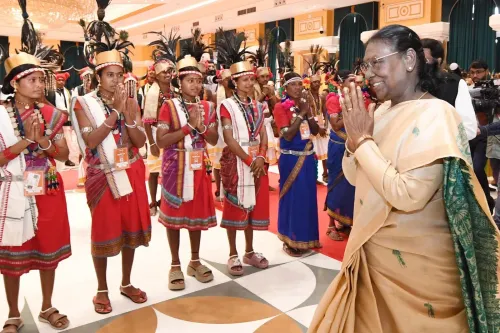
On 30 July 2026 , Union Home Minister Amit Shah and President Draupadi Murmu held a dialogue with Bastar's Manjhi-Chalki community leaders and Bastar Pandum festival winners at Rashtrapati Bhavan .
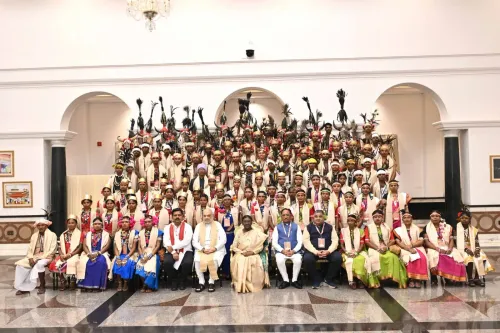
This was the first time residents of Bastar arrived at Rashtrapati Bhavan in traditional tribal attire, marking a symbolic milestone.
President Murmu is herself the first person from a tribal community to hold India's highest constitutional office, amplifying the event's significance.
Shah described Bastar as naksalmukt (free of Naxals) and said the region is now preserving its cultural heritage after decades of Left Wing Extremism.
Shah projected that Bastar will become Chhattisgarh's most developed division in the coming years.
The event fits a broader government pattern of using national platforms to showcase tribal integration and security gains in former conflict zones of central India.
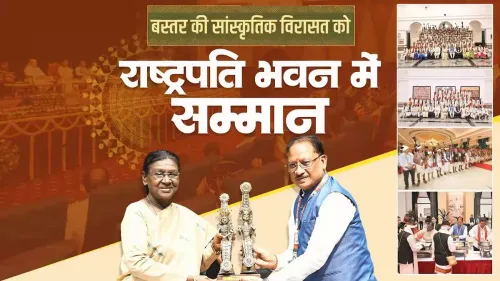
For the first time in the history of Rashtrapati Bhavan, visitors arrived in the traditional attire of Bastar — a moment that Union Home Minister Amit Shah called living proof of a region reborn. On 30 July 2026, Shah joined President Draupadi Murmu in a dialogue with the Manjhi-Chalki (traditional community leaders) and winners of the Bastar Pandum cultural festival, bringing the sounds and colours of Chhattisgarh's tribal heartland to New Delhi's most storied address.
Tribal leaders at the President's doorstep
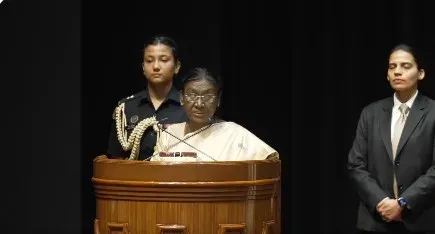
President Draupadi Murmu — herself the first person from a tribal community to hold India's highest constitutional office — hosted the gathering, lending the event a particular symbolic weight. The Manjhi-Chalki system represents the oldest layer of democratic governance in Bastar's tribal society, with village-level leaders holding customary authority over community disputes, land, and ritual. Bringing these custodians of tradition into the orbit of the national presidency was a deliberate signal: that Bastar's internal social architecture is being recognised, not overwritten.
The Bastar Pandum festival — an annual celebration of tribal dance, ritual, and heritage — supplied the winners who joined the delegation. Their presence in New Delhi underlined the government's argument that cultural life in the region has not merely survived conflict; it is now being amplified on a national stage.
From Naxal stronghold to heritage showcase
Bastar spent decades at the epicentre of Left Wing Extremism in central India. The conflict hollowed out public infrastructure, severed administrative reach, and — as Shah noted — pushed communities away from their own traditions. Successive governments combined security operations with targeted development schemes in LWE-affected districts across Chhattisgarh from the early 2010s onward, but the pace of operations intensified sharply in recent years.
Shah described the region as 'naksalmukt' — free of Naxals — and framed the Rashtrapati Bhavan visit as evidence of that transformation. 'The Bastar that was once losing its rich heritage, culture, and traditions to Naxal violence,' he wrote, 'is today, having become free of Naxalism, preserving its legacy.' The claim of full Naxal clearance in Bastar is the government's stated position; ground-level verification remains an ongoing process.
Bastar's next chapter: Chhattisgarh's most developed division
Shah went further than security messaging. He projected that Bastar, already on a development trajectory, will become Chhattisgarh's most developed division in the years ahead — a statement that sets a measurable benchmark for the region's administration. Infrastructure rollout, welfare scheme penetration, and the expansion of cultural platforms like Bastar Pandum are the visible levers the government is now pulling.
The choice of Rashtrapati Bhavan as the venue — rather than a state capital or a district collectorate — was itself a policy statement. National platforms, the government's logic runs, validate local identity and fast-track integration of communities that conflict had pushed to the margins. Whether that integration translates into durable economic gains for Bastar's predominantly tribal population is the question the coming years will answer.
A region that once made headlines for ambushes and displacement is now sending its cultural champions to the President's house. That is the image the government wants to define Bastar's next chapter.
Point of View
And a President who is herself of tribal origin, to cement the narrative that Bastar's security gains are now translating into cultural and developmental dividends. Shah's projection of Bastar as Chhattisgarh's future most-developed division is a forward commitment that will be measured against infrastructure and welfare data in the years ahead. The move also fits a wider BJP strategy of weaving tribal identity into the national mainstream without subordinating it — a balance that carries both electoral and governance implications in a state the party controls. How quickly tangible economic gains follow the symbolic wins will determine whether this moment becomes a turning point or a photo opportunity.
NationPress
13 Sept 2026
Frequently Asked Questions
Why did Amit Shah visit Rashtrapati Bhavan with Bastar tribals?
Union Home Minister Amit Shah joined President Draupadi Murmu on 30 July 2026 to hold a dialogue with Bastar's Manjhi-Chalki community leaders and Bastar Pandum festival winners, showcasing the region's cultural revival after years of Naxal conflict.
What is Bastar Pandum?
Bastar Pandum is an annual cultural festival in the Bastar division of Chhattisgarh that celebrates tribal heritage through traditional dance, rituals, and community customs.
What is the Manjhi-Chalki system in Bastar?
Manjhi-Chalki refers to traditional community leadership roles in Bastar's tribal society, where village-level leaders hold customary authority over disputes, land, and ritual — representing one of the oldest layers of local governance in the region.
Is Bastar now free of Naxals?
The Indian government's stated position, as reiterated by Home Minister Amit Shah on 30 July 2026, is that Bastar is now 'naksalmukt' or free of Naxals following sustained counter-insurgency operations in Chhattisgarh.
What is Amit Shah's vision for Bastar's development?
Shah stated that Bastar, already on a development path, will become Chhattisgarh's most developed division in the coming years, with infrastructure, welfare schemes, and cultural platforms as the key drivers.