CM Sai: Bastar's 209-member team welcomed at Rashtrapati Bhavan
Synopsis
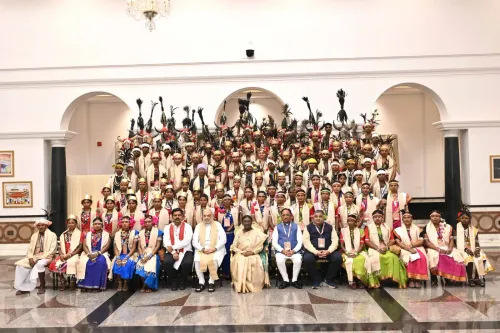
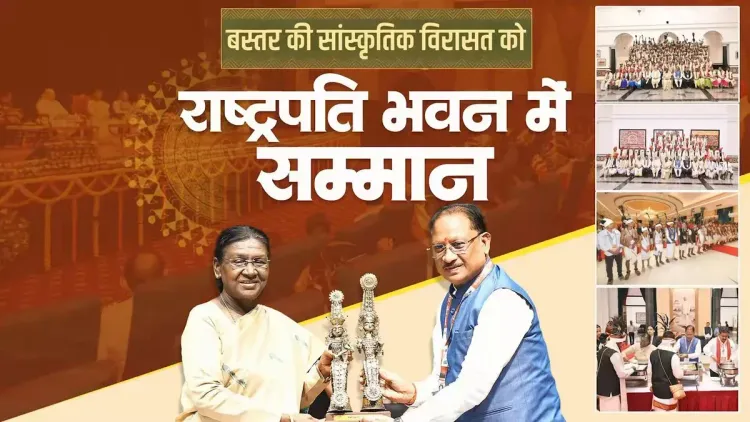
Chhattisgarh CM Vishnu Deo Sai announced that President Droupadi Murmu welcomed a 209-member Bastar delegation at Rashtrapati Bhavan on 31 July 2026, calling it a moment of national recognition for the region's rich tribal culture and traditions.
Key Takeaways
President Droupadi Murmu welcomed a 209-member delegation from Bastar at Rashtrapati Bhavan on 31 July 2026 .
CM Vishnu Deo Sai described the reception as a symbol of the entire nation's respect and pride for Bastar's tribal culture and folk traditions.
President Murmu is the first person from a tribal community to hold India's highest constitutional office, adding symbolic depth to the occasion.
Bastar in southern Chhattisgarh is home to some of India's most ancient tribal communities and is known for its distinct art, dance, and cultural heritage.
CM Sai framed the visit within a dual narrative of cultural preservation and development progress for the Bastar region.
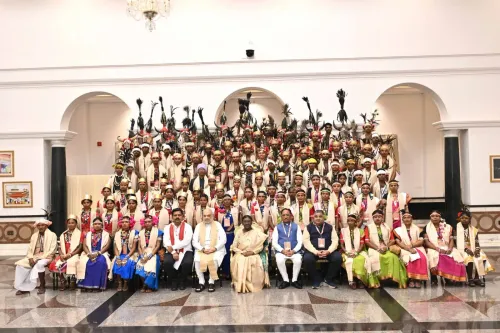
A 209-member delegation from Bastar walked the halls of Rashtrapati Bhavan on Friday, 31 July 2026 — and in doing so, carried one of India's most distinct tribal cultures straight to the heart of the republic. Chhattisgarh Chief Minister Vishnu Deo Sai hailed the reception by President Droupadi Murmu as a moment of national recognition for Bastar's indigenous heritage.
Sharing the occasion on X, CM Sai wrote: 'राष्ट्रपति भवन में बस्तर की समृद्ध सांस्कृतिक विरासत को सम्मान' — 'Honouring Bastar's rich cultural heritage at Rashtrapati Bhavan.' He described President Murmu's welcome of the delegation as a symbol of the entire nation's affection and pride for tribal culture, folk traditions, and the glorious heritage of Bastar.
Why President Murmu's welcome carries special weight
President Droupadi Murmu, who took office in 2022, is herself the first person from a tribal community to hold India's highest constitutional post. Her reception of a delegation rooted in tribal tradition is not merely ceremonial — it is a statement. When the President of India opens Rashtrapati Bhavan's doors to 209 voices from Bastar's forests and villages, the symbolism is hard to miss.
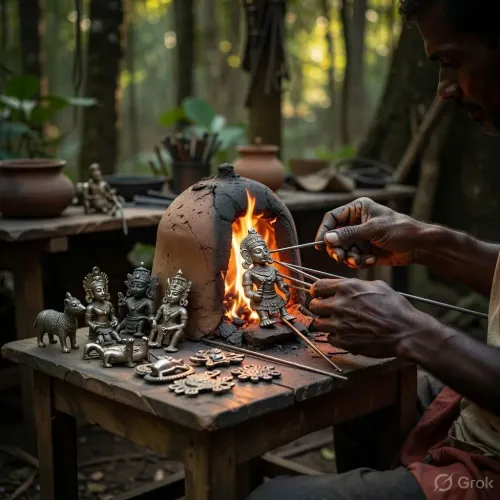
Bastar, a sprawling region in southern Chhattisgarh, is home to some of India's most vibrant and ancient tribal communities. Its art, dance, festivals, and crafts — from Dhokra metalwork to Ghotul traditions — represent a living cultural archive that has survived centuries largely on the strength of community memory.
Bastar development and the BJP's cultural messaging
CM Sai framed the Rashtrapati Bhavan visit within a broader arc: Bastar, he said, is moving toward 'new heights of development' while preserving its tribal culture and traditions. This dual framing — cultural pride plus development momentum — has been a consistent thread in how BJP-led Chhattisgarh governments have approached tribal districts since the state was carved out in 2000.
The state has backed Bastar handicrafts, festivals, and cultural institutions over the years as part of tribal welfare programming. Hosting a delegation of this size at the national capital signals an attempt to lift that local story onto a larger, more visible stage.
For Bastar's tribal communities — long associated in national discourse with conflict and underdevelopment — a reception at Rashtrapati Bhavan reframes the narrative. Today, the story being told is one of heritage, pride, and a region on the move.
Point of View
The optics are carefully layered: it signals both central government solidarity with indigenous communities and a rebranding of Bastar beyond its conflict-zone image. For CM Sai, who took charge in December 2023, amplifying such moments helps consolidate tribal support ahead of future electoral cycles in a state where tribal voters are decisive.
NationPress
14 Sept 2026
Frequently Asked Questions
Why did a 209-member Bastar delegation visit Rashtrapati Bhavan?
President Droupadi Murmu received the 209-member delegation from Bastar at Rashtrapati Bhavan on 31 July 2026 to honour the region's tribal culture, folk traditions, and indigenous heritage, as announced by Chhattisgarh CM Vishnu Deo Sai.
Who is Vishnu Deo Sai and why is he talking about Bastar?
Vishnu Deo Sai is the Chief Minister of Chhattisgarh, in office since December 2023. Bastar is a key tribal region in his state, and he regularly highlights its cultural and developmental progress.
What is Bastar known for culturally?
Bastar in southern Chhattisgarh is renowned for its distinct tribal traditions including Dhokra metalwork, Ghotul cultural institutions, folk dance, and vibrant festivals rooted in indigenous community life.
Why is President Droupadi Murmu significant for tribal communities?
President Murmu, who took office in 2022, is the first person from a tribal community to serve as President of India, making her reception of tribal delegations symbolically significant beyond protocol.
What is Chhattisgarh's approach to tribal cultural preservation?
Since the state's formation in 2000, Chhattisgarh governments have supported tribal welfare through cultural preservation programmes, backing Bastar handicrafts, festivals, and indigenous art forms.