CM Sai Hails President Murmu's Presence at Bastar Dussehra
Synopsis
Chhattisgarh CM Vishnu Deo Sai lauded President Draupadi Murmu's presence at Bastar Dussehra 2026, calling the multi-week tribal festival a living symbol of cultural self-respect passed to future generations, and highlighting the Muriya Darbar assembly.
Key Takeaways
Bastar Dussehra 2026 was attended by President Draupadi Murmu , the first tribal-community member to hold India's highest constitutional office.
CM Vishnu Deo Sai called Bastar Dussehra an 'invaluable heritage' where traditions are carried as lived faith to the next generation.
The Muriya Darbar — a traditional tribal court session — is a central institution of the festival and was specifically highlighted by the CM.
Bastar Dussehra is distinct from pan-Indian Dussehra, rooted in the agrarian and spiritual traditions of Chhattisgarh's tribal communities.
Chhattisgarh's formation in 2000 elevated the Bastar region's distinct festivals onto a larger national stage.
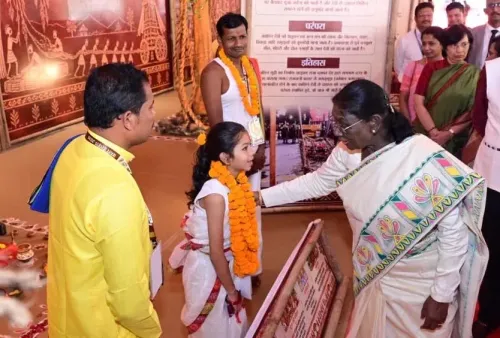
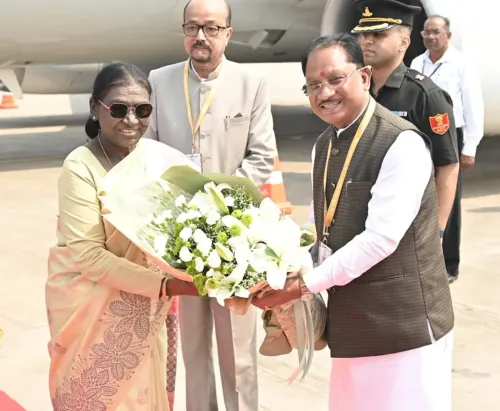
A festival older than most modern institutions, Bastar Dussehra in Chhattisgarh drew the nation's highest constitutional authority on Saturday, 24 October 2026 — and Chhattisgarh Chief Minister Vishnu Deo Sai marked the moment with a tribute that went well beyond ceremonial courtesy.
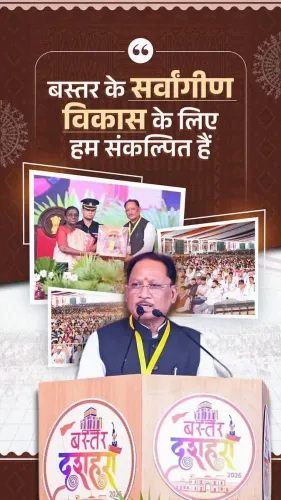
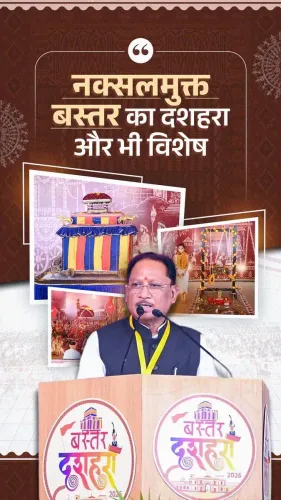
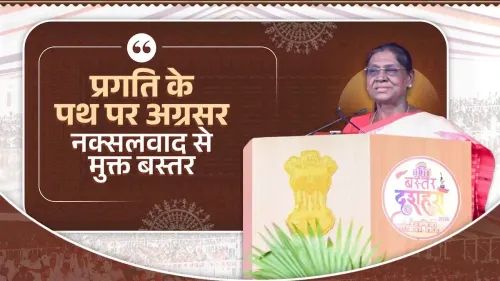
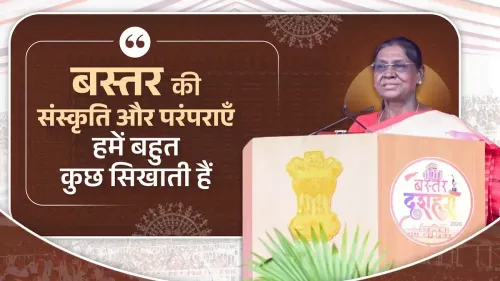
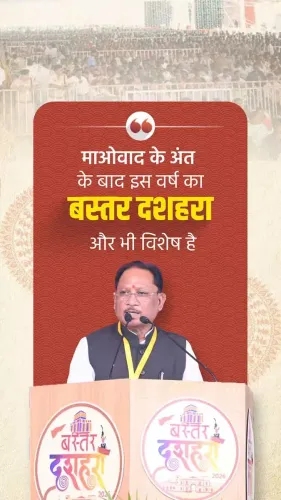
Posting on X, CM Sai wrote that Bastar Dussehra is a symbol of an 'invaluable heritage where traditions are not merely observed, but carried forward as faith woven into daily life and cultural self-respect, passed on to the next generation.' He singled out President Smt. Draupadi Murmu's 'dignified presence' as having made the historic mahaparvam (grand festival) even more distinguished.
Why President Murmu's Presence Resonates Deeply
Draupadi Murmu, who took office as President of India in July 2022, is the first person from a tribal community to hold the office. Her attendance at Bastar Dussehra 2026 is therefore not merely a protocol visit — it is a constitutional head who shares the living heritage returning to its roots. For Bastar's tribal communities, that symbolism is hard to overstate.
The festival also features the Muriya Darbar, a traditional tribal court session in which community customs and disputes are addressed — an institution that has survived and adapted across centuries. CM Sai's post specifically tagged @rashtrapatibhvn and used the hashtags #बस्तर_दशहरा_2026 and #मुरिया_दरबार, amplifying the dual significance of this year's edition.
Bastar Dussehra: A Festival That Runs on Its Own Calendar
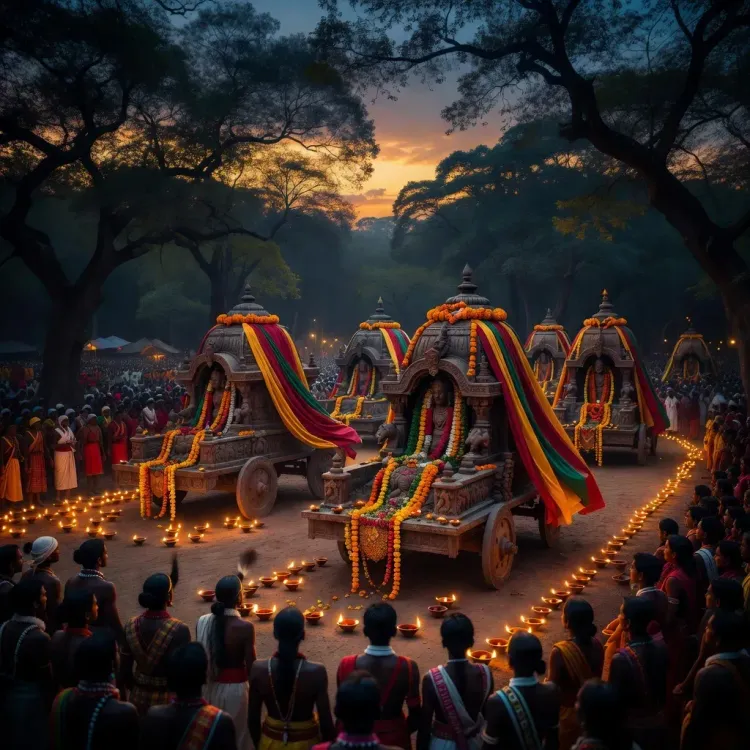
Unlike the pan-Indian Dussehra that marks Rama's victory over Ravana, Bastar Dussehra follows the traditions of the Bastar region — a weeks-long cycle of rituals rooted in the agrarian and spiritual life of its tribal people. Since Chhattisgarh's formation as a separate state in 2000, successive administrations have worked to raise the festival's national and international profile, positioning it as a flagship expression of indigenous heritage.
CM Sai's government has continued that thread — framing cultural self-respect (sanskritik swabhimaan) as a policy priority alongside development programmes in the state's tribal heartland.
When a tribal woman who became President walks through the procession grounds of Bastar, it is the kind of moment institutional India rarely manufactures — it simply arrives. The question now is how the state translates that moment into lasting infrastructure for the culture it celebrated.
Point of View
Invoking sanskritik swabhimaan (cultural self-respect) at a flagship tribal festival reinforces the party's broader framing of governance as cultural continuity. The Muriya Darbar's inclusion in the official narrative is notable: it legitimises customary tribal institutions within the modern state's frame. Whether this visibility translates into concrete cultural-preservation or tourism infrastructure will be the sharper test of intent.
NationPress
24 Oct 2026
Frequently Asked Questions
What is Bastar Dussehra and how is it different from regular Dussehra?
Bastar Dussehra is a weeks-long tribal festival in the Bastar region of Chhattisgarh rooted in the agrarian and spiritual traditions of local indigenous communities. Unlike the pan-Indian Dussehra celebrating Rama's victory over Ravana, it follows distinct rituals including the Muriya Darbar, a traditional tribal court assembly.
Why did President Draupadi Murmu attend Bastar Dussehra 2026?
President Draupadi Murmu, the first person from a tribal community to serve as India's head of state, attended Bastar Dussehra 2026 as part of the established practice of constitutional heads visiting regional tribal festivals. Her presence carried special symbolic weight given her own tribal heritage.
What is the Muriya Darbar?
The Muriya Darbar is a traditional tribal court session held during Bastar Dussehra in which community customs and disputes are addressed. It is one of the oldest institutional features of the festival and represents indigenous self-governance traditions.
Who is Vishnu Deo Sai and what is his role?
Vishnu Deo Sai is the Chief Minister of Chhattisgarh and a BJP leader who has held the post since December 2023. He represents the Bastar belt's political significance within the state and has consistently promoted tribal cultural festivals as part of his government's agenda.
When was Chhattisgarh formed and why does it matter for Bastar Dussehra?
Chhattisgarh was formed as a separate state in 2000 after being carved out of Madhya Pradesh. The formation gave greater administrative and political visibility to the Bastar region and its distinct tribal festivals, elevating Bastar Dussehra onto a national cultural stage.