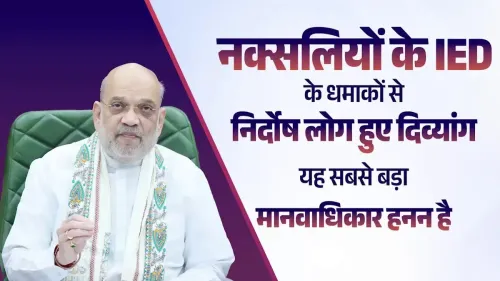
Amit Shah accuses Congress of backing Naxalism
Synopsis
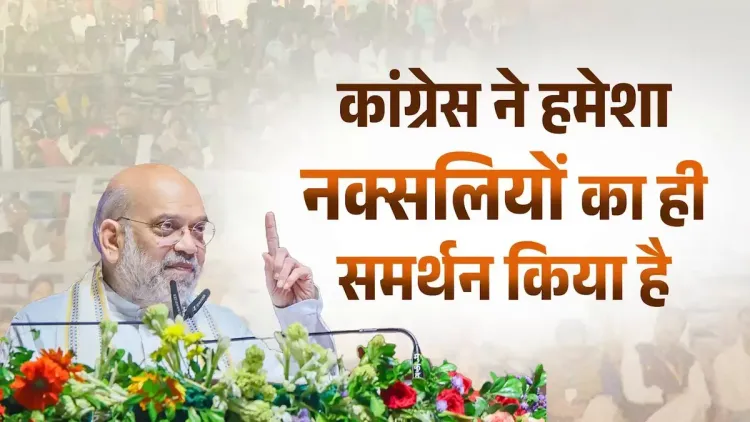
Union Home Minister Amit Shah accused the Indian National Congress of historically supporting Naxalism, alleging the party asked Maoists not to disarm and lent legitimacy to their parallel 'Janatana courts' operating in India's Red Corridor.
Key Takeaways
Union Home Minister Amit Shah posted a direct political attack on the Indian National Congress over Naxalism on November 3, 2026 .
Shah alleged Congress asked Naxalites not to surrender weapons, undermining central disarmament and rehabilitation schemes active since the mid-2000s.
He accused Congress of emboldening Janatana courts — parallel Maoist judicial structures operating outside the constitutional order in the Red Corridor.
The BJP government has pursued intensified counter-LWE operations alongside development drives in Chhattisgarh , Jharkhand , and Odisha .
Tribal communities in areas like Bastar and Gadchiroli remain the most directly affected by the persistence of Maoist parallel governance structures.
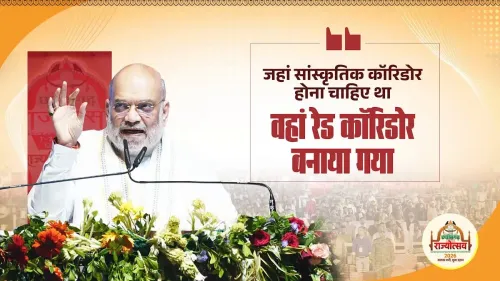
Union Home Minister Amit Shah launched a sharp political broadside against the Indian National Congress on Tuesday, November 3, 2026, accusing the opposition party of consistently supporting Naxal insurgency — a charge that cuts to the heart of one of India's longest-running internal security debates.
In a post on X, Shah wrote: 'Naxaliyon se hathiyar na chhodne ko kahne wali aur unki Janatana Adalatonko shah dene wali Congress ne hamesha Naxalwad ka hi samarthan kiya hai.' — translated: 'The Congress, which asked Naxalites not to surrender their weapons and which emboldened their Janatana courts, has always supported Naxalism.'
The 'Janatana courts' charge and what it means
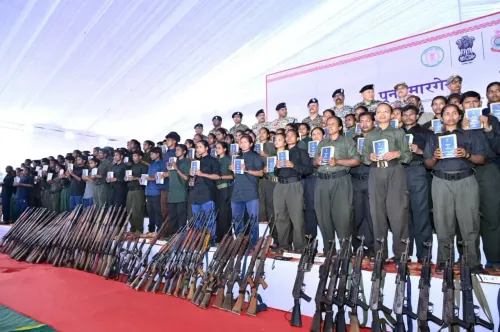
The accusation carries two specific barbs. The first — that Congress discouraged Naxalite disarmament — targets the party's handling of surrender and rehabilitation schemes, which successive central governments have run in Chhattisgarh, Jharkhand, and Odisha since the mid-2000s. Those programmes offer cash, skills training, and legal cover to insurgents who lay down arms. Any signal — real or perceived — that Maoists should hold on to weapons directly undercuts those drives.
The second charge is arguably more pointed. Janatana courts — or 'people's courts' — are parallel judicial structures that Maoist groups operate in pockets of the Red Corridor, dispensing summary 'justice' outside the constitutional order and, critics argue, entrenching insurgent authority over tribal communities. Shah's allegation that Congress provided political cover, or 'shah' (emboldening), to these structures frames the party not merely as soft on insurgency, but as complicit in a rival sovereignty.
BJP's counter-LWE push and the political battleground
The BJP-led government has made the dismantling of Left Wing Extremism — what it terms LWE — a signature security priority. Security forces have conducted intensified operations across the Red Corridor, while centrally-funded development schemes have targeted road connectivity, mobile infrastructure, and tribal welfare in affected districts. The government has pointed to declining violence incidents and a shrinking Maoist geographic footprint as evidence of progress.
The Congress, which has governed several Red Corridor states at various points, has pushed back against what it describes as a purely militaristic approach, arguing for dialogue and addressing tribal grievances. That long-running disagreement is the fault line Shah is striking — framing it not as a policy difference but as a fundamental alignment of values.
The tribes caught in the middle
Beyond the political sparring, the stakes for tribal communities across Bastar, Gadchiroli, and the broader Red Corridor are entirely concrete. Janatana courts have been documented operating in areas where state institutions have weak reach, leaving villagers subject to Maoist edicts on land disputes, social conduct, and perceived 'collaboration' with the government. Security forces and civilian officials working in these zones remain targets. The political argument about who enabled or confronted this parallel structure has direct consequences for those communities.
With anti-Naxal operations and rehabilitation drives ongoing, and Congress likely to respond to Shah's broadside, this exchange signals that Naxalism will remain a live electoral and governance flashpoint well into the season ahead.
Point of View
Making it harder to dismiss. Coming as anti-Naxal operations continue across the Red Corridor, this is also an attempt to claim security gains as a BJP governance story while pinning any residual Maoist presence on Congress-era policy choices.
NationPress
3 Nov 2026
Frequently Asked Questions
What are Janatana courts in the context of Naxalism?
Janatana courts are parallel judicial bodies set up by Maoist groups in parts of India's Red Corridor, where they dispense 'people's justice' outside the constitutional legal system. They operate in areas with weak state presence, particularly affecting tribal communities in states like Chhattisgarh and Jharkhand.
What did Amit Shah say about Congress and Naxalites?
Amit Shah posted on X that Congress asked Naxalites not to surrender their weapons and emboldened their Janatana courts, concluding that the party has always supported Naxalism.
What is India's official policy on Naxalite surrender?
Since the mid-2000s, successive central and state governments have run surrender and rehabilitation schemes offering cash incentives, skills training, and legal protection to Naxalites who lay down arms, particularly in Chhattisgarh, Jharkhand, and Odisha.
What is the Red Corridor in India?
The Red Corridor refers to a swath of central and eastern Indian states — including parts of Chhattisgarh, Jharkhand, Odisha, and Maharashtra — historically affected by Left Wing Extremism or Naxalite insurgency.
Has Congress responded to Amit Shah's Naxalism accusations?
No official Congress response to this specific post had been recorded at the time of publication. The party has historically rejected BJP's characterisations of its approach to Naxalism as distorted and politically motivated.