UNCTAD chief Grynspan widens UN secretary-general race lead in 4th straw poll
Synopsis
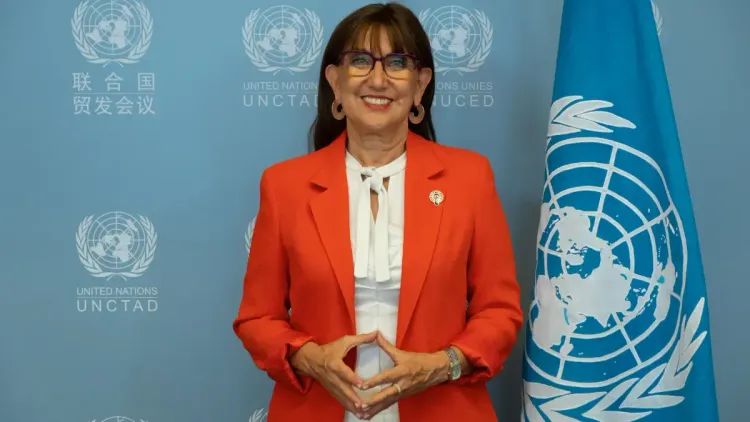
UNCTAD chief Rebecca Grynspan has inched further ahead in the race to lead the United Nations, picking up ten positive votes in the fourth Security Council straw poll — but Russia's open scepticism about the entire field means the veto could yet upend the frontrunner's path, with a three-month deadline bearing down.
Key Takeaways
Rebecca Grynspan of Costa Rica received 10 positive, 3 negative, and 2 neutral votes in the fourth Security Council straw poll on 30 September 2026 .
Her tally improved by one positive vote from the third poll held two weeks earlier.
Carolyn Rodrigues-Birkett of Guyana held second place with 8 positive, 6 negative, and 1 neutral vote .
Russia's Foreign Minister Sergei Lavrov indicated Moscow does not find the current candidates suitable, leaving the veto dynamic uncertain.
The UN Charter requires the Security Council to agree on a nominee before 1 January 2027 , when Guterres's term ends.
No Latin American has led the UN for 35 years , since Javier Pérez de Cuéllar left in 1991 .
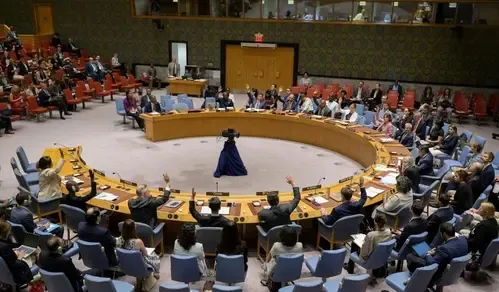
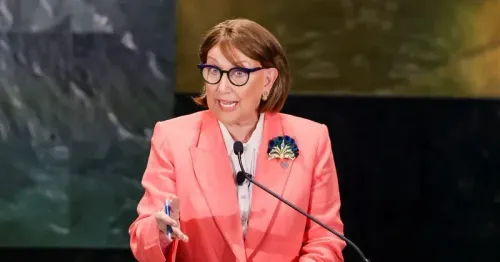
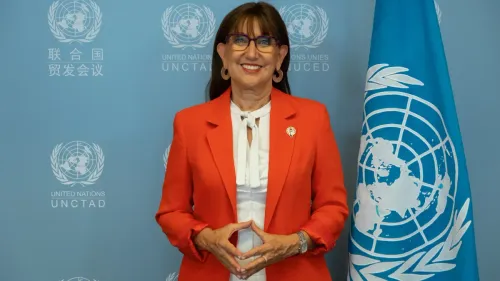
Rebecca Grynspan, the head of the United Nations Conference on Trade and Development (UNCTAD), has extended her lead among Security Council members in the fourth informal straw poll to identify a successor to outgoing Secretary-General António Guterres, according to sources tracking the confidential process. The poll, conducted on Tuesday, 30 September 2026, placed Grynspan ahead of six other candidates, though the five permanent members with veto powers retain the decisive say.
Fourth Poll Results
According to tabulations published by 1 for 8 Billion (1f8B), a group advocating for fair and open UN elections, and Pass Blue, a media outlet covering the United Nations, Grynspan of Costa Rica received ten positive votes, three negative, and two neutral votes from the 15-member Security Council. That represents one additional positive vote compared to the third straw poll held two weeks prior.
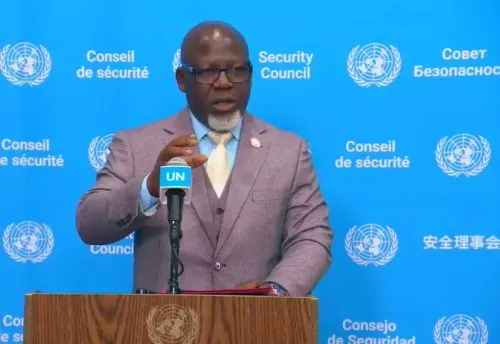
France's Permanent Representative Jérôme Bonnafont, serving as the Council president for the month, confirmed the poll had taken place but declined to reveal results under the agreed procedure. The results nonetheless leaked, as has been the pattern in previous rounds.
Where the Remaining Candidates Stand
Former Guyana Foreign Minister Carolyn Rodrigues-Birkett, who had led in an earlier round, held her second-place position with eight positive, six negative, and one neutral vote — unchanged from the third poll. International Atomic Energy Agency (IAEA) Director-General Rafael Grossi of Argentina placed third. He was followed by Olara Otunnu, a former UN under-secretary-general and ex-foreign minister of Uganda. Former Senegal President Macky Sall, who reportedly lacks the backing of his own government, came fifth. María Fernanda Espinosa, a former General Assembly president and Ecuador's former foreign minister, and Ivonne A-Baki, a former Ecuadorian ambassador to the United States and France, finished sixth and seventh respectively.
The Latin America Factor
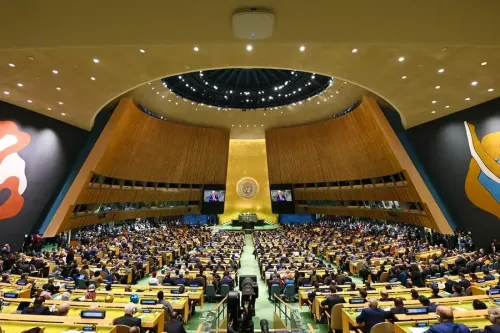
A powerful regional sentiment is shaping the race. The UN has been led exclusively by men across its 80-year history, and there has been no Latin American in the top post for 35 years — since Javier Pérez de Cuéllar departed in 1991. Delegations from Latin America and the Caribbean have argued it is the region's turn, an argument that benefits both Grynspan and Rodrigues-Birkett. During the high-level week of the General Assembly last week, sentiment reportedly ran strong for a woman to lead the organisation for the first time.
Russia's Position and the Veto Wildcard
Russian Foreign Minister Sergei Lavrov indicated at a news conference last week that Moscow did not consider the current field of candidates suitable and suggested others could yet emerge — a signal that could complicate any candidate's path to the required Council consensus. Bonnafont noted that colour-coded ballots, used at a more advanced stage to distinguish permanent members' votes, were not employed in this round, meaning the veto-holders' individual positions remain unknown. In the formal polling mechanism, members mark each candidate as Encourage, Discourage, or No Opinion, corresponding to positive, negative, and neutral.
A Three-Month Deadline
The Security Council has roughly three months to agree on a nominee before the 1 January start date, when Guterres's term expires. Guterres has stated he will not remain in office beyond midnight on 31 December. Under the UN Charter, the Council selects a candidate and forwards the nomination to the General Assembly for approval — a step that has historically been a formality. If the Council remains deadlocked, it will face the unusual challenge of determining who manages the organisation in the interim. With Russia openly signalling dissatisfaction, the informal polls remain as much about diplomatic manoeuvrability as candidate merit.
Point of View
A playbook it has deployed before. The structural pressure of a January deadline and the genuine regional momentum behind a Latin American woman could force a consensus, but the Council's history of deadlocking on senior appointments means that outcome is far from guaranteed. The real story is not who is leading the straw poll — it is whether the P5 will allow process to produce a result, or manufacture a crisis to extract concessions.
NationPress
30 Sept 2026
Frequently Asked Questions
Who is leading the race to replace UN Secretary-General António Guterres?
UNCTAD chief Rebecca Grynspan of Costa Rica is currently leading, with ten positive votes from Security Council members in the fourth straw poll held on 30 September 2026. Former Guyana Foreign Minister Carolyn Rodrigues-Birkett is in second place with eight positive votes.
What is a Security Council straw poll for the UN secretary-general?
It is an informal, confidential vote in which the 15 Security Council members mark each candidate as Encourage, Discourage, or No Opinion to gauge support levels before a formal nomination. The results are not officially released but have leaked in each round of the current process.
Why does Russia's position matter so much in this race?
Russia is one of five permanent members with veto power, and its veto can block any nominee from reaching the General Assembly. Foreign Minister Sergei Lavrov signalled last week that Moscow does not consider the existing candidates suitable, making Russia the key wildcard in the selection process.
What happens if the Security Council cannot agree on a candidate by January 2027?
If the Council remains deadlocked, it will face the challenge of identifying who manages the UN from 1 January 2027 onward, since Guterres has stated he will not remain beyond his term. The UN Charter does not have a straightforward mechanism for this scenario, making a timely consensus critical.
Why is Latin American representation a key issue in this election?
No Latin American has led the United Nations for 35 years, since Javier Pérez de Cuéllar left in 1991. Delegations from Latin America and the Caribbean have argued the region is overdue for the top post, and this sentiment gives both Grynspan and Rodrigues-Birkett a strong regional tailwind in the informal campaigning.