UNSC deadlocked on next UN Secretary-General with 76 days left
Synopsis
The race to replace António Guterres is stuck — all three frontrunners face double P5 vetoes with just 76 days left. The US reportedly wants a reformist, Trump floated FIFA's Gianni Infantino, and two late-entry candidates are now being whispered. The world's most powerful job is heading toward a diplomatic showdown.
Key Takeaways
The sixth UNSC straw poll on Friday showed the top three candidates — Rebecca Grynspan , Carolyn Rodrigues-Birket , and Rafael Grossi — each received two negative votes from permanent members.
Only 76 days remain for a new Secretary-General to be chosen before António Guterres departs.
The US under President Donald Trump reportedly does not view any declared candidate as meeting its bar, seeking a candidate committed to sweeping UN reform.
Latin America and the Caribbean have pushed a regional claim; no one from the region has led the UN since Javier Pérez de Cuéllar ended his term in 1991 .
Potential late entrants Lana Nusseibeh (UAE) and Feridun Hadi Sinirlioglu (OSCE/Turkey) are reportedly being discussed if the deadlock persists.
The straw poll results were supposed to be secret but were leaked to UN-focused outlets PassBlue and 1for8Billion .
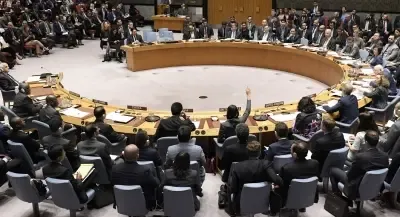
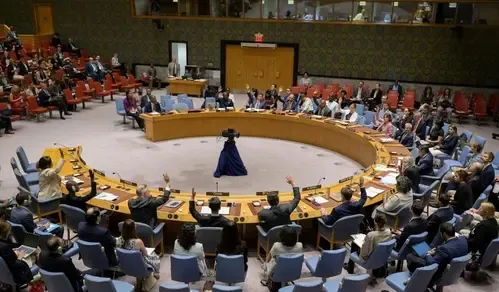
The race to choose the next United Nations Secretary-General is at an impasse, with the top three candidates each drawing two negative votes from permanent members of the UN Security Council (UNSC) — and only 76 days remaining before António Guterres ends his tenure.
Sixth Straw Poll Results
The sixth round of anonymous, informal straw polling in the Security Council was held on Friday, marking the first time colour-coded ballots were used to distinguish permanent members' votes from those of elected, non-veto-holding members. The results were supposed to remain confidential but were leaked to UN-focused publications PassBlue and 1for8Billion.
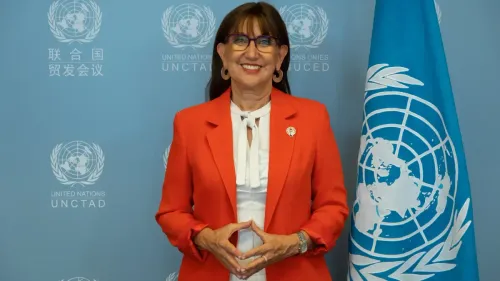
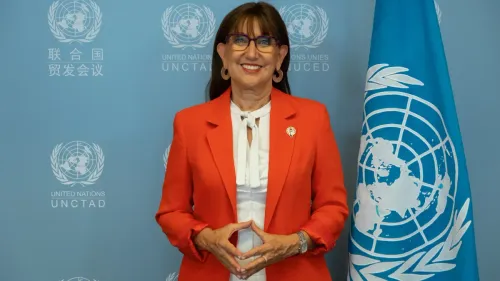
UNCTAD head Rebecca Grynspan of Costa Rica led the field with nine positive votes overall, but still received two negative votes from permanent members and a total of five negatives plus one neutral. She has led in five of the six polls, missing the top spot only in the second round in August.
Former Guyana Foreign Minister Carolyn Rodrigues-Birket and International Atomic Energy Agency (IAEA) Director-General Rafael Grossi each received eight positives, six negatives, and one neutral. Rodrigues-Birket secured three positives from permanent members, while Grossi received only two.
Among the remaining candidates, former Uganda Foreign Minister Olara Otunnu, former Senegal President Macky Sall, and former General Assembly President Maria Fernanda Espinosa each drew three negatives from permanent members. Former Ecuadorian ambassador Ivonne A-Baki fared worst, collecting five negatives from the P5.
How the Selection Process Works
To win the Council's recommendation, a candidate must secure at least ten votes without a veto — a negative vote — from any of the five permanent members: the United States, United Kingdom, France, Russia, and China. The General Assembly routinely endorses whichever candidate the Council forwards, typically by consensus in the final stage.
In straw polls, members vote 'encourage' (positive), 'discourage' (negative), or 'no opinion' (neutral). The first five rounds did not distinguish between P5 and elected member votes; the colour-coding introduced in round six was specifically designed to expose where the vetoes lie.
The US Factor and a Reform Agenda
According to reports, the United States under President Donald Trump may hold decisive influence by maintaining its veto threat. Reports indicate Washington does not believe any of the seven declared candidates meets its bar, with Trump reportedly seeking a Secretary-General willing to carry out a sweeping reform of the UN. In July, Trump was said to have floated the name of FIFA president Gianni Infantino, though the suggestion was not taken seriously by the broader membership.
Possible Late Entrants and Regional Dynamics
The deadlock has fuelled speculation that new candidates could emerge. Two names reportedly circulating as potential last-minute entrants are Lana Nusseibeh, the United Arab Emirates Minister of State for Foreign Affairs, and Feridun Hadi Sinirlioglu, the Secretary-General of the Organization for Security and Co-operation in Europe (OSCE), who is from Turkey.
There is broad international sentiment favouring the election of a woman to lead an organisation that has been headed by nine men over its 80-year history. Latin America and the Caribbean have also staked a regional claim, noting that no one from the continent has held the post since former Secretary-General Javier Pérez de Cuéllar completed his term in 1991 — a gap of 35 years.
With negotiations among veto-wielders expected to intensify and the transition clock ticking, the coming weeks will test whether the Council can break the stalemate or whether an outside contender reshapes the race entirely.
Point of View
And the Gianni Infantino episode underscored how unseriously some in the Trump circle regard multilateral norms. The colour-coded ballot introduced in round six is a small but telling reform — it at least names the obstructors, even if it cannot override them. With 76 days left and no consensus candidate, the race is as likely to be decided by back-channel P5 bargaining as by the declared field.
NationPress
17 Oct 2026
Frequently Asked Questions
Why is the UNSC deadlocked over the next UN Secretary-General?
The Security Council is deadlocked because all three leading candidates — Rebecca Grynspan, Carolyn Rodrigues-Birket, and Rafael Grossi — have each received two negative votes from permanent members in the sixth straw poll, meaning no candidate has yet cleared the threshold of ten votes without a P5 veto. With only 76 days left before Guterres's term ends, serious diplomatic negotiations are expected to begin among veto-wielding members.
Who are the frontrunners to become the next UN Secretary-General?
UNCTAD head Rebecca Grynspan of Costa Rica leads the field with nine overall positive votes and has topped five of six straw polls. Former Guyana Foreign Minister Carolyn Rodrigues-Birket and IAEA Director-General Rafael Grossi are close behind, each with eight positives, but all three carry two P5 vetoes.
What role does the United States play in the selection?
The US holds a veto in the Security Council and, according to reports, President Donald Trump's administration does not consider any of the seven declared candidates to meet its standard. Trump is said to want a Secretary-General committed to drastic UN reform, giving Washington significant leverage over the outcome.
Could new candidates enter the race?
Yes. If the deadlock continues, new candidates could emerge. UAE Minister of State for Foreign Affairs Lana Nusseibeh and OSCE Secretary-General Feridun Hadi Sinirlioglu of Turkey have been mentioned as possible late entrants, though neither has formally declared.
Why does Latin America feel it has a strong claim to the Secretary-General post?
Latin America and the Caribbean have not produced a UN Secretary-General since Javier Pérez de Cuéllar ended his term in 1991 — a gap of 35 years. The region argues it is overdue for representation at the top of the UN, and several current frontrunners, including Grynspan and Rodrigues-Birket, are from the region.