UN Security Council conducts 6th straw poll on next secretary-general candidates
Synopsis
The race to lead the United Nations is entering a decisive phase. After six rounds of closed-door straw polls, the Security Council has yet to build the nine-vote consensus — free of any P5 veto — needed to recommend a candidate. With Guterres departing at year-end and seven contenders still standing, the geopolitics of who leads the world's foremost multilateral body is very much unresolved.
Key Takeaways
The UN Security Council conducted its sixth straw poll on 17 October 2026 to narrow the field of candidates for the next UN secretary-general .
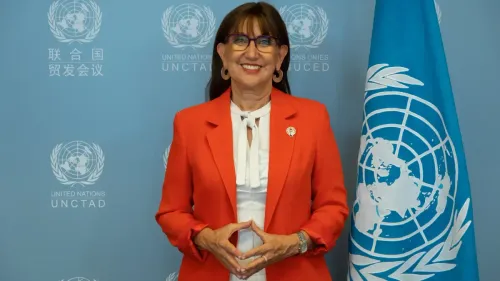
Seven candidates remain in contention, including Rafael Grossi (IAEA chief), Rebeca Grynspan (UNCTAD head), and former Senegal president Macky Sall .
A candidate needs at least nine 'encouraged' votes and no 'discouraged' vote from any P5 member to win the Council's recommendation.
Results of straw polls are not officially published ; candidates are informed privately through their nominating states.
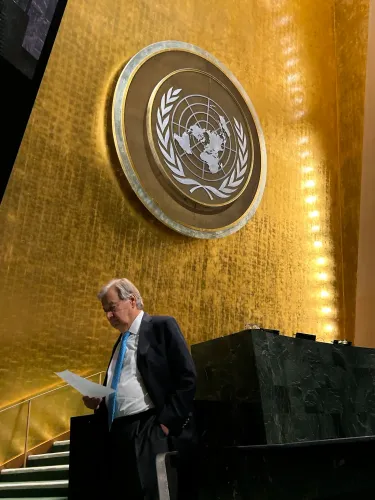
Secretary-General António Guterres' term expires end-2026 ; his successor takes office on 1 January 2027 .
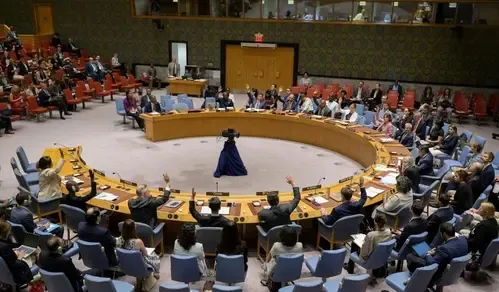
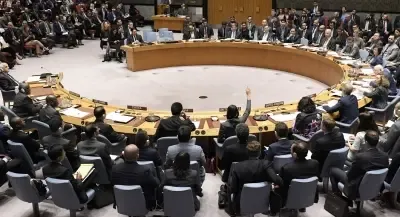
The UN Security Council held its sixth straw poll on 17 October 2026 to assess the viability of candidates competing to succeed António Guterres as the next United Nations Secretary-General, whose term expires at the close of this year.
Aglaia Balta, Greece's permanent representative to the United Nations and president of the Security Council for October, confirmed the vote to reporters. 'The sixth round of straw polls has taken place,' Balta said, adding that each candidate would be informed of the results through the permanent representatives of their nominating member states. The President of the UN General Assembly was also to be notified that the poll had been conducted.
How the Straw Poll Process Works
Security Council straw polls are informal, closed-door ballots designed to gauge the relative strength of each candidate before a formal recommendation is made to the UN General Assembly. Results are not officially published. Each Security Council member reportedly receives one ballot per candidate listing three options: 'encouraged', 'discouraged', or 'no opinion expressed'.
To secure the Council's recommendation, a candidate must obtain at least nine 'encouraged' votes and cannot receive a single 'discouraged' vote from any of the five permanent members — the United States, the United Kingdom, France, Russia, and China — effectively giving each P5 nation veto power over any candidate.
Seven Candidates Still in the Race
As of the sixth poll, seven candidates remain in contention:
Ivonne A-Baki, a former Ecuadorian minister and diplomat; Maria Fernanda Espinosa, former president of the UN General Assembly and former foreign minister and defence minister of Ecuador; Rafael Grossi of Argentina, current director general of the International Atomic Energy Agency (IAEA); Rebeca Grynspan, former vice president of Costa Rica and current secretary-general of the UN Conference on Trade and Development (UNCTAD); Olara Otunnu of Uganda, a former UN under-secretary-general; Carolyn Rodrigues-Birkett, Guyana's permanent representative to the UN; and Macky Sall, former president of Senegal.
Timeline and What Comes Next
Secretary-General António Guterres' second term concludes at the end of 2026, with his successor scheduled to assume office on 1 January 2027. The Security Council's straw polls are expected to continue narrowing the field until the Council can formally recommend a candidate to the General Assembly for appointment.
Notably, this is the sixth such round, suggesting no single candidate has yet achieved the threshold needed — reflecting how competitive and geopolitically sensitive the selection process has become. The P5 veto dynamic means that a candidate broadly acceptable across major power blocs is essential, and that consensus is proving difficult to build quickly.
The Broader Significance
The UN secretary-general selection comes at a moment of heightened global tensions — from ongoing conflicts in multiple regions to climate negotiations and multilateral reform debates. The next occupant of the role will inherit an organisation under significant pressure to demonstrate relevance and effectiveness. The candidatures of figures like Grossi, who currently leads the IAEA amid nuclear safety concerns in conflict zones, and Grynspan, who heads UNCTAD amid global trade fragmentation, signal that member states are weighing institutional expertise heavily.
Point of View
And this cycle is no different. With US-China-Russia tensions structurally elevated, any candidate perceived as too closely aligned with one bloc risks a quiet veto from another. The presence of two Ecuadorians and a sitting IAEA chief in the field also reflects a broader push from the Global South to shift multilateral leadership away from the traditional transatlantic consensus. Who emerges will say as much about great-power politics in 2026 as it does about the candidates themselves.
NationPress
17 Oct 2026
Frequently Asked Questions
What is a UN Security Council straw poll for secretary-general?
A straw poll is an informal, closed-door ballot used by the Security Council to test the viability of candidates for UN secretary-general before a formal vote. Each Council member casts a ballot per candidate marked 'encouraged', 'discouraged', or 'no opinion expressed', and results are not publicly released.
How many straw polls have been held so far in the 2026 UN secretary-general race?
As of 17 October 2026, the Security Council has completed six rounds of straw polls. No candidate has yet secured the required nine 'encouraged' votes without a P5 'discouraged' vote needed to advance a formal recommendation.
Who are the candidates still in the running to become the next UN secretary-general?
Seven candidates remain: Ivonne A-Baki and Maria Fernanda Espinosa (both Ecuador), Rafael Grossi (Argentina, current IAEA chief), Rebeca Grynspan (Costa Rica, current UNCTAD head), Olara Otunnu (Uganda), Carolyn Rodrigues-Birkett (Guyana), and Macky Sall (former president of Senegal).
When does António Guterres' term as UN secretary-general end?
Secretary-General António Guterres' second term expires at the end of 2026. His successor is scheduled to take office on 1 January 2027.
Why does a P5 'discouraged' vote matter so much in the selection process?
Any single 'discouraged' vote from one of the five permanent Security Council members — the US, UK, France, Russia, or China — effectively eliminates a candidate, giving each P5 nation veto power. This means a successful candidate must be acceptable to all major powers, making the process as much about geopolitics as qualifications.