IICA stakeholder consultation maps future of public policy professionals in India
Synopsis
IICA has convened more than 50 senior stakeholders from industry, government, and academia to map out what a professional public policy function should look like in India — signalling a shift from ad hoc government liaison toward structured, strategy-linked policy roles within organisations.
Key Takeaways
The Indian Institute of Corporate Affairs (IICA) , backed by the Ministry of Corporate Affairs , launched an initiative to professionalise public policy roles in India.
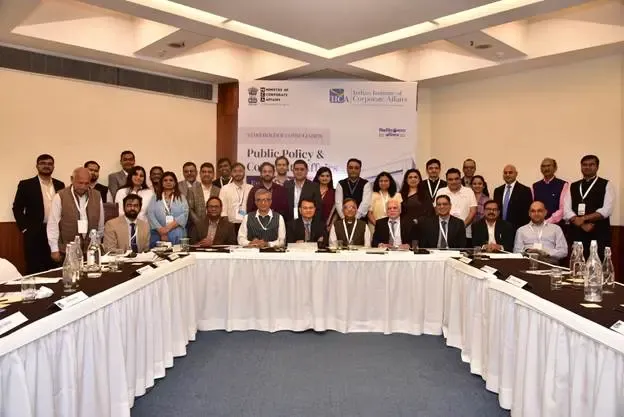
A stakeholder consultation in New Delhi drew more than 50 senior representatives from industry, academia, government, and civil society.
IICA Director General Gyaneshwar Kumar Singh called for stronger institutional capacity to support informed policy dialogue.
Participants identified key competencies including economic analysis, data-driven reasoning, risk assessment, and stakeholder management.
Recommended training models include multidisciplinary case-based programmes , flexible learning for working professionals, and government internship opportunities.
Deliberations concluded with a roadmap for collaboration between IICA, industry bodies, and academic institutions to formalise the professionalisation of public policy functions.
The Indian Institute of Corporate Affairs (IICA), backed by the Ministry of Corporate Affairs, has launched a structured initiative to define the evolving role of public policy professionals and strengthen capacity-building frameworks at the intersection of business and government, according to an official statement released on Saturday, 14 November 2026. The move follows a stakeholder consultation convened in New Delhi that brought together more than 50 senior representatives from across industry, academia, and government.
Who Was in the Room
The consultation drew senior government officials, corporate executives, policy experts, academics, and industry representatives from listed and multinational companies, consulting firms, think tanks, industry associations, civil society organisations, and government departments. The breadth of participation signals that the initiative is intended to carry cross-sectoral weight, not merely reflect IICA's institutional interests.
IICA Director General and Chief Executive Officer Gyaneshwar Kumar Singh addressed the gathering, underscoring the importance of sustained engagement between governments and businesses. He said stronger institutional capacity can support more informed policy dialogue and decision-making.
Key Findings from the Consultation
Former senior bureaucrats and corporate leaders at the consultation called for closer collaboration between regulators and industry, greater predictability in policymaking, and the development of professionals capable of bridging the public and private sectors. Participants observed that public policy functions within organisations are shifting away from traditional government liaison roles toward becoming strategic advisory functions — helping companies assess regulatory developments, manage stakeholder relationships, and contribute meaningfully to policy discussions.
The consultation mapped a range of competencies identified as essential for policy professionals: an understanding of government decision-making processes, economic analysis, data-driven reasoning, risk assessment, and stakeholder management. Experts also highlighted the need to balance corporate objectives with broader public interest considerations.
What Training Models Were Recommended
On the education and skill development front, participants recommended multidisciplinary and case-based training programmes, flexible learning models designed for working professionals, and internship opportunities within government institutions to build practical, on-the-ground experience. The emphasis on flexible delivery reflects the reality that most potential beneficiaries of such programmes are mid-career professionals who cannot step away from full-time roles.
Roadmap and What Comes Next
According to the Ministry of Corporate Affairs, the deliberations concluded with a roadmap for collaboration between IICA, industry bodies, and academic institutions to support the professionalisation of public policy and corporate affairs roles. The roadmap reflects the growing recognition that these functions are no longer peripheral to corporate strategy — they are increasingly central to how organisations navigate regulatory environments and contribute to national development goals. Detailed implementation timelines for the proposed training pathways and institutional partnerships have not yet been announced publicly.
Point of View
Yet the people who navigate it inside corporations have rarely had formalised credentials or career pathways — an asymmetry this IICA initiative is trying to correct. The shift from 'government liaison' to 'strategic policy adviser' reflects a maturing corporate governance ecosystem, but the risk is that without an independent accreditation standard, the professionalisation effort becomes another institutional certificate with limited market traction. The roadmap's credibility will depend on whether IICA can secure genuine buy-in from regulators and industry bodies, not just their attendance at a consultation. The absence of announced timelines for the training frameworks is worth watching.
NationPress
14 Nov 2026
Frequently Asked Questions
What is the IICA public policy professionals initiative?
It is a structured effort by the Indian Institute of Corporate Affairs (IICA) to define the competencies, training pathways, and institutional frameworks needed to professionalise public policy and corporate affairs roles in India. The initiative was formally launched following a stakeholder consultation in New Delhi on 14 November 2026 that brought together over 50 senior participants from government, industry, and academia.
Who participated in the IICA stakeholder consultation?
More than 50 senior representatives attended, drawn from listed and multinational companies, consulting firms, think tanks, industry associations, civil society organisations, and government departments. Former senior bureaucrats and corporate leaders also participated and contributed recommendations on regulatory collaboration and training.
What competencies did the consultation identify for public policy professionals?
Participants identified understanding of government decision-making processes, economic analysis, data-driven reasoning, risk assessment, and stakeholder management as core competencies. Experts also stressed the need to balance corporate objectives with broader public interest considerations.
What training models were recommended at the consultation?
The consultation recommended multidisciplinary and case-based training programmes, flexible learning models for working professionals, and internship opportunities within government institutions to build practical experience. These models are designed to accommodate mid-career professionals who cannot take extended leave from their roles.
What is the outcome of the IICA consultation and what happens next?
The deliberations concluded with a roadmap for collaboration between IICA, industry bodies, and academic institutions to support the professionalisation of public policy and corporate affairs roles. Detailed implementation timelines for the proposed training pathways and institutional partnerships have not yet been announced publicly.