CM Rekha Gupta Intensifies Delhi-NCR Anti-Pollution Drive
Synopsis
Delhi Chief Minister Rekha Gupta on 14 November 2026 announced a zero-tolerance anti-pollution drive across Delhi-NCR, citing Union Environment Minister Bhupender Yadav's guidance and pledging 24x7 monitoring, mechanised sweeping, dust control, and strict enforcement with no leniency for polluters.
Key Takeaways
Delhi CM Rekha Gupta announced intensified anti-pollution measures across Delhi-NCR on 14 November 2026 .
Measures include 24×7 monitoring, mechanised sweeping, dust control and strict ground-level enforcement.
The push is framed as coordinated action between Delhi, the Centre , and neighbouring states.
Union Environment Minister Bhupender Yadav's guidance was specifically cited as shaping the effort.
The Graded Response Action Plan (GRAP) , operational since 2017 , and the CAQM (constituted under a 2021 Act ) form the statutory backbone of NCR air quality management.
Gupta declared zero leniency for polluters and no compromise on public health under the #ViksitDelhi initiative.
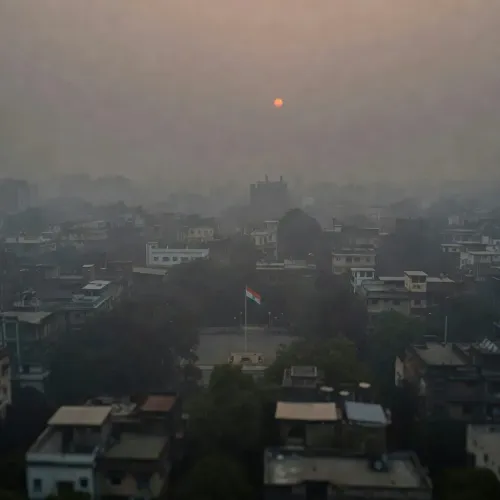
Winter is here, and Delhi's air is once again at war with its own residents. Delhi Chief Minister Rekha Gupta on Saturday, 14 November 2026 declared a zero-tolerance stance on polluters as the capital deepens its coordinated crackdown on air pollution across the Delhi-NCR region.
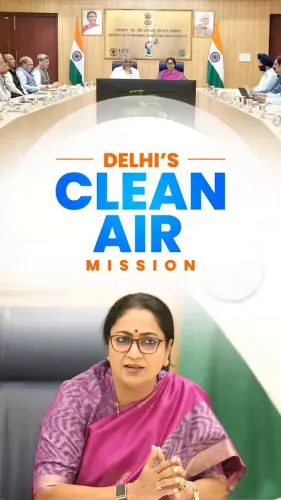
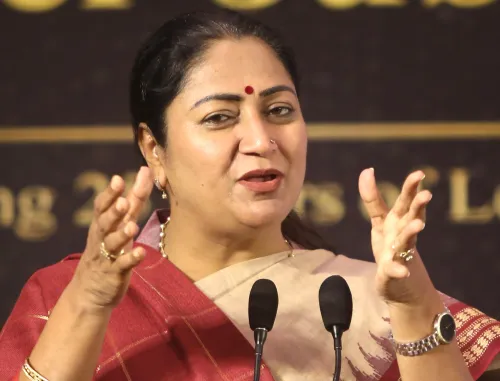
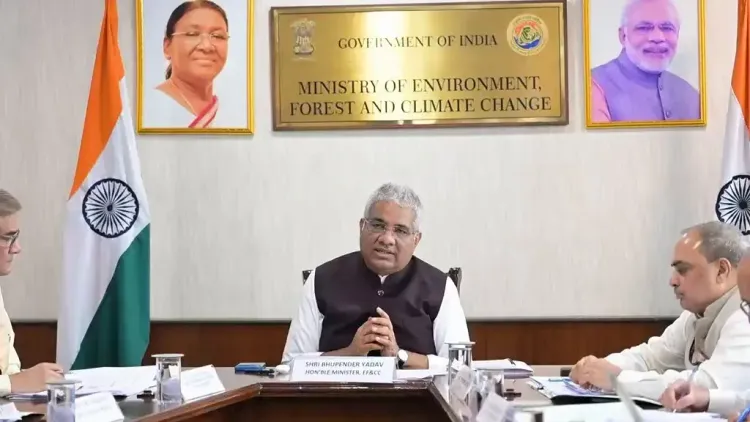
Citing the guidance of Union Environment Minister Bhupender Yadav, Gupta said Delhi is intensifying 24×7 monitoring, mechanised sweeping, dust control and strict ground-level enforcement — framing the push as a joint effort between the Centre, Delhi, and neighbouring states. 'No leniency for polluters, no excuses for negligence and no compromise when it comes to the health of our people,' she wrote, with the hashtag #ViksitDelhi.
Why October-February is Delhi's annual reckoning
Delhi-NCR's winter pollution crisis is structural, not incidental. Each year, a convergence of factors — falling temperatures, low wind speeds, paddy stubble burning in Punjab and Haryana, vehicular congestion, construction dust, and industrial emissions — compresses the region's air into a hazardous haze. The problem crosses state lines, which is precisely why a multi-state coordination architecture exists.
The Graded Response Action Plan (GRAP), first notified in 2017 and revised since, provides a staged toolkit: as Air Quality Index readings worsen, progressively stricter curbs kick in — from restricting construction activity to halting certain industries and odd-even vehicle rationing. It is the operational backbone of every winter anti-pollution response in the NCR.
CAQM: the statutory nerve centre of NCR air quality
Coordinating this multi-state machinery is the Commission for Air Quality Management (CAQM), constituted under a 2021 Act of Parliament specifically to give the Centre binding enforcement authority across Delhi, Uttar Pradesh, Rajasthan, Haryana, and Punjab. The CAQM can override state decisions on pollution control — a significant statutory lever that places the Centre squarely at the centre of any credible solution.
Gupta's explicit acknowledgement of Union Minister Yadav's guidance signals that Delhi is leaning into that Centre-state coordination rather than working around it — a notable posture given the historically fractious relationship between the city government and central agencies on this file. With both the state and Centre now under BJP leadership, that friction has visibly reduced.
What enforcement looks like on the ground
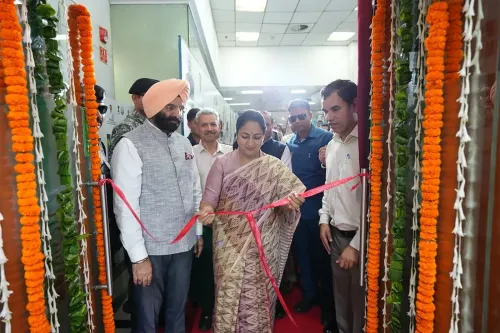
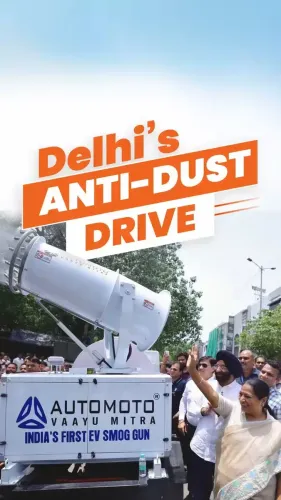
Mechanised road sweeping suppresses the resuspended dust that contributes significantly to particulate matter counts. Anti-smog guns, water sprinkling on construction sites, and real-time sensor networks feeding into a central dashboard are the tools Gupta's administration has flagged. Ground-level enforcement — inspectors checking open burning of waste, unregistered diesel generators, and construction-site dust norms — is the hardest piece: it requires consistent presence, not just policy paperwork.
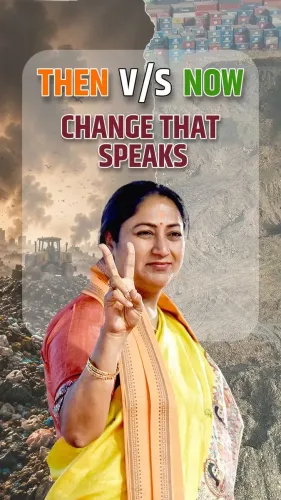
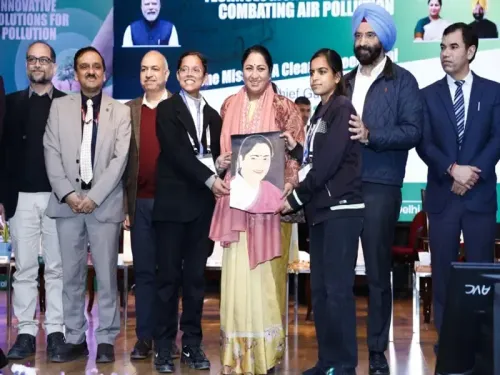
The post's accompanying videos — four in total — are likely to show field action or monitoring operations, reinforcing the administration's message that this is an on-ground effort, not a press-release campaign.
Delhiites have heard clean-air pledges before. The measure of this winter will be whether the AQI numbers bear out the enforcement rhetoric — and whether CAQM's upcoming GRAP review meetings produce tighter stubble and industrial compliance from every state in the region.
Point of View
She signals a cooperative Centre-state model that contrasts sharply with the previous administration's confrontational stance toward central agencies. The CAQM framework, designed precisely for this multi-state problem, gives the BJP-aligned governments a structural advantage in projecting unified action. Whether the enforcement rhetoric translates into measurable AQI improvement will determine if the 'no leniency' framing survives the winter news cycle.
NationPress
14 Nov 2026
Frequently Asked Questions
What is Rekha Gupta doing about Delhi air pollution?
Delhi Chief Minister Rekha Gupta has announced intensified 24x7 monitoring, mechanised sweeping, dust control, and strict ground-level enforcement across Delhi-NCR, declaring zero tolerance for polluters and working in coordination with the Union Environment Ministry and neighbouring states.
What is the Graded Response Action Plan (GRAP) in Delhi?
The Graded Response Action Plan (GRAP) was first notified in 2017 and provides a staged set of anti-pollution restrictions for Delhi-NCR that activate as air quality worsens — ranging from construction curbs to industrial shutdowns and vehicle restrictions.
What is CAQM and what does it do?
The Commission for Air Quality Management (CAQM) is a statutory body constituted under a 2021 Act of Parliament to coordinate and enforce air pollution control across Delhi and the NCR states of Haryana, Uttar Pradesh, Punjab, and Rajasthan.
Why is Delhi's air pollution worse in winter?
Winter brings lower temperatures, reduced wind speeds, and temperature inversions that trap pollutants close to the ground. Combined with paddy stubble burning in neighbouring states, vehicular emissions, and construction dust, the October-February period is consistently Delhi-NCR's worst for air quality.
Who is the Union Environment Minister responsible for Delhi pollution coordination?
Bhupender Yadav serves as the Union Minister of Environment, Forest and Climate Change and is the central government's key figure in coordinating the Delhi-NCR anti-pollution effort through bodies like the CAQM.