CM Sawant inaugurates 34th All India Konkani Parishad Adhiveshan in Pune
Synopsis
Goa Chief Minister Pramod Sawant inaugurated the 34th All India Konkani Parishad Adhiveshan in Pune on 14 November 2026, calling Konkani the community's identity and heritage, and urging deliberation on its future in education, research and the digital age.
Key Takeaways
Goa CM Pramod Sawant inaugurated the 34th All India Konkani Parishad Adhiveshan in Pune on 14 November 2026 .
The convention is organised by the Akhil Bharatiya Konkani Parishad , the national body for Konkani literary and cultural activity.
Sawant described Konkani as 'more than a language — it is our identity, heritage and a bond that connects generations across regions.' The Adhiveshan's agenda covers Konkani's future in education, research and the digital age .
The Goa Official Language Act, 1987 remains the legal foundation for Konkani's institutional standing.
Konkani speakers are spread across Goa, coastal Maharashtra, Karnataka and Kerala , making cross-state conventions central to language advocacy.
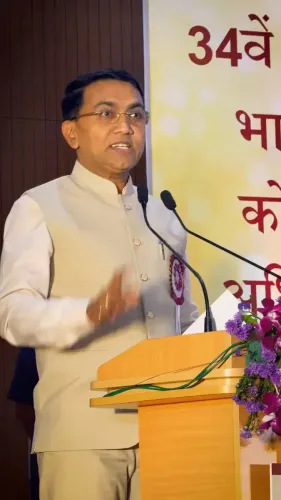
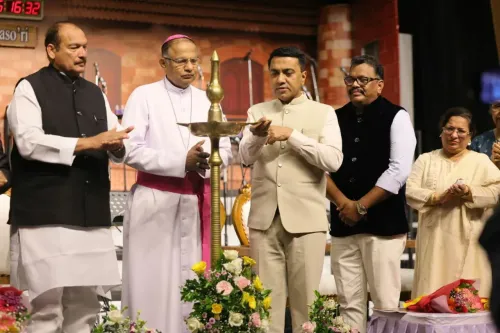
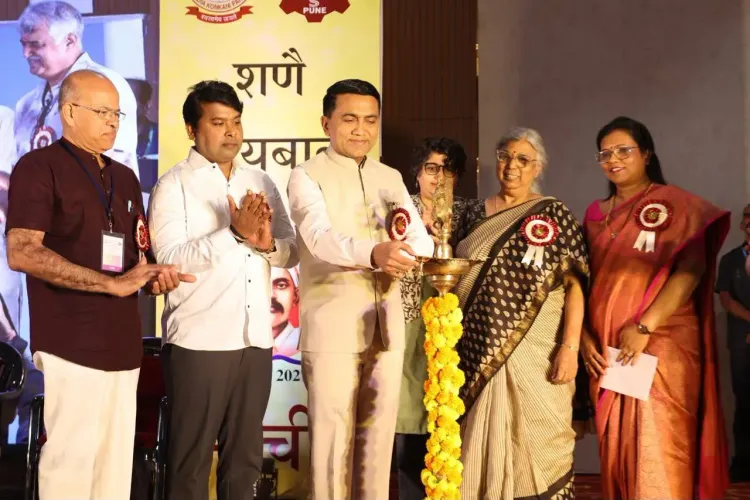
A language scattered across four coastlines came together in one city on Saturday, 14 November 2026. Goa Chief Minister Pramod Sawant travelled to Pune to inaugurate the 34th All India Konkani Parishad Adhiveshan, organised by the Akhil Bharatiya Konkani Parishad, drawing litterateurs, scholars, poets and Konkani enthusiasts from across the country.
Posting from the venue, Sawant framed the occasion in terms that went well beyond ceremony: 'Konkani is more than a language; it is our identity, heritage and a bond that connects generations across regions.' He closed with a Konkani declaration — कोंकणी आमची भास, कोंकणी आमचो वारसो, कोंकणी आमची वळख! ('Konkani is our language, Konkani is our heritage, Konkani is our identity!') — underlining the emotional register the convention carries for its community.
A convention older than Konkani's official status
The Akhil Bharatiya Konkani Parishad is the national-level body that coordinates Konkani literary, cultural and educational activity across every state where the language has a foothold. Konkani speakers are dispersed across Goa, coastal Maharashtra, Karnataka and Kerala, making a cross-state platform like the Adhiveshan essential — there is no single state government that speaks for the entire community.
The convention predates the legal milestone that underpins Konkani's standing. The Goa Official Language Act, 1987 declared Konkani the sole official language of Goa, giving the language a constitutional anchor. The Adhiveshan series has continued building on that foundation ever since, using periodic national gatherings to standardise scripts, expand literature and push for institutional support.
What the 34th edition is deliberating
Sawant said the Adhiveshan provides a platform to 'deliberate on the future of Konkani in education, research and the digital age' — a three-part agenda that maps the pressures any regional language faces in 2026: curriculum presence in schools, academic legitimacy and survival in an era of AI-driven content. The digital dimension is particularly pointed; smaller languages risk being left behind as large-language models and voice assistants default to dominant tongues.
The Chief Minister congratulated the organisers and all delegates 'for their dedication towards preserving and promoting our beloved mother tongue,' signalling Goa's continued institutional backing for Konkani advocacy beyond its own borders.
Pune as a stage for regional language solidarity
Pune is not an accidental choice. The city is a long-established hub for literary and cultural gatherings of regional-language communities, and hosting the Konkani Parishad here speaks directly to the significant Konkani-speaking population in coastal Maharashtra. Bringing the convention out of Goa also reinforces that Konkani identity is not coterminous with one state's boundaries — it is a pan-coastal bond.
The gathering now turns to its substantive deliberations. Resolutions on Konkani in school curricula and any announcements on digital archiving initiatives will be the ones to watch when the convention concludes.
Point of View
Investing political capital in a Maharashtra venue reinforces that Konkani transcends state lines, a message with resonance in border districts long contested between linguistic communities. The digital-age agenda is strategically timely: as central and state governments push schemes for regional-language digitisation, associating with that discourse keeps the Parishad — and by extension its patron — at the front of funding conversations. Watch whether Goa's education department follows the convention with concrete curriculum or archiving announcements.
NationPress
14 Nov 2026
Frequently Asked Questions
What is the All India Konkani Parishad Adhiveshan?
It is a periodic national convention organised by the Akhil Bharatiya Konkani Parishad, bringing together Konkani writers, scholars, poets and language enthusiasts from across India to deliberate on literature, education and the future of the language.
Where was the 34th All India Konkani Parishad Adhiveshan held?
The 34th edition was held in Pune, Maharashtra, inaugurated by Goa Chief Minister Pramod Sawant on 14 November 2026.
Why is Konkani significant as an official language?
The Goa Official Language Act, 1987 declared Konkani the sole official language of Goa, giving it constitutional backing. Konkani speakers are also present in coastal Maharashtra, Karnataka and Kerala, making it a cross-state linguistic identity.
What issues is the Konkani Parishad convention discussing?
The 34th Adhiveshan is focused on Konkani's future in education, academic research and the digital age, including concerns about the language's presence in school curricula and digital platforms.
What did CM Pramod Sawant say about Konkani at the convention?
Sawant said 'Konkani is more than a language; it is our identity, heritage and a bond that connects generations across regions,' and closed with the Konkani declaration meaning 'Konkani is our language, our heritage, our identity.'