CM Sawant Pays Tribute to Konkani Pioneer Shenoi Goembab on Jayanti
Synopsis
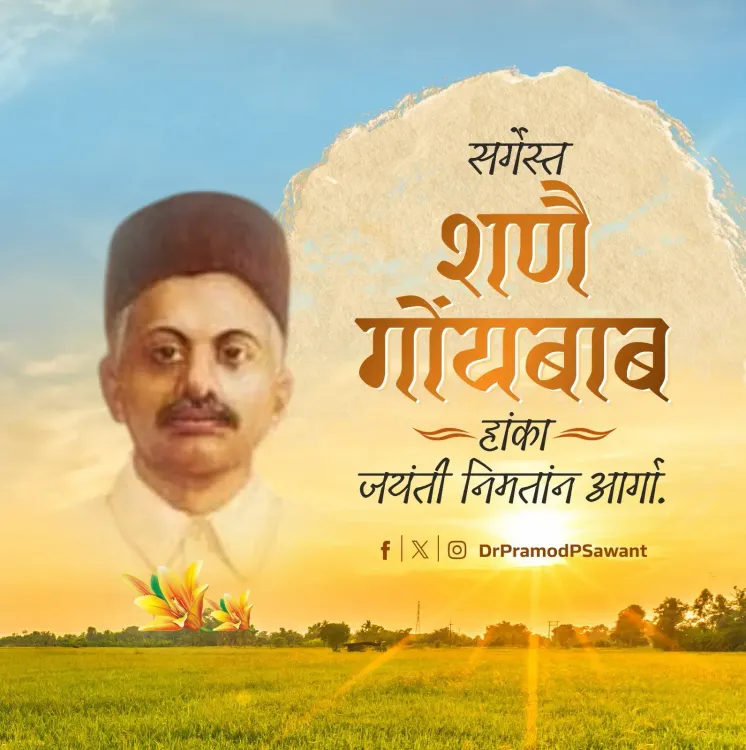
Goa Chief Minister Pramod Sawant marked the birth anniversary of Shenoi Goembab — the father of modern Konkani prose — with a heartfelt tribute on X, honouring the literary pioneer's role in giving Konkani a public identity and affirming the state's commitment to the language's heritage.
Key Takeaways
Goa CM Pramod Sawant paid tribute to Shenoi Goembab on his birth anniversary on 23 June 2026 .
Shenoi Goembab , pen name of Joaquim Agostinho Varde Valaulikar , is regarded as the father of modern Konkani prose.
Sawant credited Goembab's writing with giving Konkani a 'public identity' ( bhowshik volokh ).
Konkani was recognised as Goa's sole official language in 1987 and added to the Eighth Schedule of the Constitution in 1992 .
The tribute was posted in Konkani , reinforcing the Chief Minister's public commitment to the language.
State literary awards and Konkani-medium education proposals are expected to feature in the next Goa Legislative Assembly budget session.
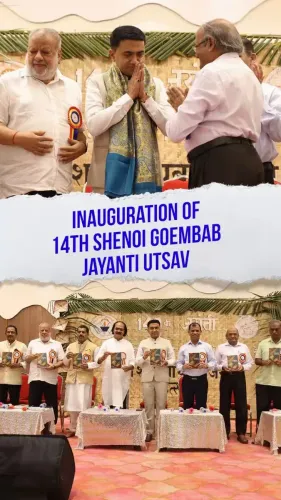
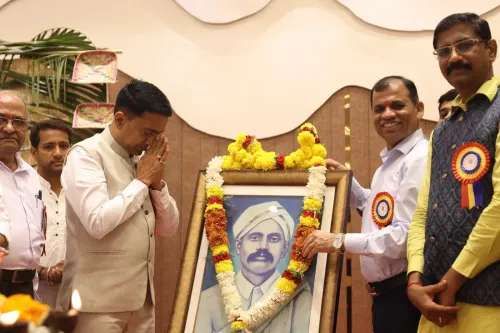
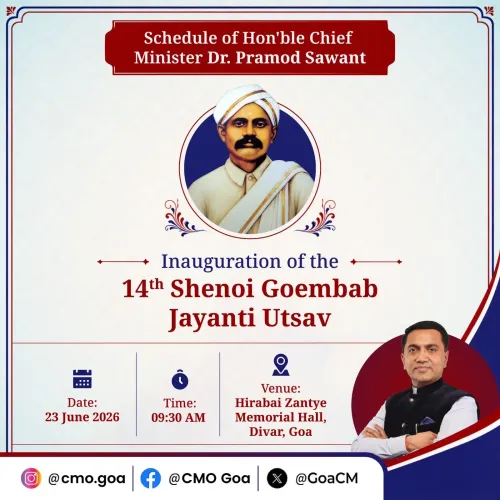
Goa Chief Minister Pramod Sawant on Tuesday, 23 June 2026 paid tribute to Shenoi Goembab, the pioneering figure of modern Konkani literature, on the occasion of the latter's birth anniversary. Sawant posted a heartfelt message in Konkani on X, honouring the literary icon as the 'first man of Konkani' (Koknichi aady purush) and offering his respects from the heart.
In his post, Chief Minister Sawant wrote: 'Shenoi Goembab hanchya lekhan ani sahityan Konkani bhashek bhowshik volokh nirman keli' — meaning, 'Shenoi Goembab's writing and literature gave Konkani a public identity.' He described the departed scholar as sargeast (the late, or 'one who has ascended to heaven') and offered floral tribute on the occasion of his birth anniversary.
Context
Shenoi Goembab, the pen name of Joaquim Agostinho Varde Valaulikar, is widely regarded as the father of modern Konkani prose. His writings, composed primarily in the Roman script, are credited with establishing Konkani as a vehicle for serious literary expression at a time when the language's very identity was contested. His birth anniversary is observed annually as a significant cultural occasion in Goa.
Chief Minister Sawant's tribute, written in Konkani rather than Hindi or English, is itself a deliberate assertion of linguistic solidarity — reflecting the state government's consistent effort to champion the Konkani language in public life.
Policy Backdrop
Konkani's journey to formal recognition has been long and contested. In 1987, the Goa Legislative Assembly enacted the Official Language Act, recognising Konkani as the sole official language of the state — a landmark decision that came after decades of debate over whether Marathi should hold that status instead. Five years later, in 1992, Konkani was included in the Eighth Schedule of the Indian Constitution, granting it national recognition among India's scheduled languages.
These milestones remain foundational to Goan cultural identity, and figures like Shenoi Goembab are frequently invoked in policy and political discourse to underscore the antiquity and legitimacy of Konkani as a distinct language — not a dialect of Marathi.
Stakeholders and Impact
The tribute carries significance for Konkani writers, scholars, and literary organisations across Goa and the wider Konkani-speaking diaspora spanning coastal Karnataka and Maharashtra. For this community, official recognition of Shenoi Goembab's legacy by the sitting Chief Minister reinforces the state's commitment to Konkani's cultural continuity.
The message also resonates amid ongoing debates around script standardisation — whether Devanagari, Roman, or Kannada script should be the primary medium for Konkani — a question that continues to divide literary communities. Sawant's use of the Konkani language itself in the post, without privileging any particular script debate, signals an inclusive cultural posture.
What's Next
The tribute comes ahead of what observers expect will be an active season for Konkani cultural programming in Goa. State literary awards and any proposals for Konkani-medium education incentives are likely to feature in the next budget session of the Goa Legislative Assembly. Chief Minister Sawant's consistent public messaging on Konkani identity is expected to shape the contours of those policy conversations, linking cultural commemoration directly to administrative decisions on language in education and governance.
Point of View
' Sawant anchors the BJP's Goa identity to a pre-political, literary foundation that transcends party lines. The tribute fits a broader national pattern of regional leaders using cultural commemoration to reinforce sub-national identity, particularly as language-in-education policies come under renewed scrutiny. It also signals that Konkani cultural issues will remain a live political variable ahead of the next budget and assembly cycle in Goa.
NationPress
22 Sept 2026
Frequently Asked Questions
Who is Shenoi Goembab and why is he important to Konkani?
Shenoi Goembab, pen name of Joaquim Agostinho Varde Valaulikar, is regarded as the father of modern Konkani prose. His writings gave Konkani a serious literary identity at a time when the language's distinct status was widely contested.
What did CM Pramod Sawant say about Shenoi Goembab?
CM Pramod Sawant said that Shenoi Goembab's writing and literature gave Konkani a public identity. He referred to him as the 'first man of Konkani' and offered heartfelt tribute on his birth anniversary.
When was Konkani recognised as Goa's official language?
Konkani was recognised as the sole official language of Goa through the Official Language Act passed by the Goa Legislative Assembly in 1987. It was subsequently included in the Eighth Schedule of the Indian Constitution in 1992.
Why does Pramod Sawant frequently post about Konkani culture?
As Goa's Chief Minister and a senior BJP leader, Sawant uses cultural and linguistic messaging to reinforce Goan identity. Konkani remains a politically sensitive issue in the state given historical debates over its status relative to Marathi.
What is the significance of Shenoi Goembab's birth anniversary in Goa?
Shenoi Goembab's birth anniversary is observed as a key cultural occasion in Goa, marking the legacy of the man credited with establishing Konkani as a vehicle for serious literature. It is often marked by literary events, state tributes, and public discourse on Konkani's future.