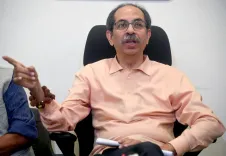
CM Saini pays tribute to Munshi Premchand on birth anniversary
Synopsis
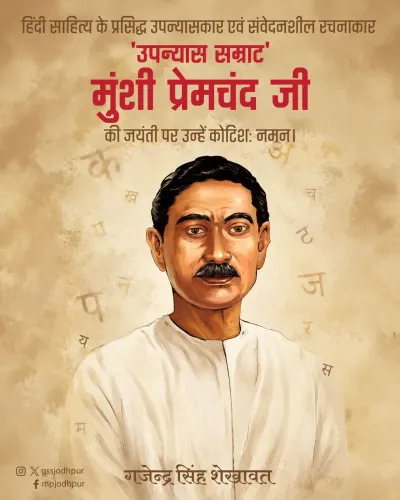
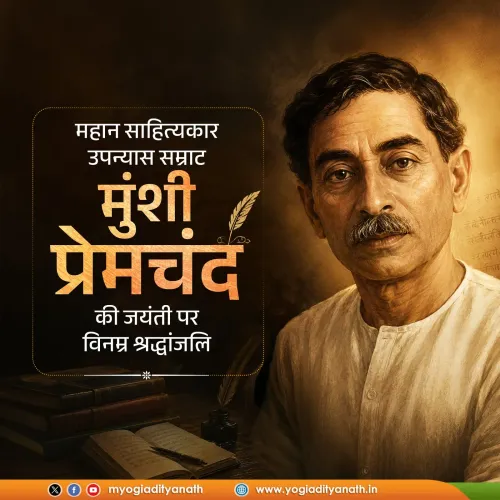
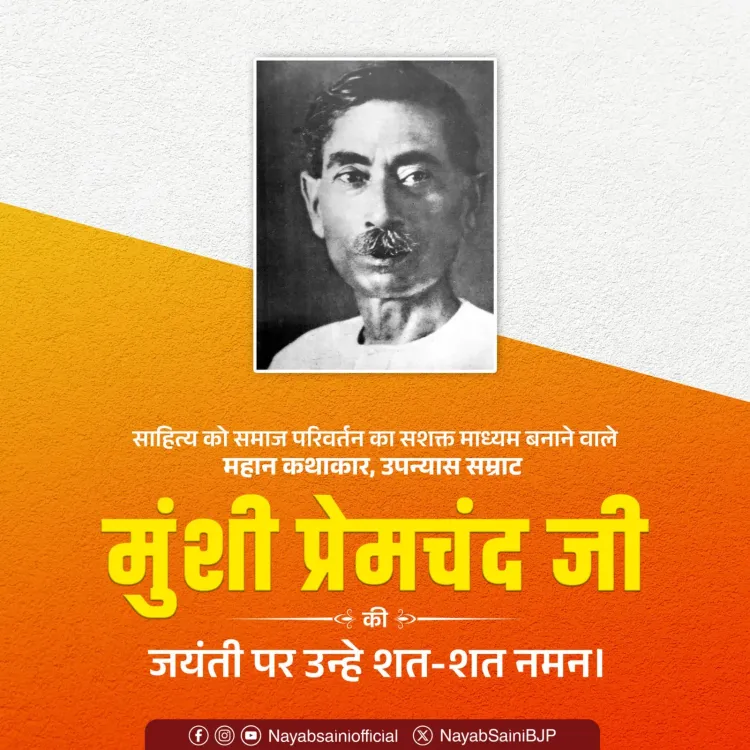
Haryana Chief Minister Nayab Singh Saini paid tribute to Munshi Premchand on his birth anniversary on 31 July, honouring the 'Upanyas Samrat' as a champion of social transformation whose works on rural poverty and human dignity continue to inspire India.
Key Takeaways
Haryana CM Nayab Singh Saini paid tribute to Munshi Premchand on his birth anniversary, 31 July .
Saini described Premchand as one who made literature 'a powerful medium of social transformation.' Munshi Premchand (1880–1936) , titled 'Upanyas Samrat' (Emperor of Novels), wrote in both Hindi and Urdu.
His landmark works include Godan and Nirmala , depicting rural poverty, caste oppression, and human compassion.
Indian political leaders across parties routinely mark 31 July with Premchand tributes, a long-standing tradition of invoking literary heritage in public discourse.
Premchand's fiction remains prescribed reading in schools and universities across India nearly 90 years after his death.
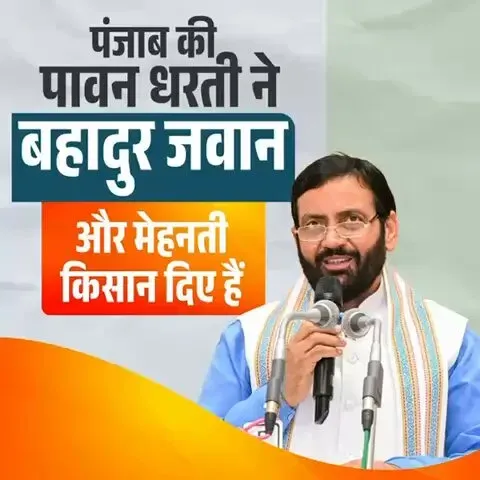
A writer who turned the rural lane into literature's grandest stage — Haryana Chief Minister Nayab Singh Saini on Friday, 31 July paid tribute to Munshi Premchand, the towering Hindi-Urdu storyteller, on his birth anniversary, calling him a powerful force for social transformation.
Saini wrote, 'साहित्य को समाज परिवर्तन का सशक्त माध्यम बनाने वाले महान कथाकार' — 'the great storyteller who made literature a powerful medium of social transformation' — and offered a hundredfold salute to the writer revered across India as 'Upanyas Samrat', or Emperor of Novels. He noted that Premchand's works gave a strong voice to society's realities, human sensibilities, and social consciousness, and that his literature continues to inspire the building of a society rooted in moral values, compassion, and equality.
The man who put the village on the page
Munshi Premchand (1880–1936) remains one of the most consequential figures in South Asian literary history. Born Dhanpat Rai Shrivastava in Lamahi, near Varanasi, he wrote in both Hindi and Urdu, producing novels, short stories, and essays that cut to the bone of colonial-era rural India. Works like Godan and Nirmala depicted the grinding poverty of peasants, the exploitation of landless labourers, and the quiet dignity of those society had forgotten. He did not romanticise the village — he documented it, and in doing so, forced readers to reckon with it. His title 'Upanyas Samrat' was not honorary decoration. It reflected a body of work that redefined what the Hindi novel could carry: caste oppression, widow remarriage, child marriage, zamindari cruelty — subjects that polite literary circles of his era preferred to leave alone.A ritual tribute with a living resonance
Every 31 July, Indian political leaders across party lines mark Premchand's birth anniversary with public statements — a long-standing tradition of invoking literary figures to signal cultural and ethical commitments. Saini's tribute fits that pattern, but the language he chose is pointed: literature as a 'medium of social transformation', a society built on 'equality' and 'compassion'. In a state like Haryana, where debates around caste equity and rural welfare remain live political terrain, invoking Premchand is never purely ceremonial. Nearly 90 years after his death, Premchand's fiction is still prescribed reading in schools and universities across India — proof that the best tribute to a writer is that his pages remain turned.Point of View
A state with persistent caste and agrarian fault lines. For a BJP chief minister, aligning with Premchand's egalitarian literary legacy is also a subtle cultural positioning: it signals sensitivity to rural and marginalised communities without entering explicit policy debate. The durability of Premchand as a shared national symbol, claimed by left and right alike, reflects how India's literary heritage functions as neutral moral ground in an otherwise fractured political landscape.
NationPress
14 Sept 2026
Frequently Asked Questions
Why is Munshi Premchand called 'Upanyas Samrat'?
Munshi Premchand earned the title 'Upanyas Samrat,' meaning Emperor of Novels, for his prolific and groundbreaking contributions to Hindi and Urdu fiction, including landmark works like Godan and Nirmala that depicted rural India with unflinching realism.
When is Munshi Premchand's birth anniversary?
Munshi Premchand was born on 31 July 1880 , and his birth anniversary is observed every year on that date across India with literary events and public tributes.
What did Haryana CM Nayab Singh Saini say about Premchand?
CM Saini described Premchand as a great storyteller who made literature a powerful medium of social transformation and said his works continue to inspire the building of a society based on moral values, compassion, and equality.
What are Munshi Premchand's most famous works?
Among Premchand's most celebrated works are the novels Godan and Nirmala, along with hundreds of short stories that addressed themes of rural poverty, caste discrimination, and the dignity of ordinary people in colonial-era India.
Why do Indian politicians pay tribute to Munshi Premchand?
Paying tribute to Premchand on 31 July has become a long-standing tradition across India's political spectrum, as leaders invoke his legacy of social consciousness, equality, and compassion to signal cultural and ethical commitments to the public.