Rijiju calls Naseeruddin Shah 'dangerous' for democracy over 'Dimagi Naxal' boast
Synopsis
Veteran actor Naseeruddin Shah reclaimed the government's own label — 'Dimagi Naxal' — as a badge of pride, triggering a direct ministerial hit from Kiren Rijiju who called him 'dangerous' for democracy. The exchange, rooted in the SRFTI campus crisis, signals that the government is treating celebrity dissent as a political battleground, not just a cultural sideshow.
Key Takeaways
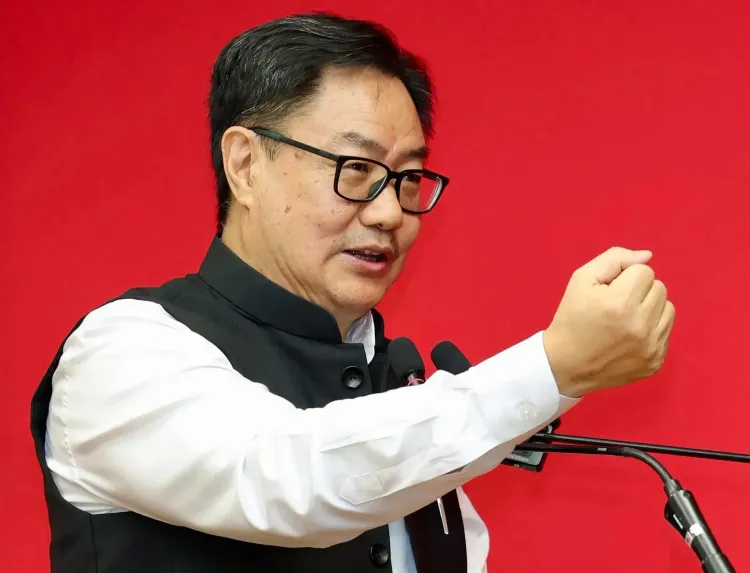
Union Parliamentary Affairs Minister Kiren Rijiju called Naseeruddin Shah 'extremely harmful to India's democracy' in a post on X on 29 October 2026 .
Naseeruddin Shah declared 'with pride' that he is a 'Dimagi Naxal' — a term coined by PM Modi in his Independence Day 2026 address.
Shah also called the current government an 'illegitimate government' and cited alleged attacks on JNU , SRFTI , and Jamia Millia .
The row is linked to clashes at Satyajit Ray Film and Television Institute (SRFTI) , Kolkata , on 27 September 2026 .
The institute suspended 6 students ; filmmakers Payal Kapadia and Anand Patwardhan also backed protesters alongside Shah.
Union Parliamentary Affairs Minister Kiren Rijiju on 29 October 2026 launched a sharp rebuke against veteran actor Naseeruddin Shah after the actor publicly embraced the label 'Dimagi Naxal' — a term coined by Prime Minister Narendra Modi in his Independence Day address in August — calling Shah 'extremely harmful to India's democracy.'
What Rijiju Said on X
Posting on X, Rijiju wrote: 'I thought Naseeruddin Shah was just an ordinary actor. I used to respect & like him. I never knew that he was a dangerous urban Dimagi Naxal! I discovered his true character far too late. He is extremely harmful to India's democracy.' The minister's post drew immediate attention as a direct government-level response to the actor's remarks.
What Naseeruddin Shah Said
In a video shared online, Shah declared: 'I say with pride, I am a Dimagi Naxal. Apart from Dimagi Naxal, I don't know what other titles the chowkidar has given to people like me, anti-national, tukde-tukde gang and what not. If there is any tukde-tukde gang in this country, then it is this illegitimate government.' He further challenged the administration, asking: 'What else will you do to break the courage of our country's youth, to destroy the education system, and to put our democracy at risk? How much will you do? How far will you go?' Shah also cited institutions he believes have come under pressure — Jawaharlal Nehru University, Satyajit Ray Film Institute, and Jamia Millia — warning that 'the atrocities that are being done on students will be remembered.'
The SRFTI Row — Background
Shah's remarks are rooted in an ongoing dispute at Kolkata's Satyajit Ray Film and Television Institute (SRFTI). The crisis began on 27 September 2026, when clashes broke out between students and members of the RSS-linked Akhil Bharatiya Grahak Panchayat during a campus event. Students subsequently demanded the resignation of Vice-Chancellor Santosh Ajmera, accusing the administration of failing to protect them. The institute responded by suspending 6 students on misconduct grounds — a decision the students' union challenged. Notably, filmmakers Payal Kapadia and Anand Patwardhan joined Shah in backing the protesters, while the Bharatiya Janata Party (BJP) criticised the actor's intervention. The administration alleged that outside forces had politicised the agitation.
Broader Context and What It Means
The exchange reflects a wider pattern of clashes between the government and cultural figures over the boundaries of dissent. The term 'Dimagi Naxal' was originally deployed by Prime Minister Modi to describe what he characterised as intellectual subversion — critics argue it has since become a political instrument to delegitimise opposition voices. Shah's decision to own the label inverts that framing, and his explicit targeting of higher-education institutions underscores growing tensions on campuses. The BJP's criticism of Shah, now elevated to a ministerial response, signals that the government views his remarks as politically consequential rather than merely celebrity commentary.
What Happens Next
The SRFTI situation remains unresolved, with the students' union contesting the suspensions. The broader row over academic autonomy and political interference on campuses is likely to intensify as the semester progresses. Rijiju's public rebuttal may draw further responses from the arts and academic community.
Point of View
' it shifts the register from debate to denunciation. The irony is sharp: Shah reclaimed a label the government coined, and the government's response validated exactly the political conditions Shah was critiquing. The SRFTI dispute is the immediate trigger, but the deeper contest is over who gets to define the limits of legitimate dissent in India's institutions of art and learning.
NationPress
29 Oct 2026
Frequently Asked Questions
Why did Kiren Rijiju attack Naseeruddin Shah?
Rijiju hit out at Naseeruddin Shah after the actor publicly declared he was a 'proud Dimagi Naxal' in a video, also calling the current government 'illegitimate.' The minister posted on X that Shah was 'extremely harmful to India's democracy.'
What is 'Dimagi Naxal' and who coined the term?
'Dimagi Naxal' is a term coined by Prime Minister Narendra Modi in his Independence Day address in August 2026 to describe what he characterised as intellectual or ideological subversion. Naseeruddin Shah chose to embrace the label as a mark of pride, inverting its intended framing.
What is the SRFTI controversy that sparked Shah's remarks?
Clashes erupted on 27 September 2026 at the Satyajit Ray Film and Television Institute (SRFTI) in Kolkata between students and members of an RSS-linked body. Students demanded Vice-Chancellor Santosh Ajmera's resignation; the institute suspended 6 students. Shah, along with filmmakers Payal Kapadia and Anand Patwardhan, publicly backed the protesters.
What did Naseeruddin Shah specifically say in his video?
Shah said 'I say with pride, I am a Dimagi Naxal,' accused the government of breaking the courage of the country's youth and destroying the education system, and called for accountability over events at JNU, SRFTI, and Jamia Millia. He also described the current government as an 'illegitimate government.'
What happens next in the SRFTI dispute?
The SRFTI students' union is contesting the suspension of 6 students, and the underlying campus tensions remain unresolved. The government's direct response to Shah suggests the political dimensions of the dispute are likely to escalate further.