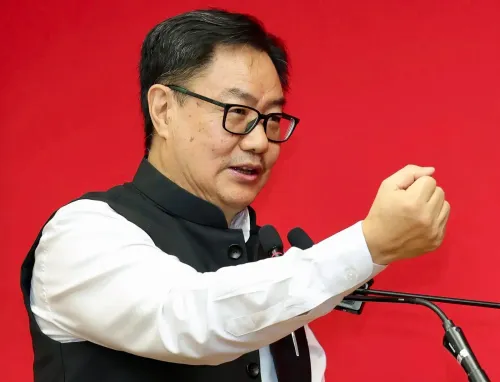
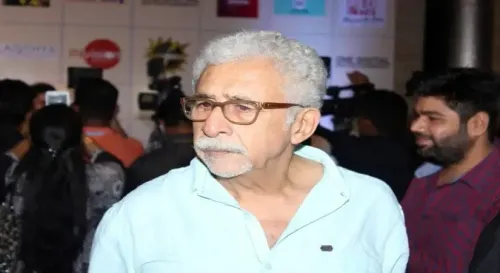
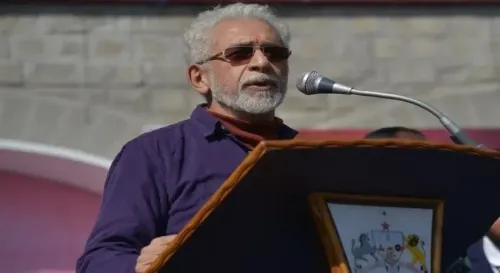
Puneet Issar slams Naseeruddin Shah: 'Selective criticism is very wrong'
Synopsis
Puneet Issar's public rebuke of Naseeruddin Shah — triggered by the veteran actor flaunting a 'Dimagi Naxal' badge on Facebook — lays bare a persistent fault line in Bollywood: whether celebrity dissent must be balanced to be legitimate, or whether demanding that balance is itself a form of silencing.
Key Takeaways
Puneet Issar publicly criticised Naseeruddin Shah on 29 October 2026 , calling his government criticism 'selective.' Naseeruddin Shah had shared a Facebook video embracing the 'Dimagi Naxal' label — a term reportedly coined by PM Modi in his Independence Day speech.
Issar accused Naseeruddin Shah of staying silent on groups he characterised as 'anti-national' while speaking out against the government.
Issar urged Naseeruddin Shah to contest elections if he opposes the government, saying 'people have chosen this government.' The row follows the resignation of Union Education Minister Dharmendra Pradhan under public pressure, which Naseeruddin Shah referenced in his video.
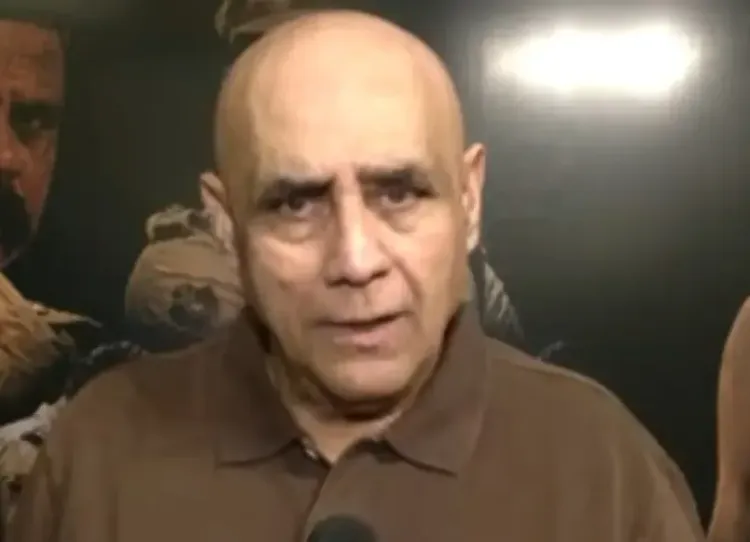
Actor Puneet Issar on 29 October 2026 publicly criticised veteran star Naseeruddin Shah over his anti-government remarks, accusing him of practising selective criticism and questioning why the senior actor stays silent on issues that Issar argues concern national interest. The remarks come a day after Naseeruddin Shah shared a video on Facebook in which he reportedly embraced the label 'Dimagi Naxal' — a term coined by Prime Minister Narendra Modi in his Independence Day address — and drew parallels between ongoing protests and earlier demonstrations at Jawaharlal Nehru University (JNU).
What Puneet Issar Said
Acknowledging Naseeruddin Shah's stature, Issar opened with a note of respect before sharpening his criticism. 'First of all, Mr. Naseeruddin Shah is our senior; he has been our teacher, he is respected, he is a very good artist. But I just want to say that when you talk, you should not talk selectively,' he said. He accused the veteran actor of responding to public affairs exclusively through what he characterised as a 'leftist ideology' while staying silent when, in his view, voices he considers anti-national are involved.
Issar alleged that Naseeruddin Shah does not speak out against groups he labelled the 'Tukde-Tukde Gang' or individuals he described as those who 'want to divide the country.' He questioned: 'If you support those people, then what happened to your being an Indian?'
The Democratic Counter-Argument
Issar stopped short of calling for silence, instead urging Naseeruddin Shah to channel his political convictions through electoral politics. 'You have every right to have your own opinion, you have the right to speak against the government. But you don't like the government that has come — you get down to the ground, you fight the elections, you win, you defeat the government. This government was not made on a whim; people have chosen this government,' he said.
He reiterated the point: 'Fight the elections, bring your ideologies to the forefront. After winning, change the government. Who has stopped you?' The statement reflects a recurring line of argument from right-leaning commentators who contend that celebrity dissent should translate into formal political participation rather than public statements.
Naseeruddin Shah's 'Dimagi Naxal' Remark
The immediate trigger for Issar's criticism was a Facebook video shared by Naseeruddin Shah on Wednesday, in which the actor reportedly flaunted a badge reading 'Dimagi Naxal'. The term was reportedly coined by Prime Minister Modi in his Independence Day speech after Union Education Minister Dharmendra Pradhan resigned under public pressure. In the video, Naseeruddin Shah also drew comparisons between ongoing protests and earlier agitations at JNU, referencing labels such as 'anti-national' and 'tukde-tukde gang' — terms critics of the government argue have been weaponised to suppress dissent, while supporters contend reflect genuine concerns about national unity.
Broader Context
The public exchange is the latest episode in a long-running tension between Bollywood's politically vocal artists and commentators aligned with the current dispensation. Naseeruddin Shah has been one of the more persistent voices from the film fraternity to publicly question government policies; critics argue such statements amount to selective outrage, while defenders of free expression maintain that artists need not adopt a 'balance sheet' approach to public commentary. Notably, the resignation of Dharmendra Pradhan that Naseeruddin Shah referenced adds a fresh political dimension to what might otherwise have been a routine celebrity spat.
As the debate intensifies, the episode raises wider questions about the boundaries of dissent, the role of public figures in political discourse, and whether the demand for 'balanced criticism' is itself a form of pressure on free speech.
Point of View
But Issar's challenge to Naseeruddin Shah to contest elections is at least a coherent democratic counter rather than a call for silence. What the episode really exposes is how the 'Dimagi Naxal' framing — a term from a Prime Ministerial speech — has now become a political badge both wielded as an insult and reclaimed as a statement of pride, a sign that the vocabulary of political polarisation is accelerating. The resignation of Dharmendra Pradhan, casually invoked in Naseeruddin Shah's video, deserves more scrutiny than this celebrity exchange is generating. Whether Issar's intervention shifts the debate or merely amplifies it remains to be seen.
NationPress
29 Oct 2026
Frequently Asked Questions
Why did Puneet Issar criticise Naseeruddin Shah?
Puneet Issar criticised Naseeruddin Shah for what he called 'selective criticism' — speaking out against the government while allegedly staying silent on groups Issar considers anti-national. The immediate trigger was Naseeruddin Shah's Facebook video in which he reportedly embraced the 'Dimagi Naxal' label.
What is the 'Dimagi Naxal' remark by Naseeruddin Shah?
Naseeruddin Shah shared a Facebook video on Wednesday in which he reportedly flaunted a 'Dimagi Naxal' badge — a term Prime Minister Modi reportedly coined in his Independence Day address. In the video, he also drew parallels between ongoing protests and earlier JNU demonstrations.
What did Puneet Issar suggest Naseeruddin Shah should do?
Issar urged Naseeruddin Shah to contest elections and change the government through democratic means if he opposes it, saying 'fight the elections, bring your ideologies to the forefront.' He argued that the current government was chosen by the people.
Who is Dharmendra Pradhan and why was he mentioned?
Dharmendra Pradhan served as Union Education Minister and reportedly resigned under public pressure before the period covered by this story. Naseeruddin Shah referenced the resignation in his Facebook video, adding a political dimension to his remarks.
What is the broader significance of this Bollywood controversy?
The exchange reflects an ongoing tension between politically vocal artists and commentators aligned with the ruling dispensation over what constitutes legitimate dissent. It also highlights how terms like 'Dimagi Naxal' and 'tukde-tukde gang' have become flashpoints in debates about free speech and national identity in India.