CM Samrat Choudhary pays tribute to Munshi Premchand on death anniversary
Synopsis
Bihar Chief Minister Samrat Choudhary marked the 90th death anniversary of Munshi Premchand on 8 October 2026, honouring the 'Upanyas Samrat' for giving voice to society's truths, struggles, and human emotion through his timeless Hindi and Urdu works.
Key Takeaways
Bihar CM Samrat Choudhary posted a tribute to Munshi Premchand on his death anniversary, 8 October 2026 .
Premchand is titled 'Upanyas Samrat' — Emperor of Novels — for his monumental contribution to Hindi and Urdu literature.
He wrote over 300 short stories and more than a dozen novels , including Godan , Nirmala , and Kafan .
Premchand passed away on 8 October 1936 , making 2026 the 90th anniversary of his death.
His writing bridged Hindi and Urdu literary traditions while documenting rural poverty, caste, and human dignity.
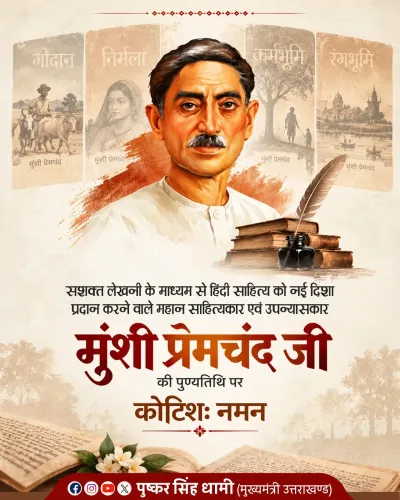
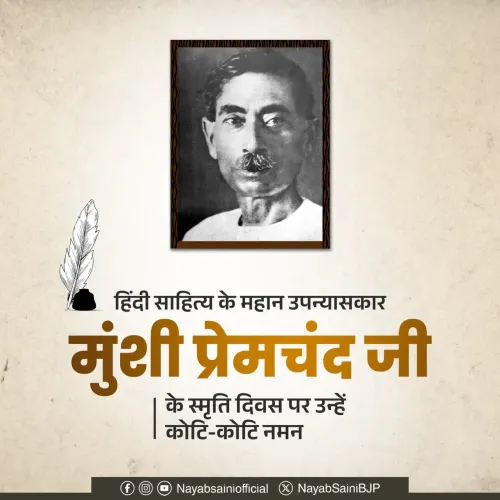
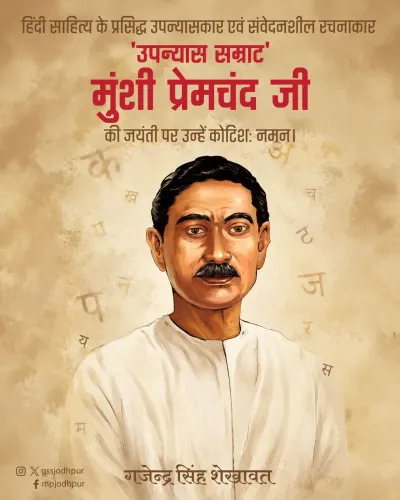
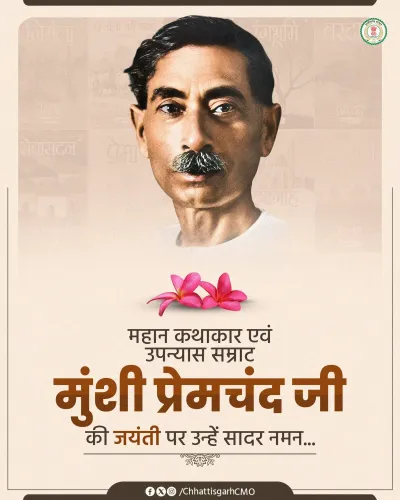
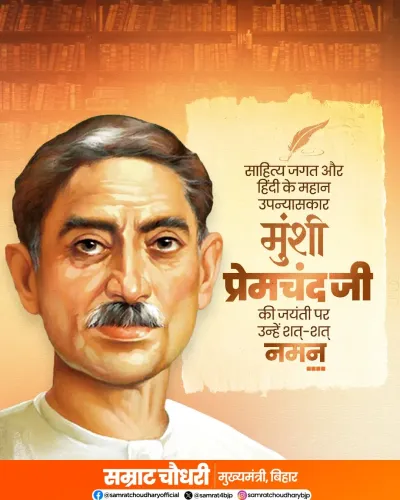
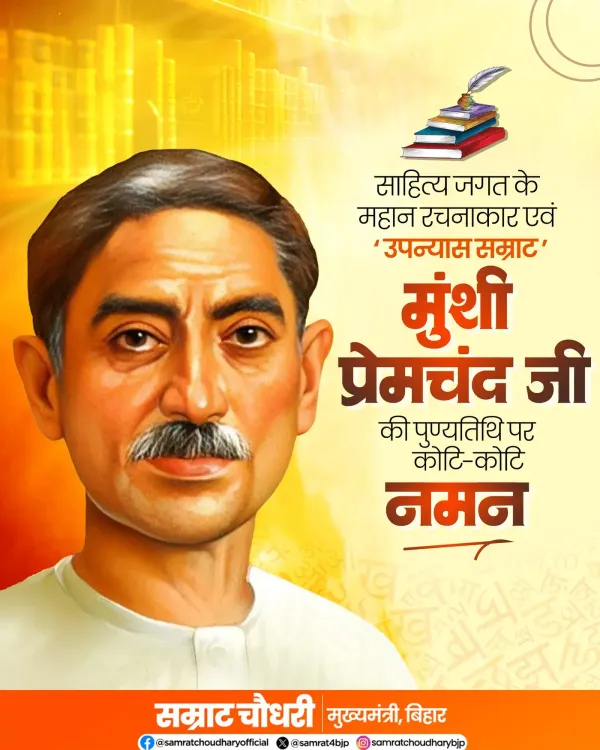
On the death anniversary of one of Hindi literature's most enduring voices, Bihar Chief Minister Samrat Choudhary paused to honour the man who gave words to rural India's pain — Munshi Premchand, remembered on 8 October 2026 as the 'Upanyas Samrat' or Emperor of Novels.
Choudhary wrote: 'साहित्य जगत के महान रचनाकार एवं उपन्यास सम्राट मुंशी प्रेमचंद जी की पुण्यतिथि पर कोटि-कोटि नमन' — paying 'crores of salutations' to the great creator of the literary world. He noted that through his timeless works, Premchand gave voice to society's truths, its struggles, and the full depth of human emotion.
The writer who made Hindi literature look inward
Munshi Premchand, born Dhanpat Rai Shrivastava, wrote with a precision about caste, poverty, and rural dignity that no other Hindi writer of his era matched. Works like Godan, Nirmala, and the short story Kafan did not merely depict suffering — they indicted the systems that produced it. He passed away on 8 October 1936, leaving behind a body of work that shaped how an entire language understood itself.
His title 'Upanyas Samrat' — 'Emperor of Novels' — was not honorary inflation. Premchand wrote over 300 short stories and more than a dozen novels, most of them in Hindi and Urdu, bridging two literary traditions at a moment when political forces were pulling them apart. That bridge still holds.
Why public tributes on this date carry weight
Every 8 October, political leaders across India's Hindi heartland mark Premchand's death anniversary — a ritual that is less about ceremony and more about claiming a shared cultural inheritance. For a Bihar Chief Minister, the gesture resonates locally: Premchand's fictional geography overlapped heavily with the Ganga plain, the peasant economy, and the social hierarchies that Bihar still navigates today.
Choudhary's tribute closes with a note that Premchand's contribution to Hindi literature 'will always be remembered' — a quiet but firm assertion that the canon belongs to everyone, not only to literary institutions.
Ninety years after his death, Premchand's characters are still fighting the same battles. That, more than any tribute, is the measure of the man.
Point of View
But they carry a specific resonance in Bihar, whose agrarian social fabric mirrors the world Premchand wrote about. For CM Choudhary, invoking the 'Upanyas Samrat' on his death anniversary reinforces a broader BJP strategy of anchoring political identity in shared Hindi cultural heritage. Premchand's secular, humanist literary canon is also a terrain that multiple political traditions compete to claim, making such tributes as much a statement of cultural ownership as of literary respect. The 90th death anniversary is a moment for Bihar — and Indian politics more broadly — to reckon with how a 20th-century writer's critiques of poverty and caste remain stubbornly contemporary.
NationPress
8 Oct 2026
Frequently Asked Questions
When did Munshi Premchand die?
Munshi Premchand died on 8 October 1936 . His death anniversary is observed annually across India, particularly in the Hindi-speaking heartland.
Why is Munshi Premchand called 'Upanyas Samrat'?
'Upanyas Samrat' means 'Emperor of Novels' in Hindi. Premchand earned this title for his prolific and powerful body of work — over 300 short stories and more than a dozen novels — that defined modern Hindi and Urdu fiction.
What are Munshi Premchand's most famous works?
His best-known works include the novels Godan and Nirmala , and the short story Kafan . These works depicted rural poverty, caste oppression, and human dignity with unflinching honesty.
Why did Bihar CM Samrat Choudhary pay tribute to Premchand?
Bihar Chief Minister Samrat Choudhary paid tribute to mark Premchand's death anniversary on 8 October 2026 , honouring his timeless contributions to Hindi literature and his portrayal of society's struggles and human emotion.
Did Premchand write in Hindi or Urdu?
Premchand wrote in both Hindi and Urdu , bridging two major literary traditions. His work is considered foundational in both languages.