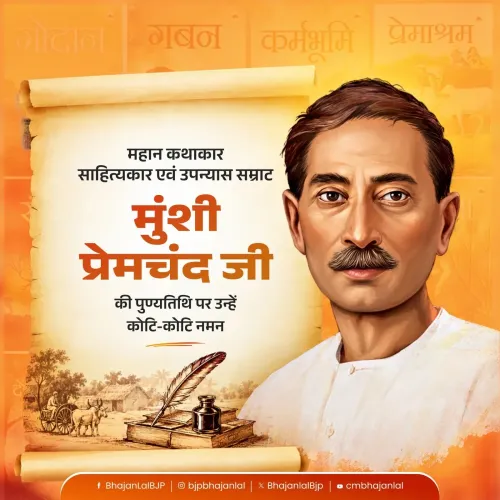
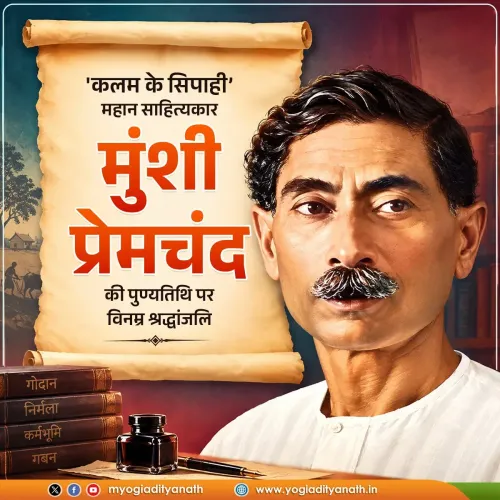
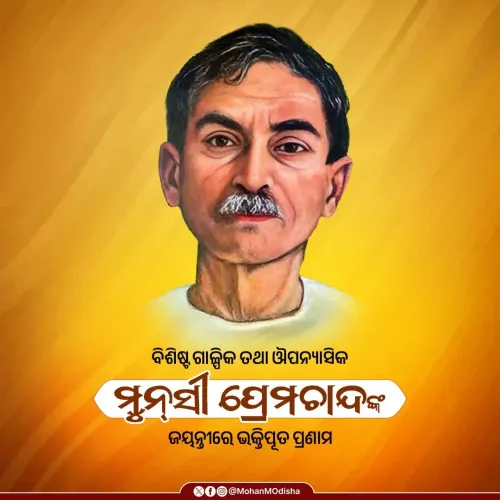
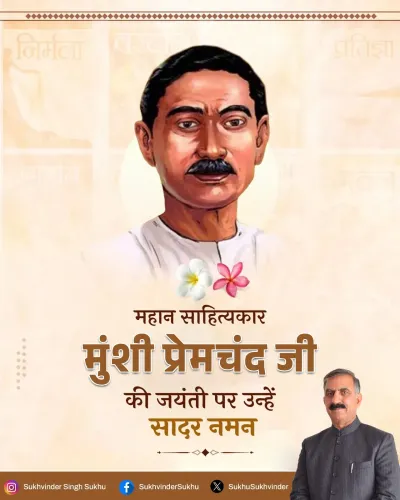
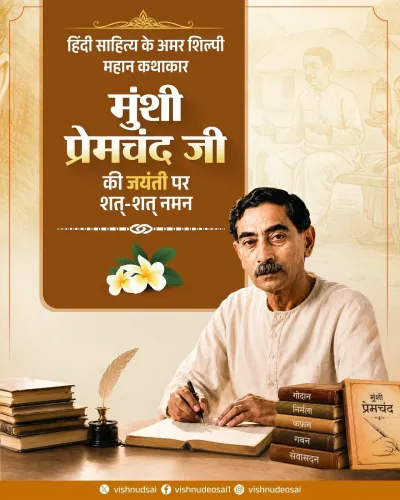
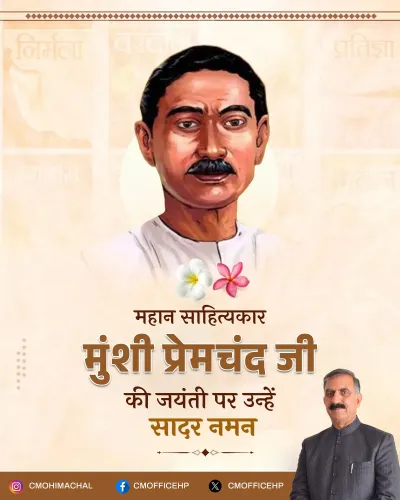
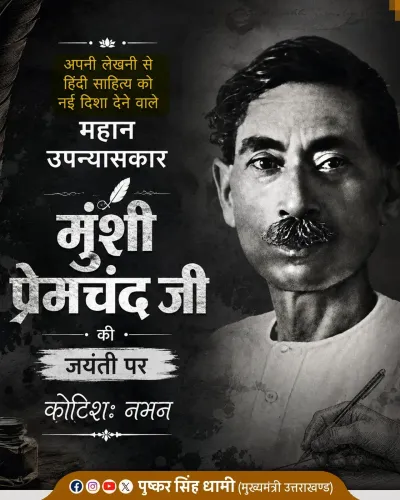
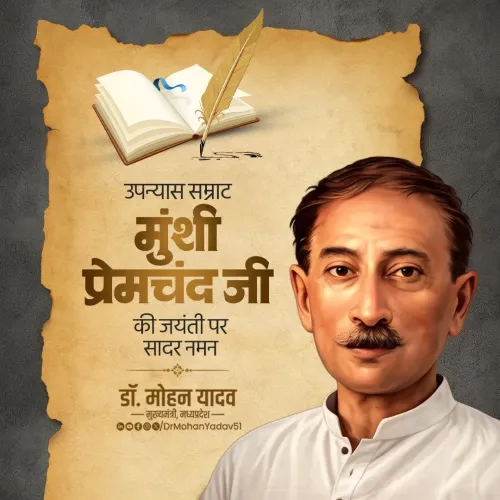
CM Dhami pays tribute to Munshi Premchand on death anniversary
Synopsis
Uttarakhand Chief Minister Pushkar Singh Dhami marked the 90th death anniversary of legendary Hindi novelist Munshi Premchand on October 8, 2026, honouring his legacy of social realism and moral vision that continues to shape Indian literature and public consciousness.
Key Takeaways
Uttarakhand CM Pushkar Singh Dhami paid tribute to Munshi Premchand on his death anniversary, October 8, 2026 .
2026 marks the 90th death anniversary of the iconic writer, who died on October 8, 1936 .
Premchand was born Dhanpat Rai Srivastava in 1880 in Lamhi, Varanasi .
CM Dhami praised Premchand for elevating Hindi literature through 'social concern and a humane vision.' Premchand's major works — including Godaan , Gaban , and Nirmala — remain central to Indian literary curricula.
His literary philosophy of 'Aadarshonmukh Yatharthvaad' (idealism-inclined realism) continues to resonate across generations.
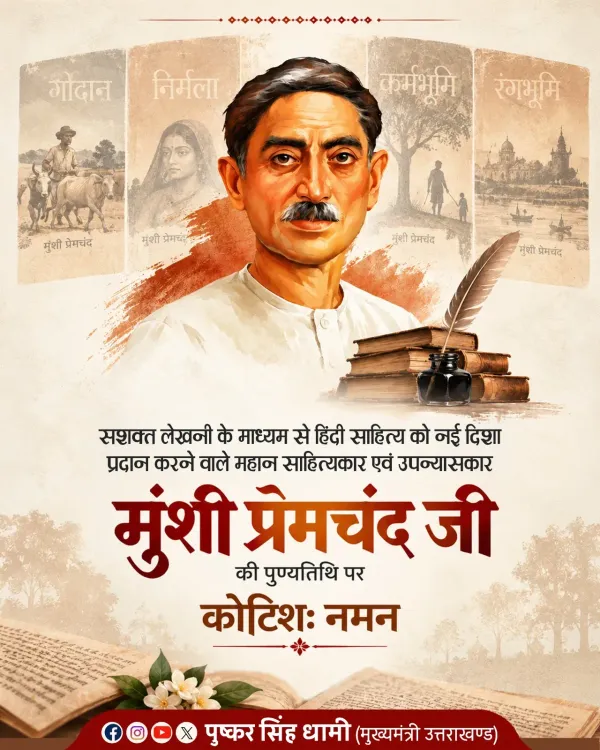
On the death anniversary of one of Hindi literature's most towering figures, Uttarakhand Chief Minister Pushkar Singh Dhami offered heartfelt homage to Munshi Premchand on Thursday, October 8, 2026, hailing the legendary novelist as a writer who lifted Hindi literature to new heights through social consciousness and human empathy.
CM Dhami wrote on X: 'सामाजिक सरोकार और मानवीय दृष्टि के माध्यम से हिंदी साहित्य को नई ऊंचाइयां प्रदान करने वाले महान साहित्यकार एवं उपन्यासकार मुंशी प्रेमचंद जी की पुण्यतिथि पर कोटिशः नमन।' — 'Countless salutations on the death anniversary of the great literary figure and novelist Munshi Premchand, who elevated Hindi literature to new heights through social concern and a humane vision. Your works shall forever keep the lamp of social consciousness and morality burning bright.'
A writer who gave voice to the voiceless
Munshi Premchand, born Dhanpat Rai Srivastava in 1880 in Lamhi, Varanasi, remains the undisputed patriarch of modern Hindi and Urdu fiction. Writing across the late colonial period, he trained an unflinching lens on the lives of peasants, women, and the socially marginalised — at a time when few dared to do so. His novels Godaan, Gaban, and Nirmala, along with hundreds of short stories, are staples of the Indian literary canon and continue to appear in school and university curricula across the country.
Premchand passed away on October 8, 1936 — meaning 2026 marks the 90th death anniversary of the writer. Tributes from public figures across the political spectrum pour in each year on this date, underscoring just how deeply his legacy is woven into the fabric of India's cultural and literary identity.
Why Premchand's social realism still resonates
Premchand pioneered what critics call 'Aadarshonmukh Yatharthvaad' — idealism-inclined realism — a literary style that neither romanticised poverty nor surrendered to despair, but insisted on the dignity of ordinary lives. His short story collections, including Manasorovar, captured every strata of Indian rural society with a precision that sociologists still cite. It is this grounding in lived, human truth that CM Dhami invoked when he described the writer's works as 'a lamp of social consciousness and morality.'
For political leaders, marking Premchand's anniversary is also a quiet act of cultural positioning — an acknowledgment that literature and governance share a common moral responsibility toward the citizen. The gesture resonates especially in Uttarakhand, a state with a proud Hindi literary tradition of its own.
Ninety years after his death, Premchand's words still sell. His flame, as CM Dhami put it, burns on.
Point of View
Reflecting how deeply Hindi literary heritage is embedded in India's political culture. For a BJP chief minister like CM Dhami, invoking Premchand — whose writing centred the poor, the farmer, and the marginalised — also serves as a bridge between cultural nationalism and social welfare messaging. The gesture situates Uttarakhand's government within a broader civilisational continuity. At 90 years since his passing, Premchand's enduring political salience says as much about the state of Indian public discourse as it does about his literary genius.
NationPress
8 Oct 2026
Frequently Asked Questions
When did Munshi Premchand die?
Munshi Premchand died on October 8, 1936 , in Varanasi. The year 2026 marks his 90th death anniversary.
What did CM Dhami say about Munshi Premchand?
Uttarakhand CM Pushkar Singh Dhami paid tribute to Premchand on X, saying his works 'shall forever keep the lamp of social consciousness and morality burning bright' and praising him for elevating Hindi literature through social concern and a humane vision.
What are Munshi Premchand's most famous works?
Premchand's most celebrated works include the novels Godaan , Gaban , and Nirmala , as well as the short story collection Manasorovar . He wrote in both Hindi and Urdu across the late colonial period.
Where was Munshi Premchand born?
Munshi Premchand, born Dhanpat Rai Srivastava , was born in 1880 in the village of Lamhi, near Varanasi , in present-day Uttar Pradesh.
Why is Munshi Premchand called the patriarch of Hindi literature?
Premchand is widely regarded as the father of modern Hindi and Urdu fiction for his pioneering social realism. He gave literary voice to peasants, women, and the marginalised, setting a new moral and artistic standard for Indian writing.