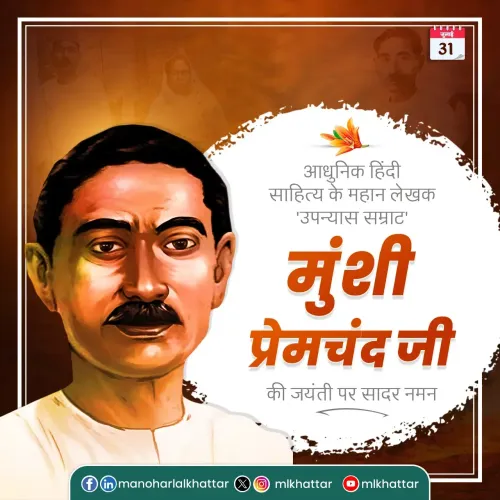
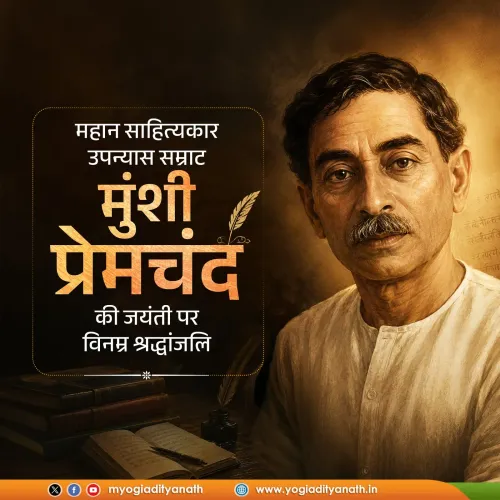
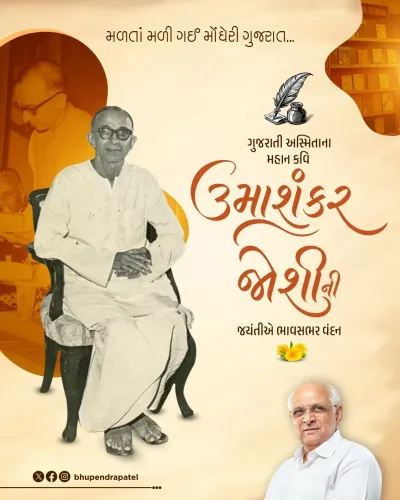
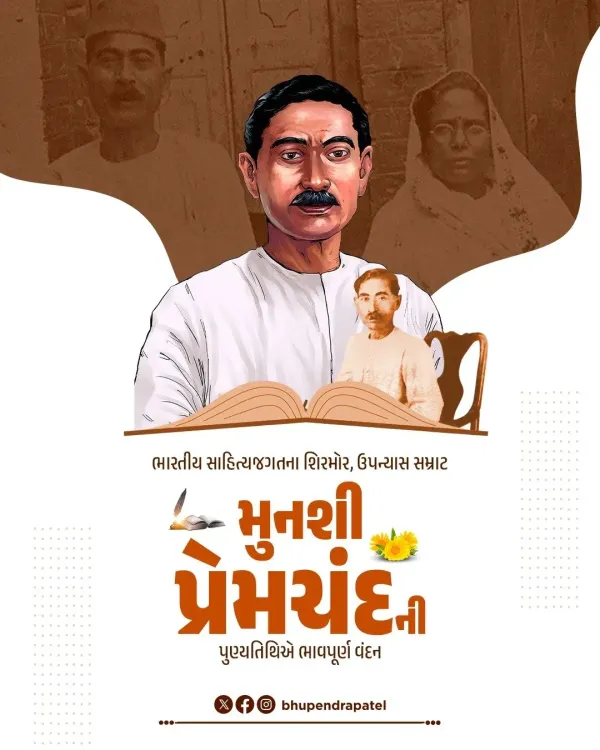
CM Bhupendra Patel Pays Tribute to Munshi Premchand on Death Anniversary
Synopsis
Gujarat Chief Minister Bhupendra Patel marked Munshi Premchand's death anniversary on October 8, 2026, honouring the 'Emperor of the Novel' for immortalising the lives of ordinary Indians, rural communities, and social realities in timeless fiction.
Key Takeaways
Gujarat CM Bhupendra Patel paid tribute to Munshi Premchand on his death anniversary, October 8, 2026 .
Patel described Premchand as a yugapravartak sahitya sarak — 'era-defining literary creator' — and hailed his title of 'Emperor of the Novel.' Munshi Premchand was born on July 31, 1880 in Lamahi, Varanasi , and died on October 8, 1936 .
Premchand's iconic works include 'Godan,' 'Nirmala,' 'Gaban,' and the short story 'Kafan,' spanning both Hindi and Urdu literature.
His writing centred the lives of ordinary rural Indians, addressing poverty, caste, and social inequality decades before independence.
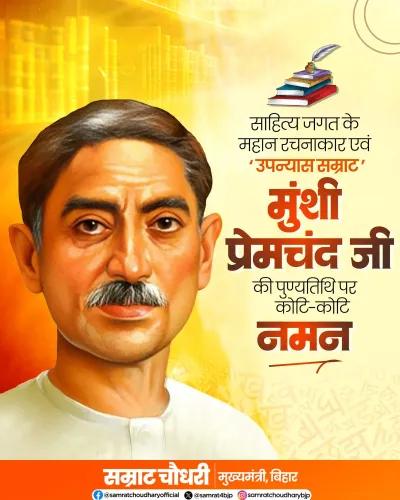
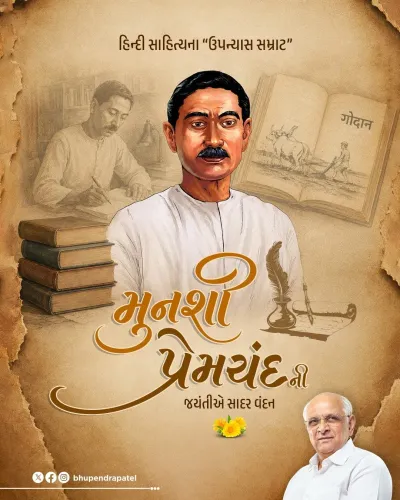
On the death anniversary of one of Hindi literature's most enduring voices, Gujarat Chief Minister Bhupendra Patel offered a heartfelt tribute to Munshi Premchand, honouring the writer who gave language to the silent struggles of ordinary Indians.
In a post on X on Thursday, October 8, 2026, CM Patel remembered Premchand as a yugapravartak sahitya sarak — a 'era-defining literary creator' — and as the 'Upanyas Samrat', or 'Emperor of the Novel', a title that has followed Premchand through decades of Indian literary history. The tribute, written in Gujarati, expressed that Premchand's immortal works, which gave voice to the sensibilities of common people, rural life, and social realities, 'will always hold a special place in the hearts of readers.'
The 'Emperor of the Novel' and His Lasting Imprint
Munshi Premchand — born Dhanpat Rai Srivastava on July 31, 1880, in Lamahi, near Varanasi — is regarded as the father of modern Hindi and Urdu fiction. He died on October 8, 1936, a date that Indian literary circles observe as his punyatithi, or death anniversary. His fiction catalogued the lived experience of rural India with an unflinching clarity that felt almost journalistic — poverty, caste, gender inequality, and colonial exploitation filtered through deeply human characters.
Works such as 'Godan', 'Nirmala', 'Gaban', and the celebrated short story 'Kafan' remain fixtures in school and university curricula across India. His writing in both Hindi and Urdu — he wrote under both languages fluidly — gave him a reach that transcended regional and religious lines, a rare feat that cemented his pan-Indian stature.
Why a Gujarat CM's Tribute Carries Cultural Weight
CM Patel chose to write in Gujarati, reflecting both his regional identity and the broad cultural resonance Premchand commands well beyond the Hindi heartland. That a BJP leader governing India's western industrial powerhouse pauses to honour a writer celebrated for depicting agrarian distress and social inequality speaks to Premchand's unique position — he belongs to no single party's cultural canon. His work is claimed equally across the political spectrum as a mirror of India's rural soul.
Premchand's legacy is particularly alive in policy conversations around rural welfare and agrarian reform — the very themes his fiction dramatised nearly a century ago continue to frame debates about farmer distress, land rights, and village governance in contemporary India.
Point of View
Given his sharp critique of rural poverty and caste hierarchy. That Patel wrote in Gujarati, not Hindi, signals cultural outreach beyond the Hindi heartland. Premchand's enduring curriculum presence makes such tributes politically cost-free yet genuinely resonant with an educated electorate. The anniversary provides a recurring moment where cultural memory and political signalling quietly overlap.
NationPress
8 Oct 2026
Frequently Asked Questions
Who is Munshi Premchand and why is he called the Emperor of the Novel?
Munshi Premchand, born Dhanpat Rai Srivastava in 1880, is regarded as the father of modern Hindi and Urdu fiction. He earned the title 'Upanyas Samrat' or Emperor of the Novel for his prolific, socially powerful novels and short stories depicting rural and lower-class Indian life.
When did Munshi Premchand die?
Munshi Premchand died on October 8, 1936 , and his death anniversary — observed as his punyatithi — is marked every year on this date by literary circles and public figures across India.
What did Gujarat CM Bhupendra Patel say about Munshi Premchand?
CM Patel described Premchand as an era-defining literary creator whose immortal works gave voice to the sensibilities of common people, rural life, and social realities, adding that his writing will always hold a special place in the hearts of readers.
What are Munshi Premchand's most famous works?
Premchand's most celebrated works include the novels 'Godan,' 'Nirmala,' and 'Gaban,' and the short story 'Kafan.' His fiction spans both Hindi and Urdu and remains part of school and university curricula across India.
Why did Bhupendra Patel write his Premchand tribute in Gujarati?
CM Patel typically communicates with his constituency in Gujarati, reflecting his regional identity as Gujarat's Chief Minister. Writing the tribute in Gujarati also signals that Premchand's cultural legacy resonates well beyond the Hindi-speaking heartland.