CM Bhupendra Patel Pays Tribute to Munshi Premchand on Jayanti
Synopsis
Gujarat Chief Minister Bhupendra Patel marked Premchand Jayanti on 31 July 2026 with a Gujarati tribute to Munshi Premchand, calling the novelist the 'emperor of Indian literature' and honouring his legacy of social realism, compassion, and human values.
Key Takeaways
Gujarat CM Bhupendra Patel posted a tribute on 31 July 2026 , the birth anniversary of Munshi Premchand .
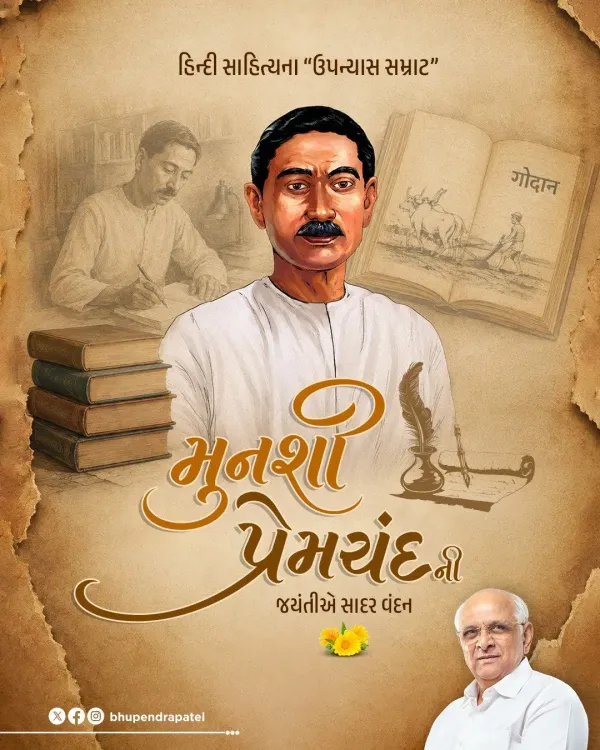
Patel described Premchand as the 'crown of Indian literature' and 'emperor of the novel' in a Gujarati-language post.
Munshi Premchand (1880–1936), born Dhanpat Rai Srivastava , is celebrated for realist novels including Godan and Gaban .
His work portrayed rural poverty, caste exploitation, and human dignity — themes that remain central to Indian literary discourse.
Indian political leaders across parties routinely mark Premchand Jayanti, reflecting the writer's pan-national cultural stature.
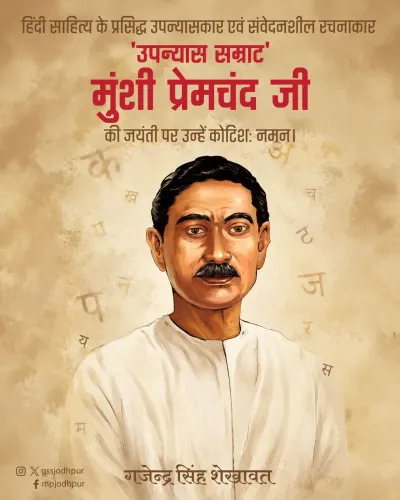
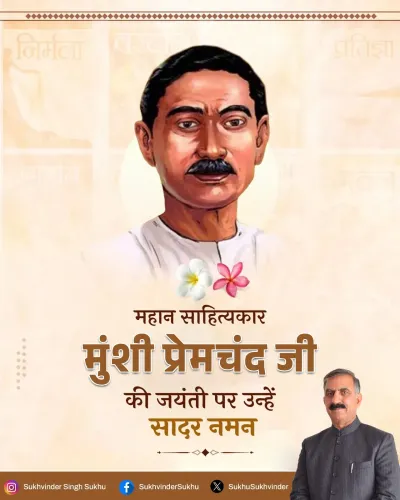
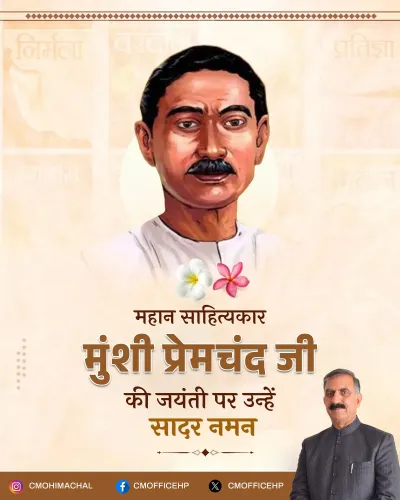
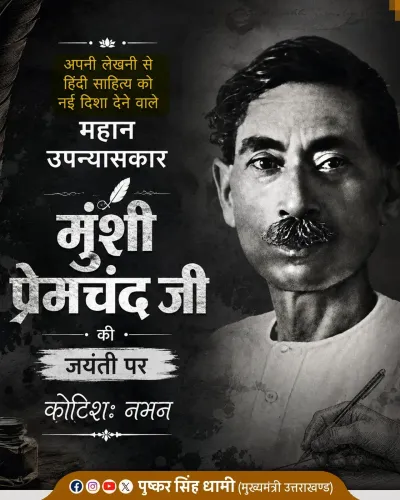
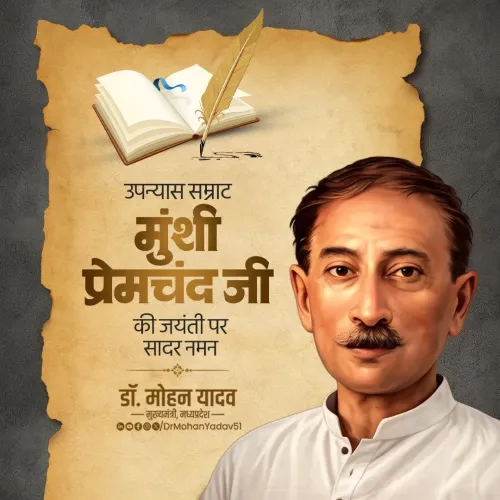
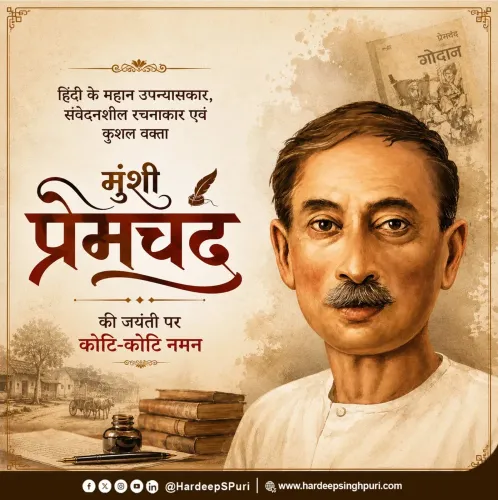
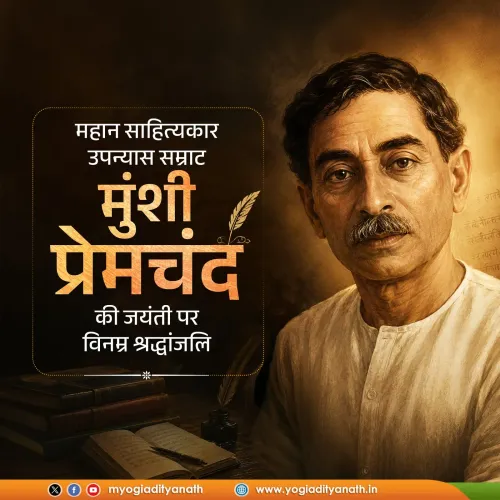
A century after he gave Indian literature its conscience, Munshi Premchand was remembered on Friday, 31 July 2026 — his birth anniversary — by Gujarat Chief Minister Bhupendra Patel, who offered a heartfelt tribute to the novelist widely regarded as the emperor of Hindi-Urdu fiction.
In his post, CM Patel wrote — 'ભારતીય સાહિત્યજગતના શિરમોર, ઉપન્યાસ સમ્રાટ' ['the crown of Indian literature, the emperor of the novel'] — honouring Premchand's legacy of weaving consciousness, compassion, and human values into the social fabric through his immortal works. He added that Premchand's literary heritage would continue to inspire fellow citizens toward social harmony, sensitivity, and cultural pride.
The man who made rural India the hero of its own story
Munshi Premchand, born Dhanpat Rai Srivastava on 31 July 1880 in Lamhi, near Varanasi, spent his life writing against the grain of power. His novels — Godan and Gaban among the most celebrated — placed the rural poor, the exploited, and the overlooked at the centre of Indian storytelling. He died in 1936, but the characters he created never left.
His prose cut through caste, class, and gender with a clarity that felt almost journalistic. He did not romanticise poverty — he named it, showed its mechanics, and demanded the reader reckon with it. That unflinching realism is why his work still appears in school curricula, university syllabi, and drawing-room bookshelves across the subcontinent nearly ninety years after his death.
A political ritual with genuine cultural weight
Indian political leaders across party lines have long marked Premchand Jayanti with public statements, and state governments routinely organise seminars, publication releases, and school programmes around the date. CM Patel's tribute follows that established practice — but the language he chose, rooted in Gujarati, signals the reach of Premchand's legacy well beyond the Hindi heartland he wrote from.
Premchand wrote in both Hindi and Urdu, and his stories crossed every linguistic boundary India draws. That a Gujarat Chief Minister pays homage in Gujarati is itself a small testament to how thoroughly this one writer became everyone's writer.
On the anniversary of his birth, the reminder stands: the most durable literature is the kind that refuses to look away.
Point of View
Invoking Premchand also carries a subtle ideological dimension: his emphasis on social harmony and cultural heritage maps onto themes the party frequently foregrounds. The tribute is ceremonial in form but points to the enduring political utility of literary memory.
NationPress
14 Sept 2026
Frequently Asked Questions
Why is Munshi Premchand Jayanti celebrated on 31 July?
Munshi Premchand was born on 31 July 1880 in Lamhi, near Varanasi . His birth anniversary is observed annually as Premchand Jayanti, with tributes from literary organisations, schools, and political leaders across India.
What did Gujarat CM Bhupendra Patel say about Munshi Premchand?
CM Patel called Premchand the 'crown of Indian literature' and 'emperor of the novel,' crediting him with instilling consciousness, compassion, and human values in society through his immortal works.
What are Munshi Premchand's most famous works?
Premchand's most celebrated novels include Godan and Gaban . He also wrote hundreds of short stories that depicted rural poverty, caste exploitation, and the lives of ordinary Indians.
Who was Munshi Premchand?
Munshi Premchand (1880–1936), born Dhanpat Rai Srivastava , was a pioneering Hindi-Urdu novelist and short-story writer. His realist fiction is widely considered foundational to modern Indian literature.
How do Indian leaders typically mark Premchand Jayanti?
Indian political leaders across parties issue public tributes on Premchand Jayanti. State governments also organise seminars, publication releases, and school programmes to mark the occasion annually.