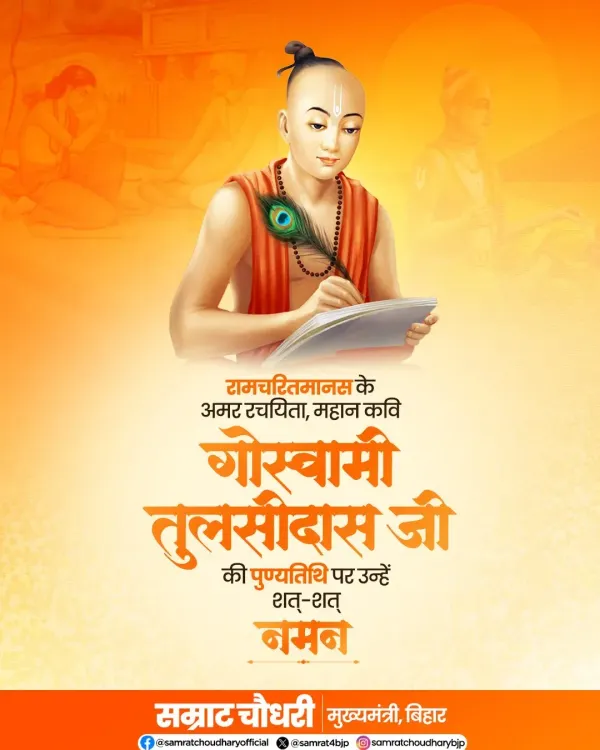
CM Samrat Choudhary pays tribute to Goswami Tulsidas on his Punyatithi
Synopsis
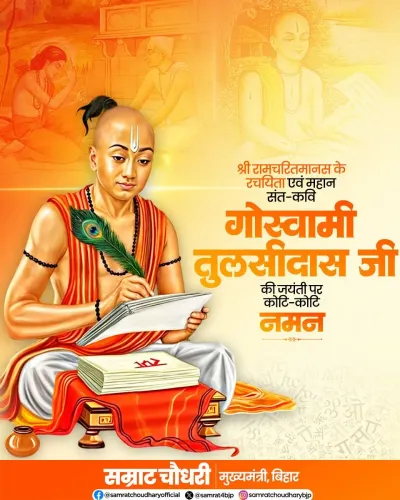
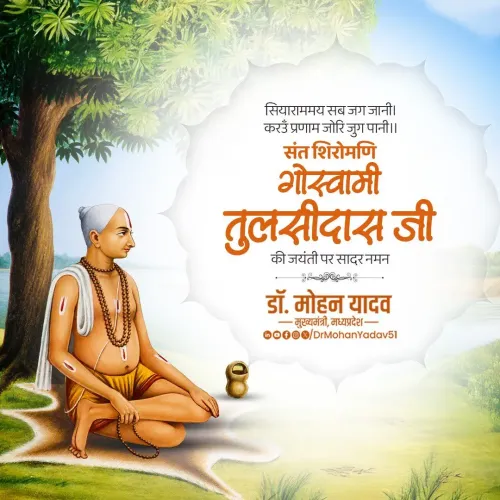
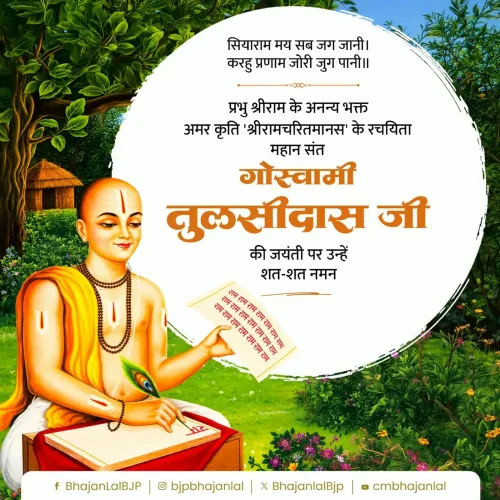
Bihar Chief Minister Samrat Choudhary offered a reverential tribute to poet-saint Goswami Tulsidas on his Punyatithi on 31 July 2026, honouring the Ramcharitmanas composer as an immortal voice of devotion, social harmony, and Indian cultural consciousness.
Key Takeaways
Bihar CM Samrat Choudhary posted a tribute to Goswami Tulsidas on his Punyatithi on 31 July 2026 .
Tulsidas is the 16th-17th century Awadhi poet-saint who composed the Ramcharitmanas , a foundational text of north Indian bhakti tradition.
CM Choudhary described Tulsidas as the 'immortal singer of devotion, harmony ( samrasta ) and Indian culture.' His legacy also includes the Hanuman Chalisa and Vinay Patrika , texts recited by hundreds of millions daily.
The tribute reflects a broader pattern of Indian political leaders publicly honouring classical devotional poets as symbols of cultural and civic continuity.
On the death anniversary of the immortal poet-saint Goswami Tulsidas, Bihar Chief Minister Samrat Choudhary offered his reverential tribute on Friday, 31 July 2026, honouring the 16th-century composer whose words continue to shape the spiritual life of millions across India.
In his post, CM Choudhary wrote: 'भक्ति, समरसता और भारतीय संस्कृति के अमर गायक' — calling Tulsidas the 'immortal singer of devotion, harmony and Indian culture' — and offered 'koti-koti naman', a crore-fold salutation, to the poet on his Punyatithi. He noted that Tulsidas's 'immortal voice and literary legacy have for centuries inspired society to walk the path of dharma, dignity, ideals and humanity.'
The poet whose words outlived centuries
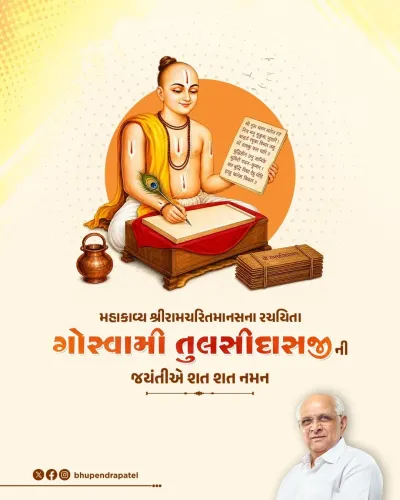
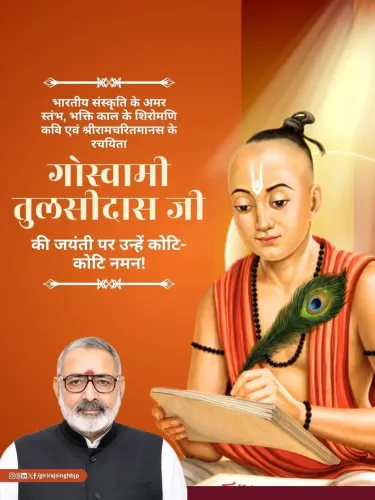
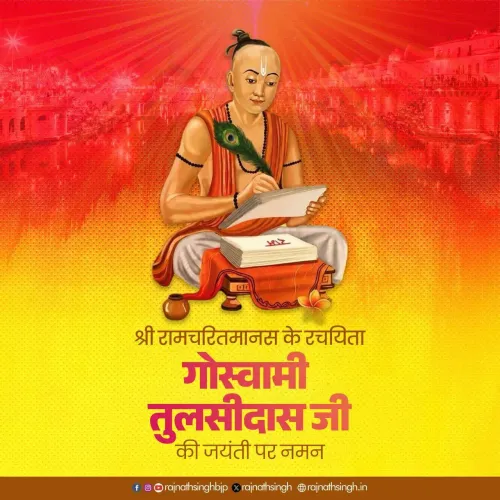
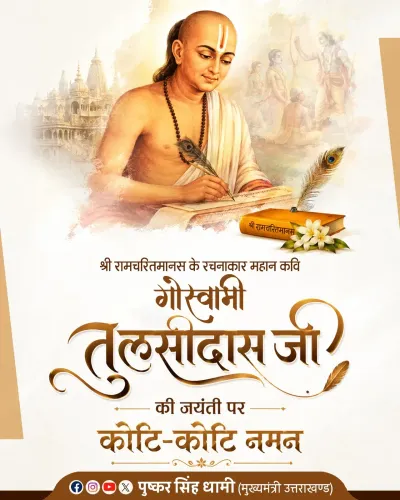
Goswami Tulsidas is credited with composing the Ramcharitmanas, an Awadhi-language retelling of the Ramayana that became the devotional cornerstone of north Indian bhakti tradition. Written in the language of the common people rather than Sanskrit, it brought the story of Ram directly into the homes and hearts of ordinary believers — a democratising act of literature as much as faith.
His work did not stop there. Tulsidas authored several other texts, including the Vinay Patrika and Hanuman Chalisa, the latter recited daily by hundreds of millions. His influence on Indian cultural consciousness — its moral vocabulary, its idea of ideal conduct, its imagery of devotion — remains without parallel among medieval poet-saints.
A tribute rooted in cultural continuity
CM Choudhary's tribute follows a well-established pattern among Indian political leaders, who mark the anniversaries of devotional poets and saints as occasions to reaffirm connections to classical heritage. What gives this particular tribute its weight is the specific language chosen: 'samrasta' — harmony or social cohesion — a word that carries deliberate resonance in a diverse, multi-caste society like Bihar's.
By invoking Tulsidas as a symbol of samrasta alongside dharma and humanity, the Chief Minister frames the poet's legacy not merely as religious inheritance but as a living civic value — one that speaks directly to Bihar's social fabric.
Point of View
A state where caste arithmetic and social unity are perennial electoral themes. By framing Tulsidas as a poet of harmony rather than merely of religion, Choudhary positions the tribute within a broader BJP cultural-nationalist discourse that seeks to present classical Hindu literary heritage as a unifying, inclusive force. This is routine political communication, but the choice of vocabulary reveals the calculation beneath the reverence.
NationPress
14 Sept 2026
Frequently Asked Questions
Who is Goswami Tulsidas and why is he remembered?
Goswami Tulsidas was a 16th-17th century Awadhi poet-saint best known for composing the Ramcharitmanas, a retelling of the Ramayana in the language of common people, and the Hanuman Chalisa. He is one of the most influential figures in north Indian devotional tradition.
What is Tulsidas Punyatithi?
Punyatithi is the death anniversary of a revered figure, observed as a day of tribute and remembrance. Tulsidas's Punyatithi is marked annually by devotees and public figures across India.
What did Bihar CM Samrat Choudhary say about Tulsidas?
CM Samrat Choudhary called Tulsidas the 'immortal singer of devotion, harmony and Indian culture' and said his literary legacy has for centuries inspired society to walk the path of dharma, dignity, ideals and humanity.
What is the Ramcharitmanas?
The Ramcharitmanas is an Awadhi-language epic poem composed by Goswami Tulsidas, retelling the story of Ram from the Ramayana. It is considered a cornerstone of north Indian bhakti literature and is recited in homes and temples across India.
Why do Indian politicians pay tribute to Tulsidas?
Indian political leaders across parties routinely mark the anniversaries of medieval devotional poets to reaffirm connections to classical cultural and religious heritage, signal social values like dharma and harmony, and engage with large devotee communities.