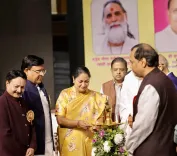
CM Vishnu Deo Sai reaffirms Chhattisgarh's development push
Synopsis
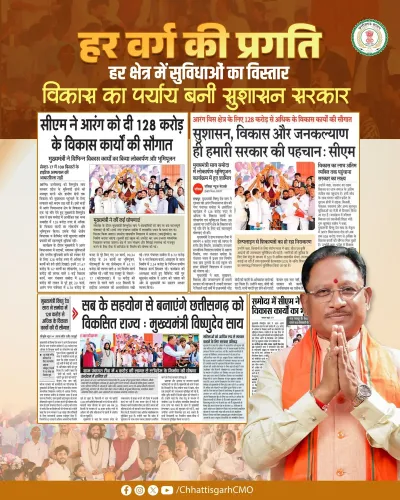
Chhattisgarh Chief Minister Vishnu Deo Sai has renewed his government's pledge to expand roads, electricity, drinking water, education and health to every corner of the state, calling it the 'resolve of a good-governance government' nearly three years into the BJP's current term.
Key Takeaways
CM Vishnu Deo Sai posted his governance reaffirmation on 14 November 2026 .
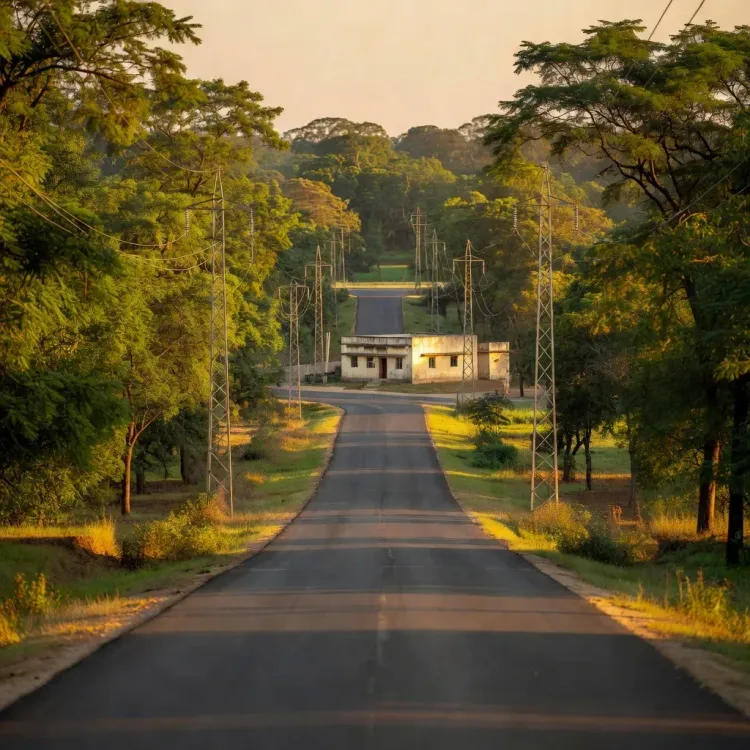
The statement names five priority infrastructure verticals: roads, electricity, drinking water, education and health.
Sai describes the mission as bringing 'positive change in the life of every family' — with a focus on those most in need.
The BJP administration has governed Chhattisgarh since December 2023 , following a decisive win in assembly elections.
The 'sushasan sarkar' framing positions the government as a good-governance corrective and sets a public benchmark for infrastructure delivery.
Chhattisgarh's tribal-majority, forest-heavy geography makes last-mile service delivery a genuine policy challenge, not just messaging.
Roads, power, clean water, schools, hospitals — Chhattisgarh Chief Minister Vishnu Deo Sai has restated his government's core commitment: that the fruits of basic infrastructure must reach every corner of the state and every family that needs them. The pledge, posted on Saturday, 14 November 2026, captures the governing philosophy the BJP administration has carried since taking office in December 2023.
In his post, written in Hindi, CM Sai declared: 'Chhattisgarh ka samagra vikas, jan-jan ka kalyan aur har parivar ke jeevan mein sakaratmak badlaav laana hi sushasan sarkar ka sankalp hai' — 'Comprehensive development of Chhattisgarh, the welfare of every citizen, and bringing positive change in the life of every family is the resolve of this good-governance government.' He added that the administration is 'continuously committed to expanding basic amenities — roads, electricity, drinking water, education and health — across every region of the state, so that the benefits of development reach every person in need.'
A BJP government's first-term governance pitch
Vishnu Deo Sai, a prominent tribal leader from Jashpur district, was elevated to the Chief Minister's post when the BJP swept back to power in Chhattisgarh after the November 2023 assembly elections, ending five years of Congress rule. His appointment was widely read as a signal to the state's substantial Scheduled Tribe population, which makes up roughly 32 percent of Chhattisgarh's residents.
The state sits on some of India's richest mineral and forest belts, yet large parts of its rural interior — particularly in Bastar and Surguja divisions — have historically lagged on road connectivity, electrification rates, and health infrastructure. Bridging that gap has been a consistent theme of the Sai administration's public communication since day one.
Why the 'sushasan' framing matters
The phrase 'sushasan sarkar' — 'good-governance government' — is a deliberate rhetorical choice. It implicitly frames the administration as a corrective to what BJP leaders characterise as the previous government's record. Indian ruling parties at the state level routinely anchor their mid-term messaging around visible infrastructure delivery: kilometres of new road, electrified villages, water pipelines commissioned. The political calculus is straightforward — in a state where rural constituencies dominate, tangible public works are the most credible election-cycle currency.
What makes Chhattisgarh's challenge distinct is geography. Dense forest cover, Maoist-affected zones, and dispersed tribal hamlets mean that last-mile delivery of even basic services carries costs and logistical complexity rarely encountered in more urbanised states. Any serious expansion of the five pillars CM Sai names — roads, electricity, drinking water, education, and health — will be tested against that terrain.
The statement sets a clear benchmark. When Chhattisgarh's next budget cycle opens and when assembly sessions turn to departmental performance, these five infrastructure verticals will be the measuring stick the opposition reaches for first.
Point of View
Dispersed tribal habitations, mineral-rich but service-poor districts — the ambition is real, and so is the gap between promise and delivery.
NationPress
14 Nov 2026
Frequently Asked Questions
Who is Vishnu Deo Sai and when did he become Chief Minister of Chhattisgarh?
Vishnu Deo Sai is a BJP leader and tribal politician from Jashpur district who became Chief Minister of Chhattisgarh in December 2023 after the BJP's victory in the state assembly elections.
What does 'sushasan sarkar' mean?
Sushasan sarkar translates to 'good-governance government' in Hindi. CM Sai uses the phrase to describe his administration's commitment to transparent, development-focused rule in Chhattisgarh.
What are the five development priorities CM Sai mentioned?
CM Sai specifically named roads, electricity, drinking water, education and health as the five basic amenities his government is committed to expanding across Chhattisgarh.
Why is infrastructure delivery particularly challenging in Chhattisgarh?
Chhattisgarh has dense forest cover, Maoist-affected zones, and dispersed tribal habitations — particularly in Bastar and Surguja — that make last-mile delivery of roads, power and water technically and logistically difficult compared to more urbanised states.
When did BJP come to power in Chhattisgarh?
The BJP won the November 2023 Chhattisgarh assembly elections and formed the government in December 2023 , ending five years of Congress rule in the state.