UNCTAD chief Grynspan leads UN secretary-general race; UAE's Nusseibeh debuts weakly
Synopsis
With António Guterres' term ending in weeks, UNCTAD chief Rebecca Grynspan tightened her grip on the UN's top job — but a return to non-colour-coded ballots means the critical question of P5 vetoes remains unanswered. The UAE's Lana Nusseibeh, expected to shake up the race, landed in fourth place on debut, leaving the deadlock largely intact.
Key Takeaways
Rebecca Grynspan received 11 positive votes in the seventh Security Council straw poll on 31 October 2026 , up two from the previous round.
Her negative votes fell to four , but it is unclear whether any came from a permanent member , as ballots were not colour-coded this round.
Lana Nusseibeh of the UAE debuted in fourth place with 7 positive, 6 negative, and 2 neutral votes.
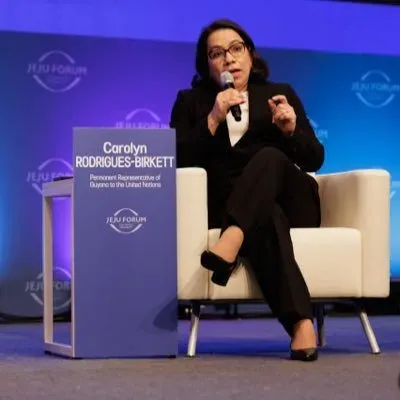
Rafael Grossi (IAEA) improved to 9 positive, 4 negative ; Carolyn Rodrigues-Birkett (Guyana) polled 8 positive, 6 negative, 1 neutral .
Latin America has not held the UN's top post since 1991 ; CELAC formally staked a regional claim this week.
Latvia takes over the Security Council presidency in November and will face pressure to finalise the recommendation before António Guterres' term expires at year-end.
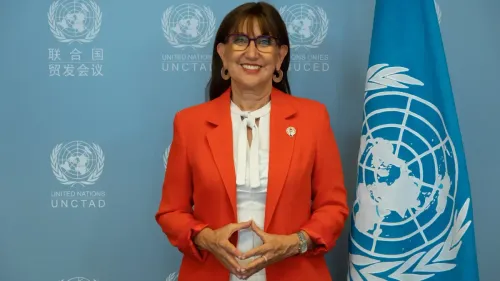
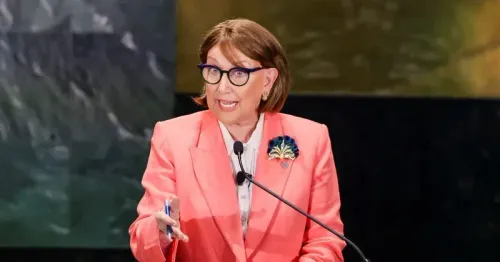
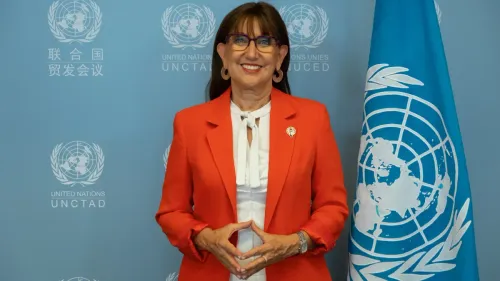
Rebecca Grynspan, the Costa Rican head of the United Nations Conference on Trade and Development (UNCTAD), extended her front-runner status in the race for the next UN Secretary-General after the seventh straw poll of Security Council members on 31 October 2026, while the United Arab Emirates' Lana Nusseibeh failed to make a significant impression in her debut round.
Grynspan's Standing After Seventh Poll
Grynspan secured 11 positive votes in the latest anonymous straw poll, up two from the previous round, and narrowed her negative tally to four, down one. She has now led six of the seven straw polls conducted so far, reinforcing her position as the most consistent contender in the field.
However, a critical uncertainty persists. The seventh poll reverted to the earlier practice of not colour-coding ballots to distinguish permanent members' votes from those of elected members — a step that had been introduced in the sixth round. This makes it impossible to determine whether any of her remaining four negative votes came from a permanent member (P5). A single veto-wielding member's opposition is enough to end a candidacy. Notably, Grynspan had received two negative votes from permanent members in the sixth poll held two weeks earlier.
Nusseibeh's Debut Falls Short
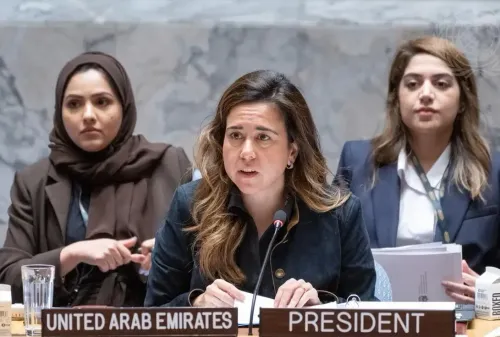
Lana Nusseibeh, the UAE's Minister of State for Foreign Affairs, entered the race last week amid expectations that her candidacy might break the prolonged deadlock. Instead, she recorded seven positive, six negative, and two neutral votes — placing her in fourth position in the field.
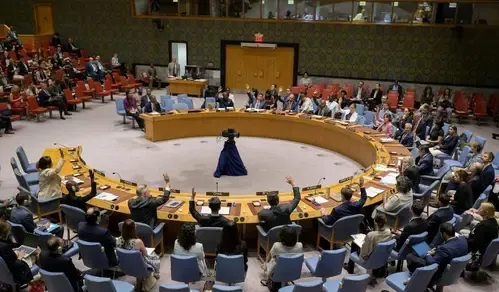
Her entry also coincided with the decision to drop ballot colour-coding for this round, a move that clouded transparency over P5 positions for all candidates. In straw polls, members vote 'encourage' (positive), 'discourage' (negative), or 'no opinion' (neutral). The results were not officially announced; they were reportedly leaked to specialist UN outlets PassBlue and 1for8Billion.
Where the Other Candidates Stand
Rafael Grossi, the Argentine director-general of the International Atomic Energy Agency (IAEA), trimmed his negative votes by two to reach four and gained one additional positive to reach nine, indicating some movement in behind-the-scenes negotiations. Carolyn Rodrigues-Birkett, former foreign minister of Guyana, polled eight positive, six negative, and one neutral vote, holding third place.
Further down the field, Olaru Otunnu, a former under-secretary-general and Uganda's former foreign minister, received 11 negative and four positive votes. Maria Fernanda Espinosa, a former president of the UN General Assembly and Ecuador's former foreign minister, recorded 10 negative and two positive votes, while Ivonne A-Baki, a former Ecuadorian ambassador to the United States, tallied 14 negative and one positive.
The Latin America Claim and the Deadline Pressure
The race carries a firm deadline: current Secretary-General António Guterres' term expires at the end of 2026, giving the Council roughly two months to settle on a successor. Greece's Permanent Representative Aglaia Balta, who presided over October's proceedings as Security Council president, gave assurances that the election would conclude in time, stating: 'The Security Council plans to make its recommendation to the General Assembly in a timely manner so that the appointment by the Assembly allows the newly elected Secretary-General sufficient time to prepare for the job.'
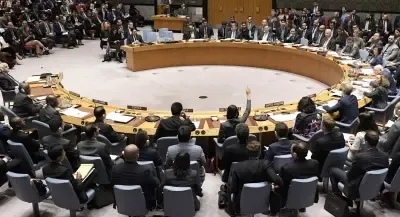
Latvia, which assumes the Council presidency in November, inherits the task of accelerating the process. The winning candidate must secure ten positive votes without a veto from any permanent member before being forwarded to the UN General Assembly, which typically ratifies the Council's recommendation unanimously.
A strong regional push has emerged from Latin America and the Caribbean. Representatives of the Community of Latin American and Caribbean States (CELAC) publicly pressed their claim on Tuesday, with Uruguay's Permanent Representative Laura Dupuy Lasserre stating: 'The time has come for a national of Latin America and the Caribbean to assume the responsibility of holding the position of Secretary-General of the United Nations in accordance with the principle of equitable geographical balance and with the strengthening of diversity in the leadership of the organisation.' The region has not held the office since Javier Pérez de Cuéllar ended his term in 1991 — a gap of 35 years.
Beyond regional representation, there is broad international sentiment favouring the election of a woman as secretary-general, given that all nine previous holders of the office since the UN's founding 80 years ago have been men. After Friday's poll, Grynspan posted on X: 'We face pivotal moments that require a united and modern United Nations. I remain committed to listening to all voices, pursuing necessary reform, and delivering on our shared mandate for peace and security.'
With Latvia taking over the process in November and the year-end deadline looming, the pressure on all five permanent members to coalesce around a single candidate is set to intensify sharply in the coming weeks.
Point of View
But two P5 vetoes in round six were not erased; they were merely hidden. The CELAC pressure is legitimate — 35 years is a long regional absence — but regional solidarity has not historically been sufficient to move a P5 holdout. Latvia's presidency will test whether there is genuine momentum or simply managed ambiguity.
NationPress
31 Oct 2026
Frequently Asked Questions
Who is leading the race to become the next UN Secretary-General?
Rebecca Grynspan, the Costa Rican head of UNCTAD, is leading the race. She secured 11 positive votes in the seventh Security Council straw poll on 31 October 2026, topping six of the seven rounds held so far.
How did Lana Nusseibeh perform in her first straw poll?
UAE Minister of State for Foreign Affairs Lana Nusseibeh debuted in fourth place, recording 7 positive, 6 negative, and 2 neutral votes. Her entry did not break the existing deadlock among candidates.
What happens next in the UN secretary-general election process?
Latvia assumes the Security Council presidency in November and will oversee the remaining rounds of straw polls. The winning candidate must receive 10 positive votes without a veto from any of the five permanent members before the General Assembly formally appoints them. The process must conclude before António Guterres' term ends at year-end 2026.
Why does the absence of colour-coded ballots matter?
Colour-coded ballots, used in the sixth poll, allowed observers to identify whether negative votes came from permanent members — the only ones who hold veto power. Without that coding, it is impossible to know if Grynspan's four remaining negative votes represent a fatal P5 obstacle or opposition only from elected members.
Why is Latin America pressing its claim for the UN's top job?
Latin America and the Caribbean have not held the secretary-general post since Javier Pérez de Cuéllar ended his term in 1991 — a gap of 35 years. CELAC representatives formally argued this week that the principle of equitable geographical rotation supports the region's candidacy, noting its candidates have consistently ranked in the top three of straw polls.