Khattar hails GSLV-F18 launch, NavIC boost with NVS-03

Synopsis
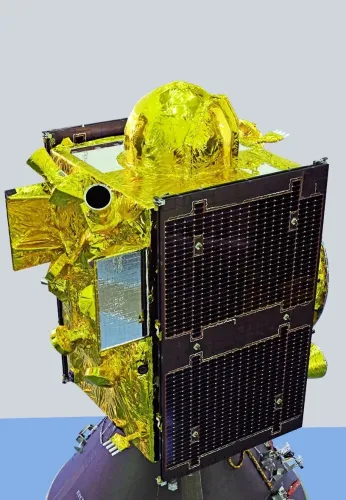
Union Minister Manohar Lal Khattar hailed the successful GSLV-F18 launch of the NVS-03 satellite, calling it a milestone for NavIC — India's indigenous navigation system — and a reinforcement of the country's strategic space self-reliance under PM Modi's leadership.
Key Takeaways
GSLV-F18 successfully placed the NVS-03 satellite into orbit, expanding India's NavIC navigation constellation.
NavIC is India's indigenous alternative to GPS, designed to operate independently of foreign satellite navigation systems.
The NVS second-generation series began with NVS-01 in May 2023 ; NVS-03 is the latest increment in that build-out.
The constellation serves both civilian sectors — transport, agriculture, maritime — and strategic defence applications.
Union Minister Manohar Lal Khattar credited PM Narendra Modi's leadership for India's sustained push in indigenous space technology.
Completion of the full NVS-series and wider rollout of NavIC-compatible devices remain the next key milestones to watch.
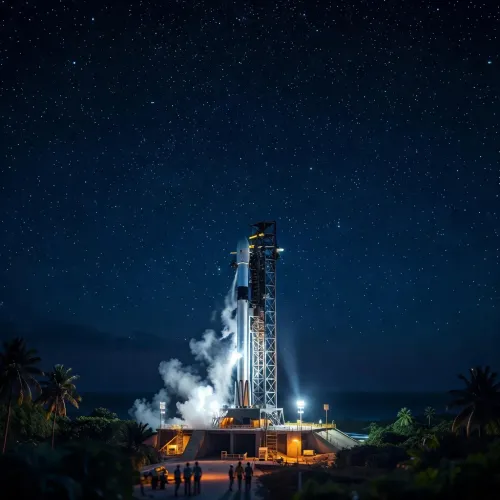
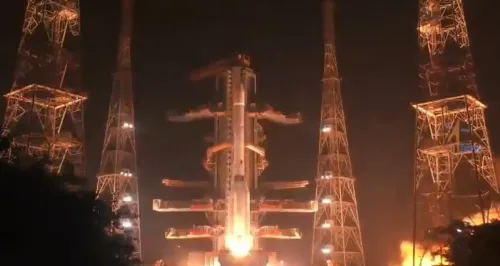
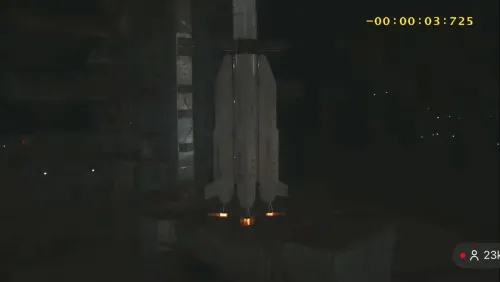
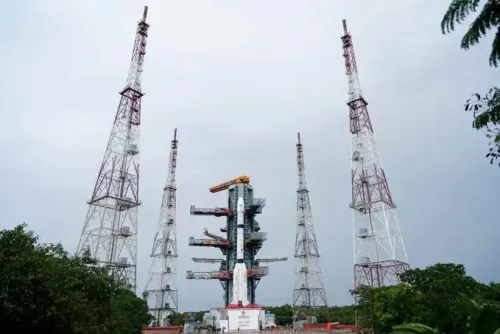
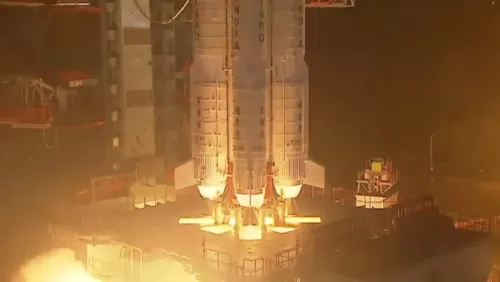
India's ambition to navigate the world on its own terms just got a powerful new signal. Union Power and Housing Minister Manohar Lal Khattar congratulated ISRO scientists and engineers on Saturday, 1 November 2026, after the successful launch of GSLV-F18 carrying the NVS-03 satellite — the latest addition to India's homegrown navigation constellation, NavIC.
What GSLV-F18 and NVS-03 add to India's navigation grid
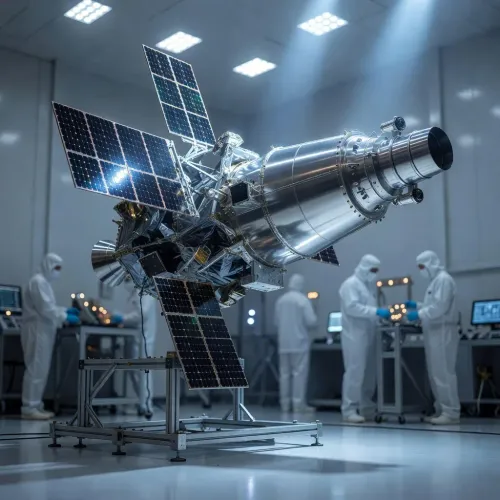
NavIC — Navigation with Indian Constellation — is India's answer to the American GPS, designed to deliver accurate positioning and timing services without any dependence on foreign satellite systems. The programme traces its roots to 2013, when the first satellite of the original IRNSS series was placed in orbit. The second generation began in earnest with the NVS-01 launch in May 2023, and NVS-03 now pushes that expansion further, reinforcing the constellation's coverage and resilience.
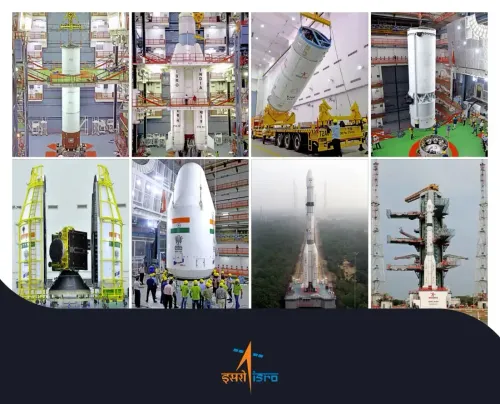
The Geosynchronous Satellite Launch Vehicle (GSLV) is itself a symbol of indigenous engineering — a workhorse rocket developed and steadily refined by ISRO over decades. Each successful flight on a domestic launcher deepens India's end-to-end space self-reliance: not just the satellite, but the rocket beneath it, built and operated entirely on Indian soil.
Why NavIC's strategic weight keeps growing
Navigation satellites are dual-use by nature. Accurate, reliable positioning data underpins military targeting, logistics, and surveillance — which is precisely why India's defence forces are among NavIC's most consequential stakeholders. A system that operates independently of foreign infrastructure cannot be switched off by a geopolitical rival in a crisis. That logic has made NavIC not just a technology project but a strategic priority for successive governments.
Civilian applications are equally significant. Transport networks, precision agriculture, fishermen at sea, and India's rapidly expanding drone economy all stand to benefit as the constellation matures and user-end hardware becomes widespread. The completion of the full NVS-series constellation — with additional satellites still to follow — will be the moment those applications can scale with confidence.
Khattar framed the launch as evidence of India's 'commitment to technological self-reliance and a stronger, more resilient navigation infrastructure,' crediting Prime Minister Narendra Modi's leadership for the programme's momentum. The sentiment reflects a broader government narrative that has positioned space technology alongside defence manufacturing and semiconductors as pillars of Atmanirbhar Bharat — self-reliant India.
ISRO's expanding launch cadence
ISRO's recent years have been defined by an accelerating ambition: the Chandrayaan-3 lunar landing, the Aditya-L1 solar mission, and now a steady drumbeat of operational satellite deployments. Each successful GSLV flight also builds the case for India's commercial launch market, where private operators are beginning to enter the arena under a liberalised space policy. NVS-03 lands in that context — a mission that is simultaneously operational infrastructure and a demonstration of industrial capability.
The next milestone to watch: the remaining NVS-series satellites needed to complete the second-generation NavIC constellation, and the rollout of NavIC-compatible chips and receivers across transport, agriculture, and defence platforms. When those signals reach every corner of India, the full promise of this launch will be felt on the ground.
Point of View
Coming from outside the space ministry, signals how NavIC has become a cross-government symbol of the Atmanirbhar agenda — every ministry wants a stake in the narrative. The real policy test ahead is not the launch itself but adoption: whether NavIC-compatible chips penetrate consumer and industrial markets fast enough to make the constellation economically self-sustaining alongside its strategic role. That transition from infrastructure asset to everyday utility will define NavIC's long-term significance.
NationPress
31 Oct 2026
Frequently Asked Questions
What is NVS-03 and why was it launched?
NVS-03 is a second-generation NavIC navigation satellite launched aboard GSLV-F18 to expand and strengthen India's indigenous satellite navigation constellation, improving coverage, accuracy, and resilience of the system.
What is NavIC and how is it different from GPS?
NavIC (Navigation with Indian Constellation) is India's homegrown regional satellite navigation system, built and operated entirely by ISRO. Unlike GPS, which is controlled by the United States, NavIC gives India full sovereign control over its navigation infrastructure, critical for both civilian and defence applications.
When did India's NavIC programme begin?
India's satellite navigation programme, originally called IRNSS, began with its first satellite launch in 2013 . The second-generation NVS series started with NVS-01 in May 2023 , with NVS-03 being the latest addition.
Who benefits from NavIC in India?
NavIC serves a wide range of users including India's defence forces, the fishing community at sea, road transport operators, precision agriculture practitioners, and increasingly the commercial drone sector — all of whom benefit from reliable, sovereign positioning data.