UAE's Lana Nusseibeh enters deadlocked UN secretary-general race as 8th candidate
Synopsis
With every other UN secretary-general candidate blocked by at least two Security Council vetoes, the UAE has thrown a wildcard into the race: Lana Nusseibeh, a veteran diplomat from a country simultaneously close to Israel and under Iranian attack — a geopolitical contradiction that could define whether she can win over all five permanent members before Guterres' term expires on 31 December.
Key Takeaways
Lana Nusseibeh , UAE Minister of State for Foreign Affairs, entered the UN secretary-general race on 22 October 2026 as the eighth candidate .
All seven previous candidates were blocked after receiving negative votes from at least two permanent Security Council members in informal polling.
Top contenders Rebecca Grynspan , Carolyn Rodrigues-Birket , and Rafael Grossi each received two negative votes from veto-wielders in the sixth straw poll.
Nusseibeh served as UAE's permanent representative to the UN for 11 years , ending in 2024 , and presided over the Security Council in 2022–2023 .
The UN has been led by nine men in its 80-year history; the last Arab secretary-general was Boutros Boutros-Ghali , whose term ended in 1996 .
Current Secretary-General António Guterres ' term expires on 31 December 2026 .
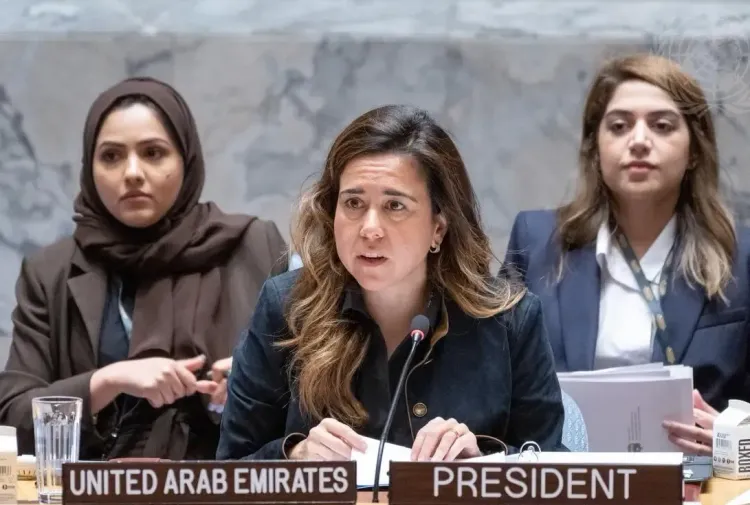
Lana Nusseibeh, the United Arab Emirates' Minister of State for Foreign Affairs, formally entered the race for United Nations Secretary-General on 22 October, becoming the eighth candidate seeking to succeed António Guterres, whose term expires on 31 December. Her nomination arrives as the Security Council remains deadlocked, with all seven previously declared candidates having received negative votes from at least two permanent members in the most recent informal polling.
Why the Race Is Deadlocked
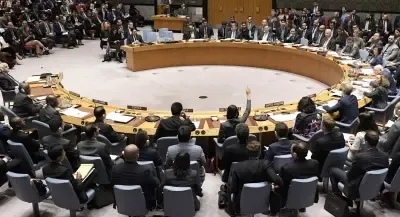
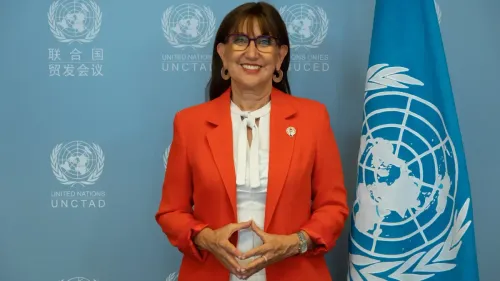
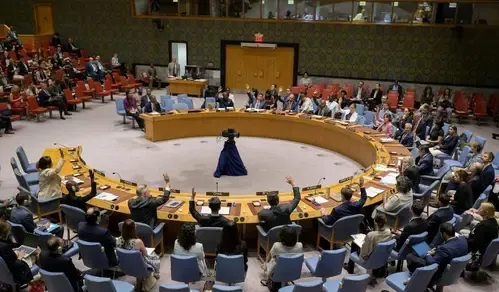
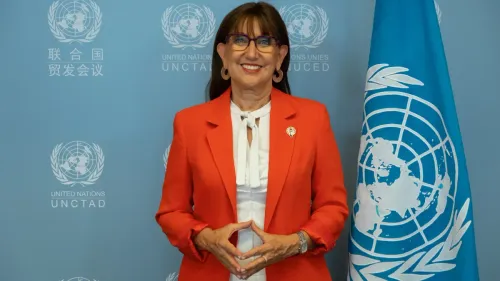
At the sixth straw poll — the first to anonymously reveal the voting positions of permanent members — the top contender, UNCTAD chief Rebecca Grynspan of Costa Rica, received two negative votes from veto-wielding members. The next two candidates, former Guyana Foreign Minister Carolyn Rodrigues-Birket and International Atomic Energy Agency Director-General Rafael Grossi, also each received two negative votes. Under Security Council rules, any two negative votes from permanent members effectively block a candidacy unless those members can be persuaded to change their position.
Nusseibeh's Vision and Credentials
In her vision statement circulated by the UN, Nusseibeh articulated a hands-on diplomatic philosophy. 'The UN need not lead every process, but it should be ready to be in every room where its presence has value,' she said — widely read as an acknowledgement of mediation efforts taking place outside the world body. She added: 'I will spend more of my time near front lines, and where agreements can be found.'
Nusseibeh served as the UAE's permanent representative to the UN for 11 years, ending that posting in 2024, and presided over the Security Council during the UAE's elected membership in 2022 and 2023. She is leaving her current ministerial role to contest the election.
The Geopolitical Calculus
Her entry brings a candidate from a country directly embroiled in the ongoing Iran-US conflict to the contest for a role that leads an organisation reportedly unable to resolve it. The UAE has been under attack from Iran during the war that escalated following US and Israeli strikes on Iran, which has since spiralled into a wider global energy crisis. Although the UAE is generally regarded as the Arab state with the closest ties to Israel, its criticism of Israel over Gaza could complicate US support for her candidacy, according to analysts tracking the race.
To secure election, Nusseibeh will need the backing of all five permanent members — the US, UK, France, Russia, and China — a threshold that has tripped every other candidate so far.
Broader Representation Debate
There is substantial support within the General Assembly for electing the first woman to lead the UN in its 80-year history — all nine previous secretaries-general have been men. Separately, a regional push for a Latin American candidate is gathering momentum: the region has not produced a secretary-general since Javier Pérez de Cuéllar ended his term in 1991. Grynspan, Rodrigues-Birket, and Grossi all hail from Latin America. The last Arab secretary-general was Egypt's Boutros Boutros-Ghali, whose single term ended in 1996 after the US blocked his re-election.
What Happens Next
Nusseibeh must first address a General Assembly-sponsored meeting, where she will present her vision and take questions from member states and civil society organisations before her candidacy formally advances. With Guterres' term ending in 10 weeks and the Security Council still unable to produce a consensus nominee, the pressure on permanent members to find common ground is intensifying rapidly.
Point of View
Not a cure for it. The same veto dynamics that blocked eight candidates before her will apply equally to her — and her UAE background, entangled in the Iran-US-Israel triangle, gives both Washington and Moscow potential grounds for objection. The deadlock also exposes a deeper tension: the General Assembly wants a woman and a Latin American, the P5 want compliance, and the world needs a secretary-general by January. None of those imperatives are currently pointing in the same direction. The longer the impasse continues, the more it risks reducing the world's most universal institution to a spectator in the crises it was designed to manage.
NationPress
22 Oct 2026
Frequently Asked Questions
Who is Lana Nusseibeh and why has she entered the UN secretary-general race?
Lana Nusseibeh is the UAE's Minister of State for Foreign Affairs and a former 11-year permanent representative to the UN. She entered the race on 22 October 2026 as the eighth candidate after the Security Council deadlocked on all seven prior nominees, each of whom received negative votes from at least two permanent members.
Why is the UN secretary-general election deadlocked?
All seven candidates in the race received negative votes from at least two of the five permanent Security Council members — the US, UK, France, Russia, and China — in the latest informal straw poll. Any two negative votes from permanent members effectively block a candidate under Security Council rules, unless those members can be persuaded to reverse their position.
What is the significance of the UAE fielding a candidate amid the Iran-US conflict?
The UAE is directly involved in the ongoing conflict that escalated after US and Israeli strikes on Iran, and has itself been under Iranian attack. This places Nusseibeh in a uniquely complex position: her country's ties to both Israel and its critics could be scrutinised by permanent members, particularly the US, when assessing her suitability.
Who are the other leading candidates for UN secretary-general?
The leading candidates include UNCTAD head Rebecca Grynspan of Costa Rica, former Guyana Foreign Minister Carolyn Rodrigues-Birket, and IAEA Director-General Rafael Grossi of Argentina — all from Latin America. All three received two negative votes from permanent members in the sixth straw poll.
When does the current UN secretary-general's term end?
António Guterres' term as UN Secretary-General ends on 31 December 2026, leaving approximately ten weeks for the Security Council to agree on a successor. Nusseibeh must first address a General Assembly-sponsored meeting before her candidacy formally advances.