UNGA holds 5th dialogue with Ecuador's Espinosa for UN chief role
Synopsis
The race to lead the United Nations is taking shape. Ecuador's Maria Fernanda Espinosa — former UNGA president and defence minister — made her case before member states on 16 June, calling for a UN that delivers results over rhetoric. With five dialogues now done and Guterres's term ending in 2026, the Security Council's P5 will ultimately decide who takes the helm on 1 January 2027.
Key Takeaways
The UNGA held its fifth interactive dialogue on 16 June with UN Secretary-General candidate Maria Fernanda Espinosa of Ecuador .
Espinosa was nominated by Antigua and Barbuda in May and previously served as UNGA president , foreign minister, and defence minister.
Her vision centres on five pillars : peace and security, development, digital and energy transformation, closing the delivery gap, and rebuilding credibility.
Four other candidates — Michelle Bachelet , Rafael Grossi , Macky Sall , and Rebeca Grynspan — appeared in a two-day UNGA dialogue in late April .
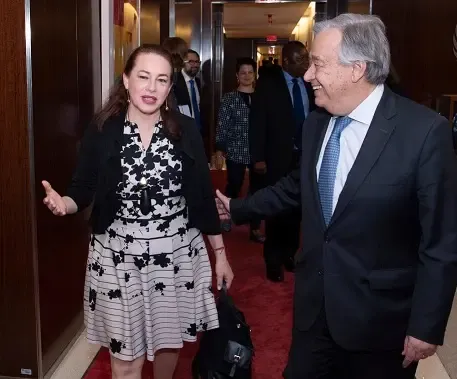
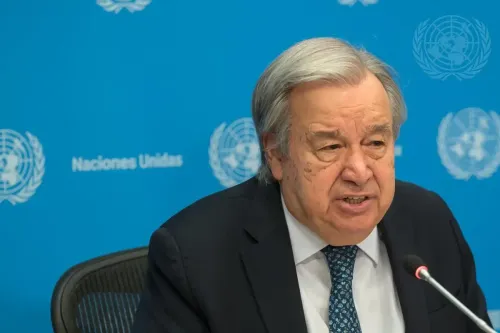
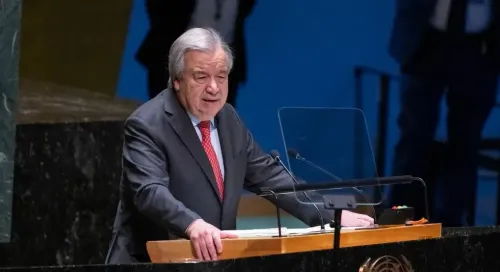
António Guterres , the ninth UN Secretary-General , steps down at end of 2026 ; the successor assumes office on 1 January 2027 .
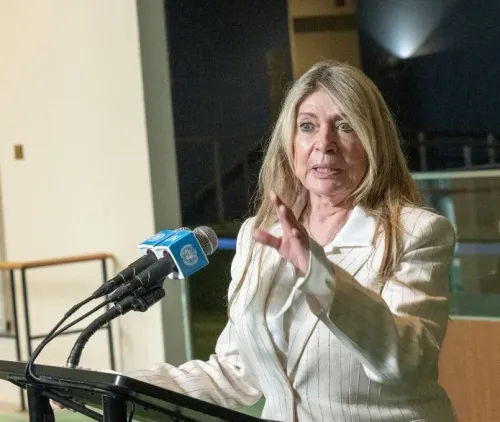
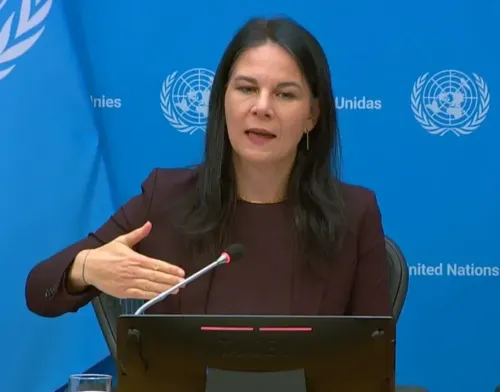
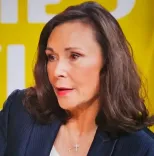
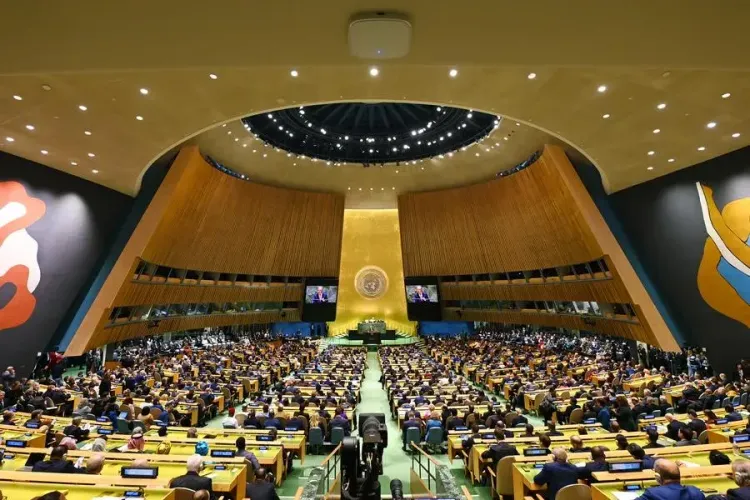
The UN General Assembly (UNGA) on Monday, 16 June convened its fifth interactive dialogue with a candidate vying to succeed António Guterres as the next UN Secretary-General. The session featured Maria Fernanda Espinosa, former UNGA president and former foreign and defence minister of Ecuador, who was nominated by Antigua and Barbuda in May.
Espinosa's Vision for the UN
Espinosa told member states and civil society representatives that the world does not need another restatement of multilateral ideals — it needs results. She outlined a vision centred on five interconnected pillars of transformation: peace and security, development, digital and energy transformation, closing the delivery gap, and rebuilding credibility.
'This is not an extensive comprehensive action plan, because comprehensive political and financial leadership must come from the Member States. Rather, it highlights areas where the Secretary-General can act most effectively within her remit to restore UN credibility and confidence by delivering results,' Espinosa said.
She argued for a United Nations that prevents crises earlier, responds more coherently, and delivers more effectively — language that signals a direct critique of the organisation's current operational limitations.
Other Candidates in the Race
Espinosa's dialogue follows a two-day interactive session in late April in which four other candidates appeared before the UNGA. They were Michelle Bachelet, former Chilean president and former UN High Commissioner for Human Rights, nominated by Brazil and Mexico; Rafael Grossi, current Director General of the International Atomic Energy Agency (IAEA), nominated by Argentina; Macky Sall, former president of Senegal, nominated by Burundi; and Rebeca Grynspan, economist and former vice president of Costa Rica, nominated by Costa Rica.
The Transition Timeline
The term of António Guterres, the current and ninth Secretary-General of the United Nations, expires at the end of 2026. The incoming Secretary-General is scheduled to assume the role on 1 January 2027. The selection process is being watched closely as the UN faces mounting pressure over its effectiveness on conflicts, climate, and global governance reform.
What Happens Next
The UNGA's interactive dialogue process is designed to give member states a transparent platform to assess candidates before the Security Council makes a formal recommendation. With five dialogues now concluded, the field is taking shape — though the final decision will ultimately rest with the UN Security Council, where the five permanent members wield veto power. Observers note that geopolitical alignments among the P5 could prove decisive in narrowing the candidate pool.
Point of View
Not merit, will likely determine the next Secretary-General. Espinosa's five-pillar framework is ambitious, but the credibility gap she diagnoses is partly a product of P5 paralysis that no Secretary-General can unilaterally fix. The real question is whether any candidate can secure consensus across Washington, Beijing, and Moscow — and that question will not be answered in a UNGA dialogue.
NationPress
15 Sept 2026
Frequently Asked Questions
Who is Maria Fernanda Espinosa and why is she significant in the UN Secretary-General race?
Maria Fernanda Espinosa is a former president of the UN General Assembly and former foreign and defence minister of Ecuador, nominated by Antigua and Barbuda in May 2025. She is one of five known candidates vying to succeed António Guterres, whose term expires at the end of 2026.
What is the UNGA interactive dialogue process for selecting the next UN Secretary-General?
The UNGA interactive dialogue is a transparent vetting process where candidates present their vision and answer questions from member states and civil society. It is part of a broader selection process that culminates in a formal recommendation by the UN Security Council.
Who are the other candidates for the next UN Secretary-General?
The other known candidates include Michelle Bachelet (nominated by Brazil and Mexico), Rafael Grossi of the IAEA (nominated by Argentina), Macky Sall, former president of Senegal (nominated by Burundi), and Rebeca Grynspan, former vice president of Costa Rica (nominated by Costa Rica).
When will the next UN Secretary-General take office?
The next UN Secretary-General is scheduled to assume the role on 1 January 2027, following the expiry of António Guterres's term at the end of 2026.
What vision did Espinosa outline for the United Nations?
Espinosa called for a UN that prevents crises earlier, responds more coherently, and delivers more effectively. Her vision is built around five pillars: peace and security, development, digital and energy transformation, closing the delivery gap, and rebuilding credibility.