Two Chinese agents sentenced 30 months in US military spy case
Synopsis
Two Chinese nationals — Liren 'Ryan' Lai and Yuance Chen — have been sentenced to 30 months each for running a Ministry of State Security operation that surveilled Navy bases, ran dead-drop cash payments, and built biographical files on US service members earmarked as recruitment targets. The case is one of the most operationally detailed MSS prosecutions in recent years.
Key Takeaways
Liren 'Ryan' Lai , 40 , and Yuance Chen , 39 , were each sentenced to 30 months in prison on 31 October 2026 .
Both received an additional three years of supervised release for acting as unregistered agents of China's Ministry of State Security .
The operation began no later than May 2021 and involved a $10,000 dead-drop cash payment in Livermore, California in January 2022 .
Chen photographed Navy Base Kitsap in Bremerton, Washington and filmed recruits at a Navy recruiting station in Southern California .
Lai pleaded guilty on 12 December 2025 ; Chen on 20 February 2026 .
Chen travelled to China in 2024 and 2025 to meet MSS handlers and receive fresh assignments targeting US service members.
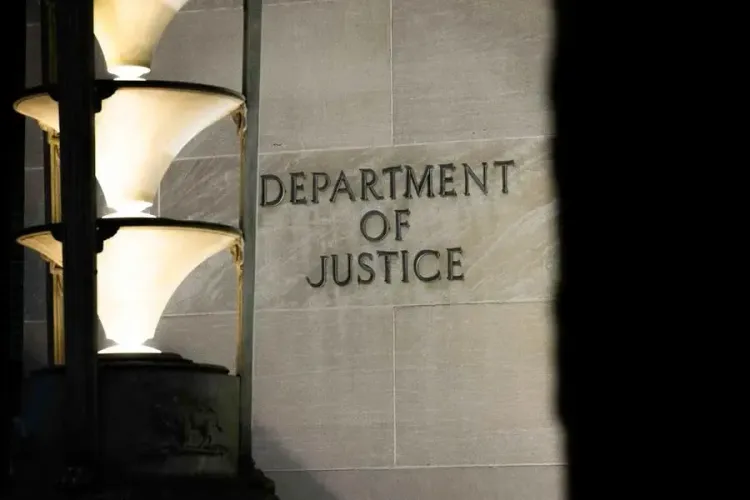
Two Chinese nationals convicted of running a covert intelligence operation targeting US military personnel have each been sentenced to 30 months in prison, the US Department of Justice announced on 31 October 2026. The case exposed a years-long scheme directed by China's Ministry of State Security (MSS) that involved secret cash drops, surveillance of Navy installations, and recruitment efforts inside the American military.
Who the Defendants Are
Liren 'Ryan' Lai, 40, and Yuance Chen, 39, were each handed 30 months in federal prison and three years of supervised release after being convicted of conspiring to act — and acting — as unregistered agents of a foreign government. Both defendants entered guilty pleas: Lai on 12 December 2025 and Chen on 20 February 2026.
How the Operation Worked
According to court documents cited by the Justice Department, the two men began operating as agents of Chinese intelligence no later than May 2021. Lai initially served as an intermediary between Chen and MSS officers before Chen began receiving assignments directly from those handlers.
In January 2022, the defendants coordinated a clandestine cash transfer of approximately $10,000. While in China, they arranged for associates in the United States to leave a backpack containing the money in a locker at a recreational facility in Livermore, California — a method the Justice Department described as a 'dead drop', designed to allow funds or intelligence to change hands without the parties meeting in person.
Surveillance of Navy Bases and Personnel
From 2022 onwards, Chen gathered information about US military installations and personnel at the direction of Lai and MSS officers. That surveillance included photographs of Navy Base Kitsap in Bremerton, Washington, as well as photographs and videos of military recruits and active-duty sailors inside a Navy recruiting station in Southern California.
Chen also collected identifying information on a Navy employee and compiled detailed biographical profiles of military personnel considered potential intelligence targets, the department said. In March 2023, Lai travelled to the United States and delivered a mobile phone to Chen for covert communications with the MSS.
Chen subsequently travelled to China in both 2024 and 2025, meeting intelligence officers and receiving further assignments related to US service members, according to the Justice Department.
What the Government Said
Assistant Attorney General for National Security John A. Eisenberg said the two men 'operated in a long-running scheme to undermine US national security by supporting Chinese intelligence operations and recruiting in the United States.'
Broader Context
This sentencing comes amid a sustained push by US federal prosecutors to expose and prosecute MSS-linked networks operating on American soil. The case follows a pattern of Chinese intelligence efforts to cultivate sources within the US armed forces — a strategy that US counterintelligence officials have repeatedly flagged as a growing threat. The use of dead drops, encrypted devices, and in-person handler meetings in China mirrors tradecraft documented in earlier MSS-linked prosecutions, underscoring the systematic nature of the alleged programme.
With both sentences now handed down, attention will turn to any broader network the two men may have supported — and whether additional prosecutions are forthcoming.
Point of View
Dead drops, base surveillance, and biographical targeting of service members. That gap between the documented conduct and the punishment reflects the practical limits of prosecuting intelligence cases, where classified equities constrain what can be argued in open court. More significant than the sentences is the granular tradecraft the Justice Department chose to put on public record: it is a deliberate warning to MSS networks still active in the US, and a signal to potential recruits inside the military about the consequences of cooperation. The pattern — civilian cut-outs, encrypted phones delivered in person, in-China handler meetings — also suggests this is doctrine, not improvisation, which raises the question of how many similar networks remain undetected.
NationPress
31 Oct 2026
Frequently Asked Questions
Who are Liren Lai and Yuance Chen?
Liren 'Ryan' Lai, 40, and Yuance Chen, 39, are Chinese nationals convicted of acting as unregistered agents of China's Ministry of State Security inside the United States. They were sentenced on 31 October 2026 to 30 months in federal prison each, following guilty pleas entered in late 2025 and early 2026 respectively.
What exactly did the two men do for Chinese intelligence?
Under MSS direction, the pair arranged covert cash payments using dead drops, photographed US Navy bases and personnel, compiled biographical profiles of potential military recruits, and maintained encrypted communications with Chinese handlers. Chen also travelled to China in 2024 and 2025 to receive fresh assignments targeting US service members.
What is a 'dead drop' and how was it used in this case?
A dead drop is a clandestine method of transferring money or information without the parties meeting directly. In this case, approximately $10,000 in cash was left in a backpack inside a locker at a recreational facility in Livermore, California in January 2022, coordinated while the defendants were in China.
Which US military sites were targeted?
Surveillance focused on Navy Base Kitsap in Bremerton, Washington, and a Navy recruiting station in Southern California. Chen photographed the base and recorded military recruits and active-duty sailors, according to court documents cited by the Justice Department.
What happens next following the sentencing?
Both defendants will serve their 30-month prison terms followed by three years of supervised release. The Justice Department has not publicly confirmed whether the investigation has identified additional members of the network, but the level of operational detail disclosed suggests counterintelligence efforts in this area are ongoing.