China's spy network targets Taiwan President's family in US, California woman arrested
Synopsis
A California real estate agent was arrested at Los Angeles airport for allegedly stalking Taiwan President Lai Ching-te's son in Seattle on Beijing's orders — a case the FBI calls a 'brazen' covert operation on US soil. It is the latest in a pattern of Chinese state-linked espionage that now exploits university networks, civilian contacts, and digital platforms to reach targets thousands of miles from any traditional conflict zone.
Key Takeaways
Wanying 'Heather' Zhang , 34 , was arrested at Los Angeles International Airport on 4 October on charges of acting as an unregistered agent of the Chinese government .
Zhang allegedly surveilled the son of Taiwan President Lai Ching-te in Seattle , collecting vehicle details, photographs, and video footage.
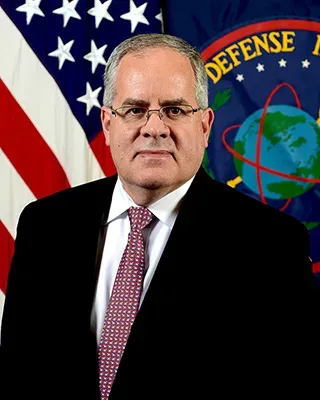
FBI Assistant Director Roman Rozhavsky described the operation as a 'brazen plot directed by the Chinese government' on US soil.
In September 2026 , MI5 disclosed Chinese state-linked sponsorship of research involving over 100 UK academics in AI and cybersecurity.
Taiwan's government condemned the alleged surveillance and pledged to cooperate with democratic allies against cross-border repression.
Security analysts warn that modern foreign espionage increasingly exploits civilian networks and digital platforms rather than traditional covert methods.
A California-based real estate agent has been arrested on charges of conducting covert surveillance on the family of Taiwan President Lai Ching-te on behalf of the Chinese government, exposing how Beijing's alleged transnational repression has extended deep into American suburban life. The case underscores a broader shift in global espionage, with foreign intelligence operations increasingly targeting personal relationships and civilian digital platforms rather than secure government infrastructure.
The Arrest and Allegations
Wanying 'Heather' Zhang, 34, a real estate agent based in Irvine, California, was detained at Los Angeles International Airport on 4 October as she attempted to board a flight to China. According to US federal court records, investigators allege that Zhang collected vehicle registration details, photographs, and video footage of President Lai's son during a trip to Seattle, after a university alumnus reportedly put her in contact with Chinese government officials. Prosecutors contend she was acting as an unregistered foreign agent of the Chinese government.
FBI's Response
Roman Rozhavsky, Assistant Director of the FBI's Counterintelligence and Espionage Division, said the case exposed a deliberate operation directed from Beijing. 'The complaint in this case lays bare a brazen plot directed by the Chinese government to conduct a covert surveillance mission on US soil targeting close relatives of a Taiwanese government official,' he said. He added: 'Wanying Zhang's arrest for allegedly acting as an unregistered agent of the Chinese government makes clear how far China's authoritarian regime will go to advance its goals.'
Taiwan Condemns the Operation
The spokesperson for the Taiwanese president, speaking to CBS News, condemned the alleged surveillance as an unacceptable act. 'Such brutal acts of suppression, intimidation, and even harm to the freedom and democracy of people or their families, which are unacceptable in the civilized world,' the spokesperson said. Taiwan's government confirmed it would continue cooperating with democratic allies to 'jointly combat illegal acts of cross-border repression.'
A Pattern of State-Linked Espionage
The Zhang case is far from isolated. In September 2026, British intelligence agency MI5 disclosed that state-linked institutions had sponsored research involving over 100 UK academics in sensitive fields including artificial intelligence and cybersecurity. Separately, US and UK courts secured the conviction of Yaoning 'Mike' Sun for monitoring Taiwanese political visits, illustrating how state actors systematically track diaspora communities and political dissidents abroad. Security analysts stress that such operations increasingly exploit trusted personal networks — university connections, professional contacts, and social media platforms — rather than conventional covert infiltration methods. This marks a fundamental evolution in how foreign intelligence is gathered: the threat is no longer confined to government servers or classified facilities, but is embedded in everyday civilian interactions.
What This Means Going Forward
The convergence of enforcement actions across the US and UK signals that security agencies face a growing challenge in detecting threats hidden within ordinary civilian life. Counterintelligence experts warn that as digital recruitment platforms blur the line between routine social contact and state surveillance, democratic governments must expand monitoring frameworks beyond traditional espionage vectors. For Taiwan, the incident reinforces concerns about the personal safety of officials and their families stationed or travelling abroad, and is likely to prompt a reassessment of protective protocols for Taiwanese citizens in the United States.
Point of View
Not a trained handler. Beijing's alleged use of civilian proxies embedded in diaspora communities means the traditional espionage playbook is obsolete; the threat is now diffuse, low-signature, and structurally difficult to detect before damage is done. The concurrent MI5 disclosure about Chinese academic infiltration in the UK suggests this is a coordinated global posture, not a series of ad hoc incidents. Democratic governments that still frame counterintelligence primarily around cyber and defence-sector threats risk being consistently outflanked in the grey zone of everyday civilian life.
NationPress
12 Oct 2026
Frequently Asked Questions
Who is Wanying 'Heather' Zhang and what is she accused of?
Wanying 'Heather' Zhang is a 34-year-old real estate agent from Irvine, California, arrested on 4 October at Los Angeles International Airport. She is accused of acting as an unregistered agent of the Chinese government, allegedly surveilling the son of Taiwan President Lai Ching-te in Seattle by collecting vehicle registration details, photographs, and video footage.
Why did the FBI call this a 'brazen' plot?
FBI Assistant Director Roman Rozhavsky described the case as a 'brazen plot directed by the Chinese government to conduct a covert surveillance mission on US soil targeting close relatives of a Taiwanese government official.' The remark reflects US counterintelligence concern about overt foreign state operations being carried out through civilian proxies inside American communities.
How does this case fit into a broader pattern of Chinese espionage?
The case is part of a documented pattern: in September 2026, MI5 revealed Chinese state-linked sponsorship of research by over 100 UK academics in AI and cybersecurity, and US and UK courts previously convicted Yaoning 'Mike' Sun for monitoring Taiwanese political visits. Analysts say Beijing increasingly uses personal networks and digital platforms rather than conventional spy craft.
What has Taiwan said in response to the alleged surveillance?
A spokesperson for Taiwan President Lai Ching-te condemned the operation as 'brutal acts of suppression, intimidation' that are 'unacceptable in the civilized world.' Taiwan's government thanked US authorities and pledged to continue cooperating with democratic allies to combat cross-border repression.
What does this mean for Chinese espionage tactics going forward?
Security analysts say modern foreign intelligence gathering no longer relies solely on cyber intrusions or defence secrets. Beijing allegedly exploits trusted civilian networks — university contacts, diaspora communities, and social media — creating a surveillance infrastructure that is harder for traditional counterintelligence frameworks to detect and disrupt.